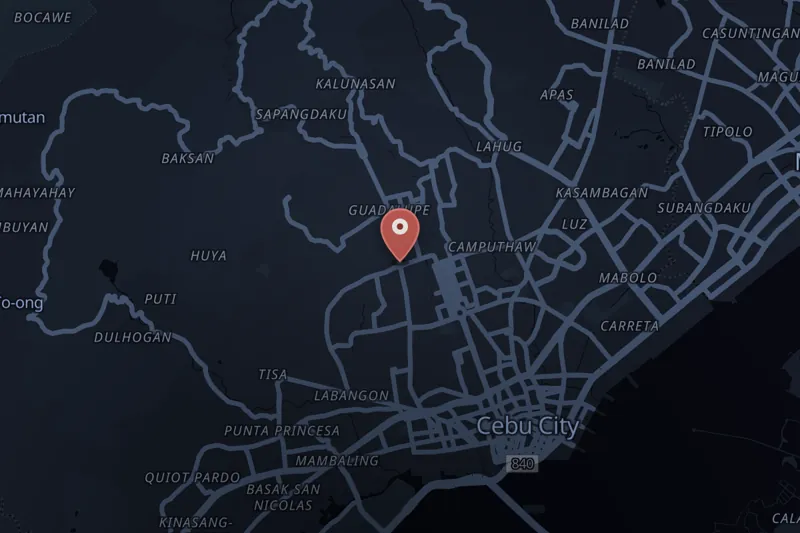
On the night of July 16–17, 1997, sisters Marijoy and Jacqueline Chiong were allegedly kidnapped near a mall in Cebu City, Philippines. Prosecutors charged that Francisco Juan "Paco" Larrañaga and six co-defendants abducted, raped, and murdered the sisters, later disposing of a body in a ravine. That body was initially presented as Marijoy's, but this identification was later disputed and it was determined not to be her. Jacqueline's body was never found; the sisters remain missing.
The prosecution's case relied heavily on the testimony of co-defendant Davidson Valiente Rusia, who was granted blanket immunity in exchange for testifying against the others. Rusia's account placed Larrañaga in Cebu on the night of the crime. During a limited cross-examination, defense counsel established that Rusia had lied under oath about his criminal history, including prior convictions for burglary and forgery in the United States. Rusia did not come forward as a witness until roughly ten months after the alleged crime and was previously unknown to Larrañaga.
The defense presented forty-five witnesses, including instructors and classmates from the Center for Culinary Arts in Quezon City, along with a condominium security logbook and airline records, to argue that Larrañaga was in Quezon City—hundreds of kilometers from Cebu—at the time of the alleged crime. The trial court deemed this testimony irrelevant on the grounds that the witnesses were "friends of the accused" and did not admit it. Larrañaga and his six co-defendants were convicted of murder on May 5, 1999, and on February 3, 2004, the Supreme Court of the Philippines imposed the death penalty on the convicted defendants except James Anthony Uy, who had been a minor at the time of the offense. The Supreme Court affirmed the convictions in July 2005.
International legal organizations, including the Basque Bar Council and Fair Trials International, filed amicus briefs arguing Larrañaga—who held dual Filipino and Spanish citizenship—had not received a fair trial. Following the Philippines' abolition of capital punishment on June 24, 2006, Larrañaga's sentence was commuted to life imprisonment. Under a bilateral treaty on the transfer of sentenced persons, he was transferred to Spain's Madrid Central Penitentiary at Soto del Real on October 6, 2009, a decision the victims' parents, Thelma and Dionisio Chiong, publicly objected to.
In 2019, four convicted co-defendants—Josman Aznar, Ariel Balansag, Alberto Caño, and James Anthony Uy—were released from Philippine custody under a good conduct time allowance law, prompting public controversy. Bureau of Corrections Director Nicanor Faeldon confirmed the releases; President Rodrigo Duterte subsequently fired Faeldon over the decision. Following public pressure, including from the victims' parents, the released men surrendered back to authorities in September 2019.

 SOLVEDListen