Marc Dutroux, born in 1956 in Ixelles, Belgium, was first convicted in 1989 for the abduction and rape of five young girls and women committed between 1985 and 1986 alongside accomplices Jean van Peteghem and his then-wife Michelle Martin. Dutroux received a 13.5-year sentence but was released on parole in 1992 after roughly three years, a decision made by Justice Minister Melchior Wathelet against the recommendations of the public prosecutor and an examining psychiatrist who considered him dangerous.
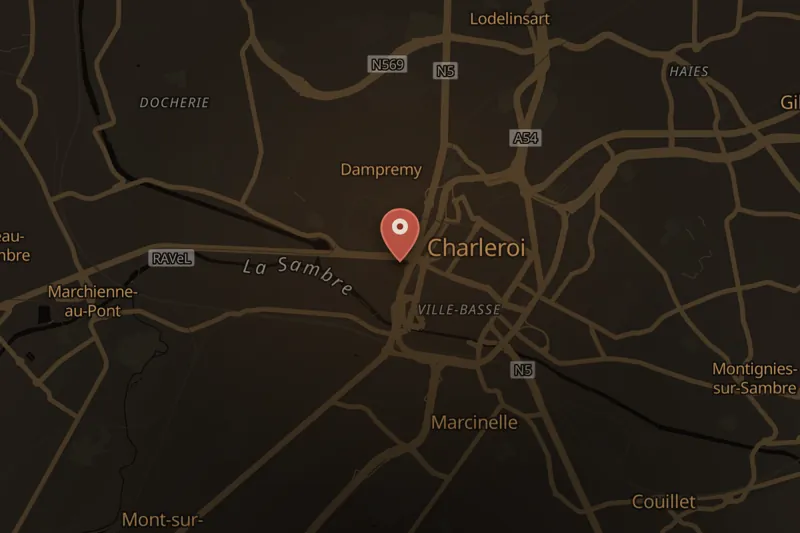
After his release, Dutroux resumed offending. Between June 1995 and August 1996 he and accomplices — his wife Michelle Martin, Michel Lelièvre, and Bernard Weinstein, who was never tried — abducted six girls and young women aged 8 to 19: Julie Lejeune, Mélissa Russo, An Marchal, Eefje Lambrecks, Sabine Dardenne, and Laëtitia Delhez. The victims were held in a concealed dungeon Dutroux had built in the basement of his house in Marcinelle, where they were sexually abused and, in several cases, filmed. Lejeune and Russo died of starvation in 1996 while Dutroux was briefly imprisoned for an unrelated vehicle-theft charge, after Martin failed to feed them as instructed. Marchal and Lambrecks were drugged and buried alive by Dutroux and Weinstein in September 1995. Weinstein himself was later tortured and buried alive by Dutroux after being suspected of betrayal. Dardenne and Delhez survived and were rescued when police, acting on witness identification of Dutroux's van, arrested Dutroux, Martin, and Lelièvre on 13 August 1996.
The investigation was marked by significant law-enforcement failures. Police had searched Dutroux's Marcinelle house twice in December 1995 — after a tip from Dutroux's own mother — and heard girls' voices in the basement but did not investigate further; construction materials for the dungeon were mistaken for drainage work; and videotapes documenting the dungeon's construction went unreviewed for years. Investigating judge Jean-Marc Connerotte, who had overseen the August 1996 rescues, was removed from the case in October 1996 after attending a fundraiser for victims' families, a decision that helped spark the "White March," in which some 300,000 Belgians protested the handling of the case. A parliamentary inquiry concluded in 1998 that Dutroux had not been protected by high-level accomplices but had benefited from corruption, carelessness, and incompetence within police and judicial institutions.
Dutroux's trial opened in Arlon in March 2004. He, Martin, and Lelièvre were convicted on all charges on 17 June 2004; Michel Nihoul, tried as an alleged accomplice in the kidnappings, was acquitted of those charges but convicted separately on drug-trafficking counts. On 22 June 2004, Dutroux received the maximum sentence of life imprisonment, Martin was sentenced to 30 years, and Lelièvre to 25 years. Martin was paroled in 2012 after serving 16 years. Dutroux remains imprisoned; his requests for early release and conditional psychiatric assessment have been the subject of subsequent legal proceedings.


 SOLVEDListen