Overview
The Claremont serial killings refers to the disappearance of Sarah Spiers, 18, and the killings of Jane Rimmer, 23, and Ciara Glennon, 27, after each woman had spent an evening at nightspots in Claremont, a suburb of Perth, Western Australia, in 1996–1997. The similarity in circumstances led police to believe an unidentified serial killer was responsible, and the resulting investigation became, according to reporting on the case, the state's biggest, longest-running, and most expensive.
Disappearances
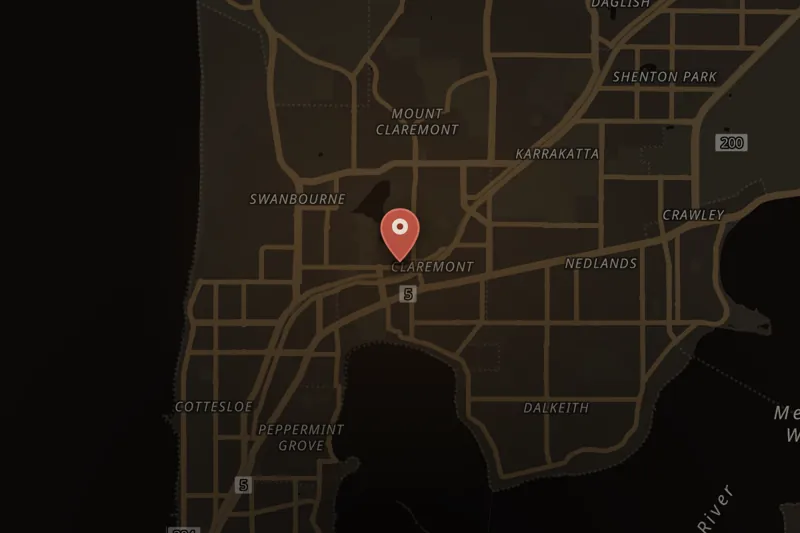
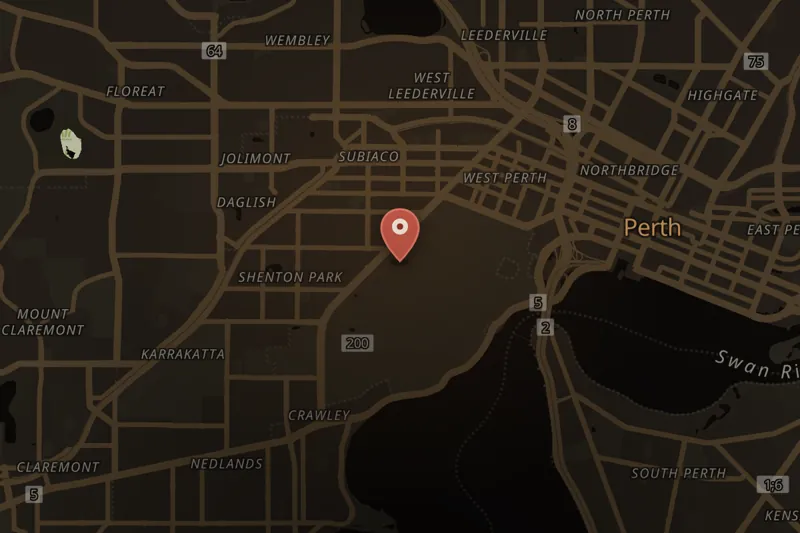
Sarah Spiers vanished in the early hours of 27 January 1996 after leaving Club Bayview in Claremont. She telephoned a taxi at 2:06 am to be taken to Mosman Park, was seen waiting alone near Stirling Road and Stirling Highway, and had gone by the time the taxi arrived three minutes later. Her fate remains unknown and her remains have not been found. Jane Rimmer disappeared in the early hours of 9 June 1996 after being last seen on security footage outside the Continental Hotel; her naked body was found 55 days later, on 3 August 1996, in bushland near Woolcoot Road, Wellard, roughly 40 km south of Claremont. Ciara Glennon disappeared in the early hours of 15 March 1997 after leaving the Continental Hotel and being seen interacting with an unidentified light-coloured vehicle on Stirling Highway; her semi-clothed body was found 19 days later, on 3 April 1997, near Pipidinny Road, Eglinton, about 40 km north of Claremont.
Investigation
Police formed a taskforce called "Macro" following Rimmer's disappearance, later confirming they were hunting a serial killer and offering a then-record $250,000 reward. Investigators pursued unidentified vehicles seen at the scenes and scrutinised Perth taxi drivers, conducting a large-scale fingerprint and DNA-testing exercise. In December 2015, fibres taken from Rimmer were identified as coming from a Holden Commodore VS Series 1. The taskforce faced criticism for tactics including confrontational questionnaires and a prolonged, narrow focus on a public servant, Lance Williams, who was investigated for years without direct evidence and was told in 2008 he was no longer a person of interest; he died in 2018. Other individuals reported to have been investigated included Bradley Murdoch, who was in custody for part of the relevant period, and Mark Dixie, whom police later said had been ruled out.
Arrest, trial and outcome
Bradley Robert Edwards was arrested on 22 December 2016 and charged the following day with the murders of Rimmer and Glennon; he was later charged with the wilful murder of Spiers on 22 February 2018, plus additional offences including a 1988 break-and-enter and unlawful detention in Huntingdale and a 1995 unlawful detention and sexual assault in Claremont. He pleaded guilty to the five non-murder charges in October 2019. His judge-alone trial ran from 25 November 2019 to 25 June 2020 before Justice Stephen Hall, involving evidence from more than 200 witnesses, including DNA and vehicle-fibre evidence linking Edwards to Glennon and Rimmer. On 24 September 2020, Edwards was found guilty of murdering Rimmer and Glennon but not guilty of murdering Spiers, though the judge found it more likely than not that Edwards was involved in her disappearance. On 23 December 2020, Edwards was sentenced to life imprisonment with parole eligibility after 40 years.
Possible related cases
Journalist reporting cited in the case's background noted that police told the father of a fourth missing woman, Julie Cutler, that she was probably a victim of the Claremont killer; Cutler disappeared in 1988 and her car was later found in the surf at Cottesloe Beach. Other cases sometimes linked include the disappearances of Lisa Brown in 1998 and Sara McMahon in 2000.


 UNSOLVEDListen