Solved case
Colfax massacre
On Easter Sunday, April 13, 1873, a mob of armed White men, including former Confederate soldiers, overpowered Black freedmen and state militia occupying the Grant Parish courthouse in Colfax, Louisiana, killing between 62 and 153 Black men, most after they had surrendered.

The Colfax massacre occurred on April 13, 1873, in Colfax, the parish seat of Grant Parish, Louisiana, amid a disputed 1872 Louisiana gubernatorial election between Republican William P. Kellogg and Democrat John McEnery. Rival slates of local officials — Republicans Robert C. Register and Daniel Wesley Shaw, and Fusionist Democrats Alphonse Cazabat and Christopher Columbus Nash — each claimed the offices of parish judge and sheriff. Black freedmen, fearing Democrats would seize the courthouse, dug trenches around it and organized armed defense, joined by state militia captain William Ward, a Black Union Army veteran.
Tensions escalated through late March and early April 1873, including gunfire exchanges and the killing of a Black bystander, Jesse McKinney, by a White man. Sheriff Nash assembled an armed White paramilitary force of more than 300 men, drawn from Grant, Rapides, Winn, and Catahoula parishes, equipped with rifles and a small cannon. On April 13, Nash's forces surrounded the courthouse, gave women and children time to leave, and then attacked. After the courthouse roof was set ablaze, defenders attempted to surrender using improvised white flags. Accounts differ on what followed: White participants said defender James Hadnot was shot while surrendering; Black survivors said he was shot from behind by his own men. In the aftermath, Nash's forces killed most of the Black defenders, including men trying to flee or hide, and dumped bodies into the Red River. About 50 Black men taken prisoner were reportedly killed later that night by captors who had been drinking. Only one member of that group, Levi Nelson, survived, having been shot by Bill Cruikshank but escaping. Three White men — Stephen Decatur Parish, James West Hadnot, and Sidney Harris — died. The precise Black death toll was never established, with contemporary and later estimates ranging from 62 to as many as 153.
US Attorney James Roswell Beckwith pursued federal prosecutions under the Enforcement Act of 1870. Ninety-seven men were indicted, and nine were charged. Two trials followed in 1874; the first ended in one acquittal and a mistrial for the rest, while the second produced convictions of three men that were later dismissed by Supreme Court Justice Joseph Bradley, riding circuit, who then released the men on bail. The case was appealed and decided by the US Supreme Court in United States v. Cruikshank (1875/1876), which held that Fourteenth Amendment protections applied only to actions by state governments, not private individuals, effectively ending federal prosecution of such attacks. No perpetrators were prosecuted by the state of Louisiana. Historian Eric Foner has described Colfax as the deadliest instance of racial violence during Reconstruction. Public memorialization of the massacre has changed over time: a 1920 monument commemorated the three White dead as fighting "for White Supremacy," and a 1950 state highway marker described the events as ending "carpetbag misrule." That marker was removed in 2021, and a new monument listing 57 identified Black victims was dedicated in 2023.

Key facts
- Victims
- Jesse McKinney, James West Hadnot, Levi Nelson, Stephen Decatur Parish, Sidney Harris
- Date
- 1873
- Location
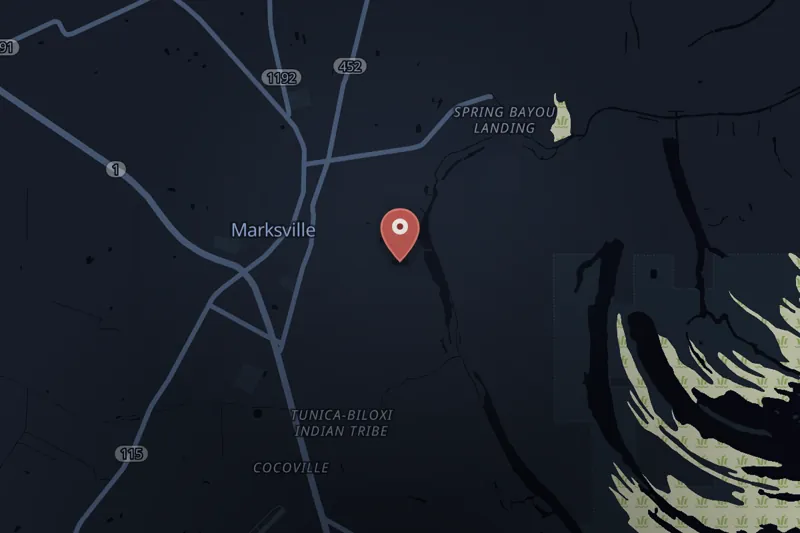
- Colfax, Grant Parish, Louisiana
- Case status
- solved
Case timeline
1872-11-04
Disputed Louisiana gubernatorial election held, producing rival claims by Republican William P. Kellogg and Democrat John McEnery.
1873-01-02
Fusionist Democrats Alphonse Cazabat and Christopher Columbus Nash take oaths of office as parish judge and sheriff at the Colfax courthouse.
1873-01-17
Governor Kellogg issues commissions to the Republican slate for Grant Parish.
1873-03-25
Republicans Robert C. Register and Daniel Wesley Shaw seize the empty courthouse and take their oaths of office.
1873-03-28
Nash, Cazabat, Hadnot and other White Fusionists call for armed Whites to retake the courthouse.
1873-04-02
Gunfire erupts between White and Black militias near Colfax.
1873-04-06
Armed conflict ends with White militia fleeing from armed Black militia; Black women and children join defenders at the courthouse.
1873-04-08
The Daily Picayune publishes an inflammatory headline about the situation in Grant Parish.
1873-04-11
William Ward departs by steamboat for New Orleans to seek armed assistance from Governor Kellogg.
1873-04-13
Nash's armed White paramilitary force attacks the Colfax courthouse; most Black defenders are killed after surrendering, and prisoners are killed later that night.
1873-04-14
Kellogg's police force arrives from New Orleans.
1873-04-15
US Marshals visit the massacre site and bury the dead, reporting 62 fatalities.
1874
Two federal trials held under the Enforcement Act of 1870; first ends in acquittal/mistrial, second produces convictions later dismissed by Justice Joseph Bradley.
1875
US Supreme Court hears United States v. Cruikshank on appeal.
1920
A monument memorializing the three White men killed is erected in Colfax Cemetery.
1950
Louisiana erects a state highway marker describing the event as the 'Colfax Riot.'
2021-05-15
The 1950 state highway marker is removed for eventual museum placement.
2023-04-13
A new monument listing 57 identified Black victims is dedicated on the 150th anniversary of the massacre.
Best coverage
No coverage has been attached to this file yet.
People
Jesse McKinney
VICTIMBlack bystander killed by a White man during rising tensions before the massacre
James West Hadnot
VICTIMWhite Fusionist militia member killed during the courthouse assault; later memorialized on a 1920 monument
William Ward
LAW ENFORCEMENTBlack Union Army veteran and Louisiana State Militia captain who organized defense of the courthouse and sought federal reinforcement
Bill Cruikshank
CHARGEDCharged under the Enforcement Act of 1870 for involvement in the massacre; case central to United States v. Cruikshank (1875/1876)
Levi Nelson
VICTIMBlack survivor shot by Bill Cruikshank while among prisoners killed that night; escaped and later served as a chief prosecution witness
Stephen Decatur Parish
VICTIMWhite man killed during the events at Colfax; memorialized on a 1920 monument
Christopher Columbus Nash
CHARGEDSheriff who commanded the armed White paramilitary force that attacked the courthouse; among those indicted, later formed the first White League chapter
James Roswell Beckwith
LAW ENFORCEMENTUS Attorney based in New Orleans who investigated and prosecuted the massacre under the Enforcement Act of 1870
Sidney Harris
VICTIMWhite man killed during the events at Colfax; memorialized on a 1920 monument
Roles reflect public records and court outcomes at the time of writing — supporting citations are on file under Sources.
Places
Common questions
- What happened to the victim?
- On Easter Sunday, April 13, 1873, a mob of armed White men, including former Confederate soldiers, overpowered Black freedmen and state militia occupying the Grant Parish courthouse in Colfax, Louisiana, killing between 62 and 153 Black men, most after they had surrendered.
- Where did the massacre happen?
- Colfax, Grant Parish, Louisiana.
- What is the current status of the case?
- Status: solved.
Sources
- PRESSThe Colfax MassacreHistory.com · 2026-07-11
- PRESSThe Colfax Massacre (1873)BlackPast.org · 2026-07-11
- ENCYCLOPEDICColfax massacreWikipedia · 2026-07-10
- OFFICIAL / AGENCYContemporaneous coverage — senate.govsenate.gov · 2026-07-10
- OFFICIAL / AGENCYContemporaneous coverage — ourdocuments.govourdocuments.gov · 2026-07-10
When a file you follow changes — a new development, a correction, fresh coverage — the Dispatch is how you hear about it.
The Casepin Dispatch
A calm weekly briefing from the archive — one case worth understanding, meaningful updates to files you follow, and the best new coverage. You’ll also get the one-time note when the apps land. No gore, no rumor, no drip.