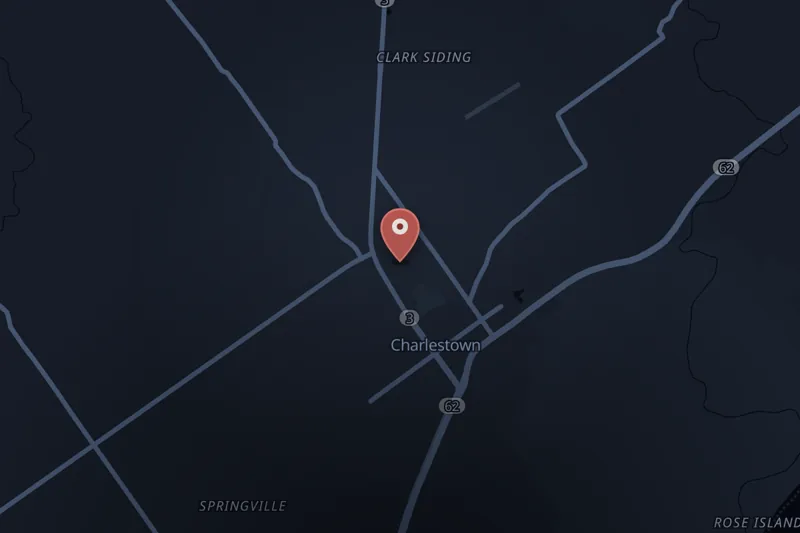
In 1871, George Johnson, Squire Taylor, and Charles Davis, three Black men, were killed in a spectacle lynching in Charlestown, Clark County, Indiana. They had been accused of murdering farmer Cyrus Park, his wife, and two of their children near Henryville, Indiana. A neighbor of the Park family, who believed he too had been targeted, reported that the assailants who tried to enter his home appeared to be white men.
Despite this, George Johnson, a Black man, was arrested on suspicion of the murders and was tortured until he confessed. Under duress, he named two other Black men, Squire Taylor and Charles Davis, who were subsequently arrested as well. A trial followed quickly, and a grand jury declared the three men not guilty due to a lack of evidence. Nevertheless, they remained in custody and were transferred to a jail in Charlestown.
Soon after their arrival at the jail, a white mob gathered, removed the three men, and hanged them. Squire Taylor was tortured before he was killed. At the time, the guilt of the three men was viewed as highly dubious by some observers. Details of the lynching were not widely publicized until a year later, when they appeared in a pamphlet titled "Murder and Mob Law in Indiana" by James Hiatt, which criticized the lack of proof against the men and pointed to substantial evidence of their innocence.
No one was ever charged or arrested for the killings of Johnson, Taylor, and Davis, even though the Park family reportedly came forward with the names of suspects and filed a lawsuit against the sheriff involved. In response to the lynching, Indiana Governor Conrad Baker called for the suppression of illegal organizations and cited the Enforcement Act of 1870, suggesting that federal intervention could be sought to stop mob violence targeting Black people. The Indiana state government ultimately did not follow through on this proposal, and mob violence against Black residents continued in the years that followed. Little additional information about the three murdered men survives in the public historical record. Between 1877 and 1950, at least eighteen Black people were lynched in Indiana.
On February 26, 2022, the Indiana Senate formally recognized the innocence of George Johnson, Squire Taylor, and Charles Davis through Senate Resolution 36. Following this action, State Senator Chris Garten expressed interest in installing a historical marker to commemorate the event, though as of the available record, no such marker had yet been created.

 Credit: Unknown authorPublic domainSourceSOLVEDListen