Documents violence · torture — written to inform, not to shock.

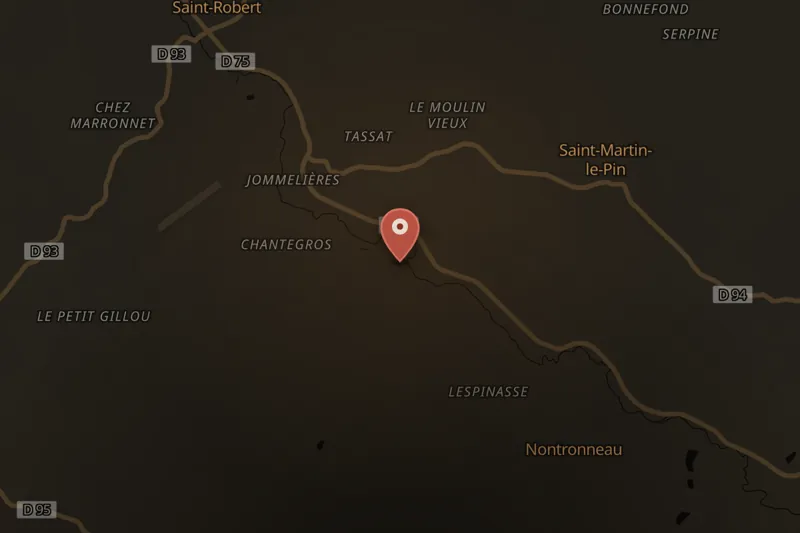
On 16 August 1870, during the annual cattle fair in the village of Hautefaye, in the Dordogne region of France, a local landowner, Alain Romuald de Monéys d'Ordières, was attacked by a crowd, beaten and tortured over roughly two hours, and then burned to death. Aged 32 and exempt from military service for physical reasons, he had asked to enlist for the Lorraine front and had come to the fair to manage his family's estate.
The events took place a month after France declared war on Prussia on 15 July 1870. Reports of early French defeats, and government restrictions on information, encouraged rumors of Prussian spies in the area and of plots among nobles and priests against the Empire. A regional drought and unusually poor fair-day trade heightened the tension, and some fairgoers had been drinking through the hot day. The historian Alain Corbin has explained the killing largely through these political anxieties among Périgord peasants.
The confrontation began after the victim's cousin was accused of spreading defeatist news and of republican sympathies; when the cousin escaped, suspicion shifted to de Monéys, who was wrongly taken for a Prussian and a traitor despite insisting he supported the peasants and intended to fight. Several people — including the parish priest, a village sawyer, a servant, and the mayor's nephew — repeatedly tried to shelter him, but were overwhelmed by the crowd. An attempt to hang him from a cherry tree failed; he was then beaten, dragged through the village, thrown into a dry pond, and set on fire.
Regional and national newspapers reported the events within days, and some described the participants as "cannibals". The source links that label to metaphors about the killing of livestock used at the fair, and to rumors that were examined at trial, where a key witness retracted his accusation against the mayor. The Minister of the Interior publicly condemned the killing, and the mayor of Hautefaye was removed from office by the Prefect of the Dordogne.
Gendarmes made about fifty initial arrests, and twenty-one defendants were tried at Périgueux from 13 to 21 December 1870. The court found four men — Chambord, Buisson, François Léonard (known as "Piarrouty"), and Mazière — directly responsible for the premeditated homicide; they were sentenced to death and executed at Hautefaye on 6 February 1871 after their appeal and request for a pardon were rejected. Jean Campot was sentenced to forced labor for life in New Caledonia, other defendants received prison or hard-labor terms, and one youth was acquitted but placed in a reformatory. The former mayor, who had testified as a witness, died a few days after the trial.
The case has been the subject of several books, including Alain Corbin's Le Village des « cannibales ». On 16 August 1970, a century after the events, a mass of forgiveness was held in the church of Hautefaye, attended by descendants of the victim and of the four executed men.

Key facts
- Victims
- Alain Romuald de Monéys d'Ordières
- Date
- 1870
- Location
- Hautefaye, Dordogne, France
- Case status
- solved
Case timeline
1870-07-15
France declares war on Prussia, the wartime backdrop to the case.
1870-08-16
Alain de Monéys is beaten, tortured and burned to death by a crowd at the Hautefaye cattle fair.
1870-08-19
The Attorney General of the Bordeaux Imperial Court takes charge of the investigation.
1870-08-27
The mayor of Hautefaye is removed from office by the Prefect of the Dordogne.
1870-12-13
The trial of twenty-one defendants opens at the Périgueux assize court.
1870-12-21
Four defendants are sentenced to death; others receive lesser sentences and one youth is acquitted.
1871-01-26
The Supreme Court rejects the appeal of the four men condemned to death.
1871-02-06
The four condemned men are executed at Hautefaye.
1970-08-16
A mass of forgiveness is held in the church of Hautefaye on the centenary of the events.
Best coverage
No approved coverage links are attached yet.
People
Étienne Campot
CONVICTEDFarmer and brother of Jean Campot; convicted of having aided and abetted the murder.
citation on file
Alain Romuald de Monéys d'Ordières
VICTIM32-year-old local landowner and Beaussac deputy who was beaten, tortured and burned to death by a crowd at the Hautefaye fair on 16 August 1870.
citation on file
François Mazière
CONVICTEDSharecropper found directly responsible for the premeditated homicide; sentenced to death and executed at Hautefaye on 6 February 1871.
citation on file
Pierre Buisson
CONVICTEDFound directly responsible for the premeditated homicide; sentenced to death and executed at Hautefaye on 6 February 1871.
citation on file
François Léonard ("Piarrouty")
CONVICTEDRagpicker found directly responsible for the premeditated homicide; sentenced to death and executed at Hautefaye on 6 February 1871.
citation on file
André Limay ("Thibassou")
ACQUITTEDAcquitted at the Périgueux trial but, as a minor, sent to a reformatory until his twentieth birthday.
citation on file
Jean Campot
CONVICTEDFarmer sentenced to forced labor for life in the penal colony of New Caledonia after the jury accepted extenuating circumstances.
citation on file
Charles Boreau-Lajanadie
LAW ENFORCEMENTAttorney General of the Bordeaux Imperial Court, who visited the scene on 19 August 1870 and took charge of the investigation.
citation on file
François Chambord
CONVICTEDFarrier described by the court as the group's leader; found directly responsible for the premeditated homicide, sentenced to death on 21 December 1870 and executed at Hautefaye on 6 February 1871.
citation on file
Places
Common questions
- What happened to the victim?
- Alain de Monéys, a local landowner, was beaten, tortured and burned to death by a crowd at the Hautefaye village fair in France on 16 August 1870; twenty-one people were tried and four were executed.
- Where did the murder happen?
- Hautefaye, Dordogne, France.
- Who was convicted?
- Étienne Campot (Farmer and brother of Jean Campot; convicted of having aided and abetted the murder.), François Mazière (Sharecropper found directly responsible for the premeditated homicide; sentenced to death and executed at Hautefaye on 6 February 1871.), Pierre Buisson (Found directly responsible for the premeditated homicide; sentenced to death and executed at Hautefaye on 6 February 1871.), François Léonard ("Piarrouty") (Ragpicker found directly responsible for the premeditated homicide; sentenced to death and executed at Hautefaye on 6 February 1871.), Jean Campot (Farmer sentenced to forced labor for life in the penal colony of New Caledonia after the jury accepted extenuating circumstances.), and François Chambord (Farrier described by the court as the group's leader; found directly responsible for the premeditated homicide, sentenced to death on 21 December 1870 and executed at Hautefaye on 6 February 1871.).
- What is the current status of the case?
- Status: solved. Last verified July 2026.
Sources
- Hautefaye casewikipedia · Wikipedia · 2026-07-05
- Cannibales d'un journews · Le Point · 2026-07-05
- Digitized primary-source document on the Hautefaye case (Gallica)book · Gallica (Bibliothèque nationale de France) · 2026-07-05
Last verified JUL 2026