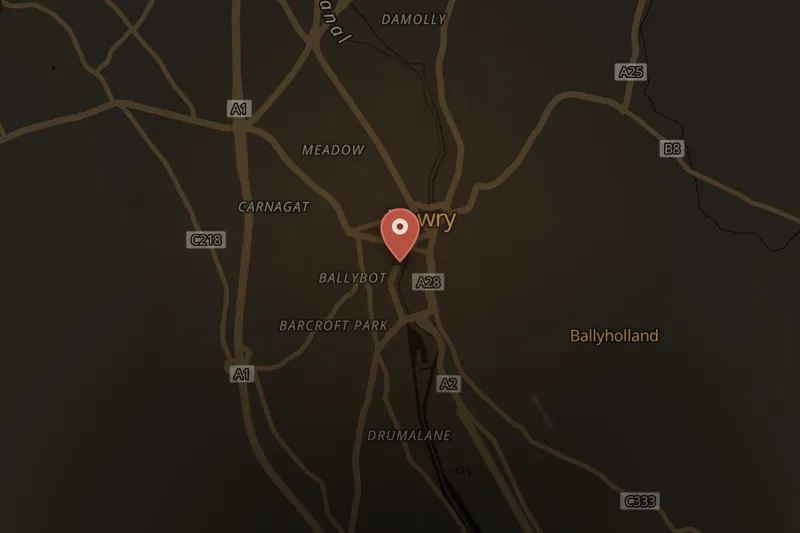
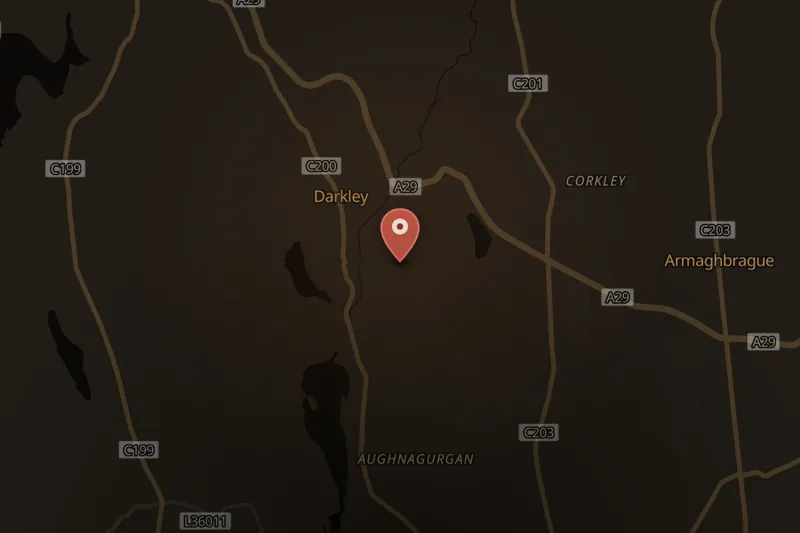
On the evening of Sunday 20 November 1983, about sixty people were attending a church service at Mountain Lodge Pentecostal Church, a small, isolated wooden church outside the village of Darkley in County Armagh, Northern Ireland, near the border with the Republic of Ireland. As the service began, three masked gunmen arrived and opened fire on those standing at the entrance. Three church elders — Harold Browne (59), Victor Cunningham (39) and David Wilson (44) — were killed. Wilson, fatally wounded, staggered into the service before collapsing and dying. The gunmen then stood outside and sprayed the building with bullets, wounding a further seven people, before fleeing by car. The service was being tape-recorded at the time; the recording captured the congregation singing the hymn "Are You Washed in the Blood?" followed by the sound of gunfire. All victims were Protestant civilians.
The attack occurred against a backdrop of sectarian violence in the preceding months. On 29 October 1983, Catholic civilian David Nocher, a member of the Workers' Party, was shot dead in Belfast. On 8 November, Catholic civilian Adrian Carroll was shot dead in Armagh; Ulster Defence Regiment (UDR) personnel were later convicted in connection with Carroll's killing, though the convictions were subsequently cleared on appeal for three of them (the "UDR Four" case). Carroll was the brother of an Irish National Liberation Army (INLA) member killed the previous year. These earlier attacks were claimed by the "Protestant Action Force" (PAF), a cover name used mainly by members of the Ulster Volunteer Force. It is believed the Darkley attack was carried out primarily in retaliation for Carroll's killing.
A caller claimed responsibility for the Darkley attack on behalf of the "Catholic Reaction Force," describing it as retaliation for the PAF's campaign against Catholics and threatening further violence unless the PAF halted its attacks. The name "Catholic Reaction Force" had not been used previously, and police said they believed the attack was carried out by INLA members. The INLA leadership publicly condemned the attack and denied direct involvement, while stating it would investigate the involvement of INLA members or weapons. A week later, INLA leader Dominic McGlinchey acknowledged that one of the gunmen was an INLA member, whom he had supplied with a weapon, but said there was no justification for the attack. According to McGlinchey, the gunman's brother had been killed by loyalists, and the gunman had sought a weapon to target a specific loyalist figure but instead used it in the attack on the church.
Reprisal sectarian attacks against Catholics occurred in North Belfast, Lisburn, and Portadown within 24 hours of the Darkley killings. On 5 December 1983, the PAF shot dead INLA member Joseph Craven in Newtownabbey. The "Catholic Reaction Force" name was invoked in several subsequent incidents through the 1990s and 2000s, including threats and claimed attacks, before the name issued a declared ceasefire on 28 October 1994.

 Credit: Dean MolyneauxCC BY-SA 2.0SourceUNSOLVEDListen