
Start here
The Texting Suicide Case Of Michelle Carter & Conrad Roy - Podcast #94
The creator's telling of the case, the strongest entry point on file.
Watch on YouTubeSolved case · 2012
Also known as Conrad Roy · Commonwealth v. Michelle Carter
The short answer
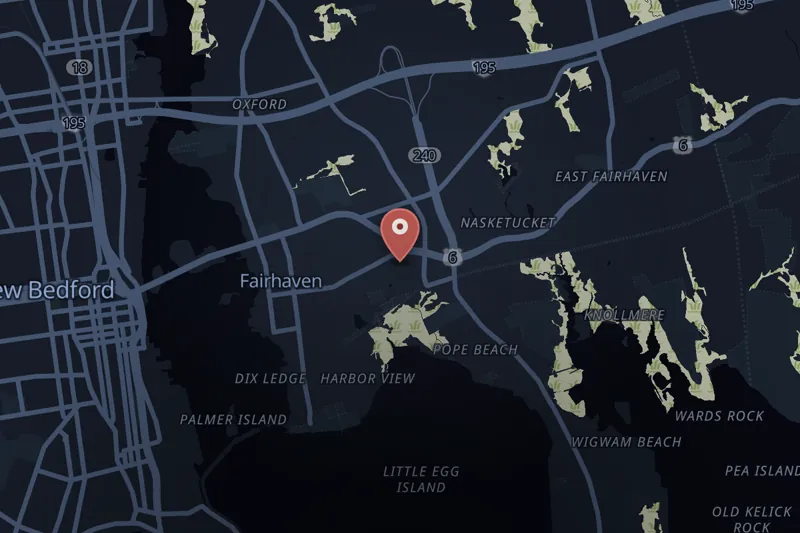
Conrad Roy III, 18, died by suicide in his truck in Fairhaven, Massachusetts, in July 2014. His girlfriend, Michelle Carter, then 17, was later convicted of involuntary manslaughter for encouraging him via text and, on a final phone call, telling him to get back into his carbon-monoxide-filling truck.
The Texting Suicide Case Of Michelle Carter & Conrad Roy - Podcast #941 piece from 1 creator: ranked, with duplicates removed and short clips set aside.
Start here
The creator's telling of the case, the strongest entry point on file.
Watch on YouTubeTitles and descriptions are the creators’ own and may not reflect current legal status. The sourced facts are in the file below. Players load only when you press play. Suggest coverage we’re missing.
Conrad Henri Roy III was born September 12, 1995, in Mattapoisett, Massachusetts, and worked in his family's marine salvage business. He was a high school athlete who graduated with a 3.88 GPA and had earned his boat captain's license. Roy had a history of mental health struggles, including social anxiety and depression, had seen multiple therapists, was prescribed the antidepressant citalopram, and had previously attempted suicide, including an overdose at age 17. According to court documents, Roy had allegedly experienced physical abuse by his father and verbal abuse by his grandfather.
Roy met Michelle Carter, who lived roughly 35 miles away, in Florida in 2012. Over the following two years the two mostly communicated through text messages and emails rather than in person. Carter initially discouraged Roy's expressed suicidal intentions and urged him to seek professional help, but by July 2014 her messages shifted toward encouraging him to go through with it. On June, 2014 texts referenced a "Romeo and Juliet" idea implying a mutual pact around dying.
On July 12, 2014, Roy died by suicide via carbon monoxide poisoning in his truck in a Kmart parking lot in Fairhaven, Massachusetts. His funeral was held on July 19, 2014, at St. Anthony's Church in Mattapoisett, and a scholarship fund was later established in his memory at the Northeast Maritime Institute.
Michelle Carter was indicted on involuntary manslaughter charges on February 4, 2015, and prosecuted as a "youthful offender." Legal challenges to the indictment, including on First Amendment grounds, were rejected by the Massachusetts Supreme Judicial Court on July 1, 2016. Carter waived her right to a jury trial, and the case was heard by Judge Lawrence Moniz in Bristol County Juvenile Court. On June 16, 2017, Moniz found Carter guilty, concluding that while the preceding text messages were not the deciding factor, Carter's phone call urging Roy to get back into his truck as it filled with carbon monoxide caused his death, breaking what the judge called Roy's "chain of self-causation" once he had exited the vehicle.
Carter was sentenced on August 3, 2017, to two and a half years, with 15 months to serve and the remainder suspended, plus five years of probation; the sentence was stayed pending appeal. On February 6, 2019, the Massachusetts Supreme Judicial Court upheld the conviction, finding Carter acted with criminal intent. She began serving her sentence on February 11, 2019, and a parole request for early release was denied on September 20, 2019. The U.S. Supreme Court declined to hear her appeal in January 2020. Carter was released on January 23, 2020, after serving 11 months and 12 days due to good-conduct credit.
In August 2017, Roy's mother Lynn Roy filed a $4.2 million wrongful death civil suit against Carter; it was later reported as resolved and dismissed with prejudice and without costs, consistent with an out-of-court settlement. The case drew extensive media coverage, including a CBS 48 Hours episode, an NBC Dateline episode, a Lifetime telefilm, and an HBO documentary, and raised broader legal questions about criminal responsibility for encouraging suicide through digital communication.
Conrad Roy III is born in Mattapoisett, Massachusetts.
Conrad Roy and Michelle Carter meet in Florida while visiting relatives.
Roy attempts suicide following his parents' divorce.
Roy graduates on the Honor Roll from Old Rochester Regional High School; texts referencing a 'Romeo and Juliet' pact are exchanged with Carter.
Conrad Roy dies by suicide via carbon monoxide poisoning in his truck in a Kmart parking lot in Fairhaven, Massachusetts.
Roy's funeral is held at St. Anthony's Church in Mattapoisett.
Michelle Carter is indicted on a charge of involuntary manslaughter.
Carter is arraigned in New Bedford Juvenile Court in Taunton, Massachusetts.
Massachusetts Supreme Judicial Court denies appeal of the grand jury indictment, allowing the case to proceed.
Carter waives her right to a jury trial the day before trial is scheduled to begin.
Judge Lawrence Moniz finds Carter guilty of involuntary manslaughter after a bench trial.
Moniz sentences Carter to two and a half years, with 15 months to serve and five years of probation; sentence is later stayed pending appeal.
Lynn Roy files a $4.2 million wrongful death civil suit against Carter.
Massachusetts Supreme Judicial Court upholds Carter's conviction and orders her 15-month sentence enforced.
Carter begins serving her prison sentence.
Carter's request for early release via parole is denied.
The U.S. Supreme Court declines to hear Carter's appeal.
Carter is released from prison after serving 11 months and 12 days.
Victims first. Every legal label is set from public records and court outcomes, not from the prose.
18-year-old man who died by suicide in Fairhaven, Massachusetts on July 12, 2014[3]
Convicted of involuntary manslaughter on June 16, 2017 for encouraging Roy's suicide; conviction upheld by Massachusetts Supreme Judicial Court in February 2019[3]
Presiding judge in the bench trial who found Carter guilty and imposed sentencing[3]
From the record
Coverage is not a source: every fact in this file rests on the records below.
Are you family of someone named in this file? Corrections and removal requests from victims’ families are prioritized.
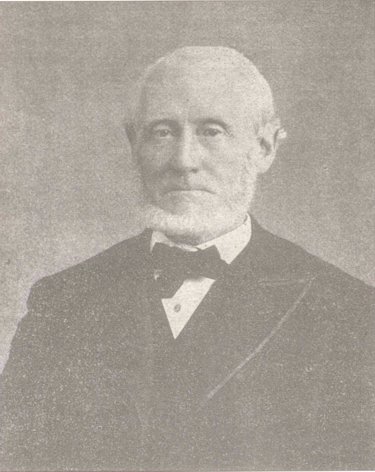 Credit: Photographer unknown (studio portrait, c. 1880s-1892); scan contributed to Find a Grave…Public domainSourceUNSOLVEDListen
92 Second Street, Fall River, Massachusetts (the Borden house) · 1890s
Andrew and Abby Borden were killed with a hatchet at their Fall River, Massachusetts home on August 4, 1892. Andrew's daughter Lizzie Borden was tried and acquitted in 1893; the case remains officially unsolved.
 Credit: U.S. Coast GuardPublic domainSourceSOLVEDListen
Monument Beach, Massachusetts, United States · 2010s
Lisa Trubnikova, a 31-year-old U.S. Coast Guard officer, was fatally shot in her Monument Beach, Massachusetts home on February 5, 2015, by Adrian Loya, a Coast Guard colleague. Her wife Anna was seriously injured. Loya was convicted of first-degree murder in 2017 and sentenced to life without parole.
 Credit: AllyfoundationPublic domainSourceSOLVEDListen
Rest area on Massachusetts Route 24, Bridgewater, Massachusetts · 2000s
Alexandra Zapp, a 30-year-old sailing enthusiast and charity volunteer, was stabbed to death in a Burger King restroom at a Massachusetts rest stop in July 2002 by a Burger King employee and repeat sex offender. He was convicted of first-degree murder in 2003 and sentenced to life without parole.
 Credit: Family/Instagram photograph, widely distributed in press coverageEditorial useSourceSOLVEDListen
Moscow, Idaho · 2022
Four University of Idaho students—Madison Mogen, Kaylee Goncalves, Ethan Chapin, and Xana Kernodle—were fatally stabbed inside an off-campus house in Moscow, Idaho, in the early morning hours of November 13, 2022. Bryan Kohberger, a criminology PhD student at nearby Washington State University, was arrested that December and pleaded guilty in 2025, receiving four consecutive life sentences.
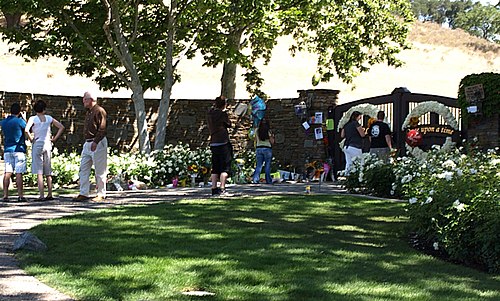 Credit: Mona EshaikerCC BY-SA 3.0SourceSOLVEDListen
Holmby Hills, Los Angeles, California · 2009
Singer Michael Jackson died on June 25, 2009, in Los Angeles from acute propofol intoxication administered by his personal physician, Conrad Murray. The Los Angeles County coroner ruled the death a homicide, and Murray was convicted of involuntary manslaughter in November 2011.
 Credit: RaptacCC BY-SA 4.0SourceSOLVEDListen
Bardstown, Kentucky · 2015
Crystal Rogers, a 35-year-old Bardstown, Kentucky, mother of five, disappeared in July 2015 and has never been found; in 2025, her former boyfriend, Brooks Houck, was found guilty of her murder, and two other men were convicted of related conspiracy and evidence-tampering charges.