
Start here
Did Lizzie Borden Axe Murder Her Parents??! #Crimetober

Kendall Rae's 27-minute breakdown, the fullest single telling on file.
Watch on YouTubeUnsolved case · 1892
Also known as Lizzie Borden case · Borden murders
New drama: Monster: The Lizzie Borden Story (opens the Netflix page in a new tab) (Netflix, Sep 2026)More new releases
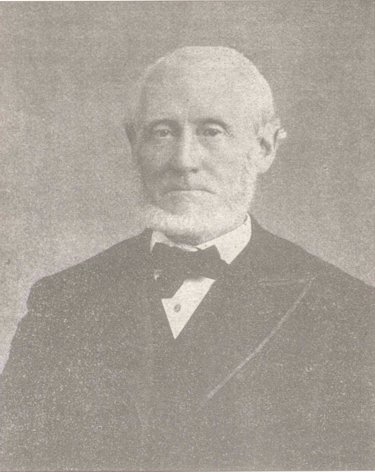 Andrew Jackson BordenCredit: Photographer unknown (studio portrait, c. 1880s-1892); scan contributed to Find a Grave…Public domainSource
The short answer
Andrew and Abby Borden were killed with a hatchet at their Fall River, Massachusetts home on August 4, 1892. Andrew's daughter Lizzie Borden was tried and acquitted in 1893; the case remains officially unsolved.
Did Lizzie Borden Axe Murder Her Parents??! #CrimetoberKendall Rae · 27 min2 pieces from 2 creators: ranked, with duplicates removed and short clips set aside.
Start here
Kendall Rae's 27-minute breakdown, the fullest single telling on file.
Watch on YouTubeLizzie Borden Case | Mental Health, Personality, & Psychopathy
 Dr. Todd GrandeVideo · YouTube · 27 min · 2020
Titles and descriptions are the creators’ own and may not reflect current legal status. The sourced facts are in the file below. Players load only when you press play. Suggest coverage we’re missing.
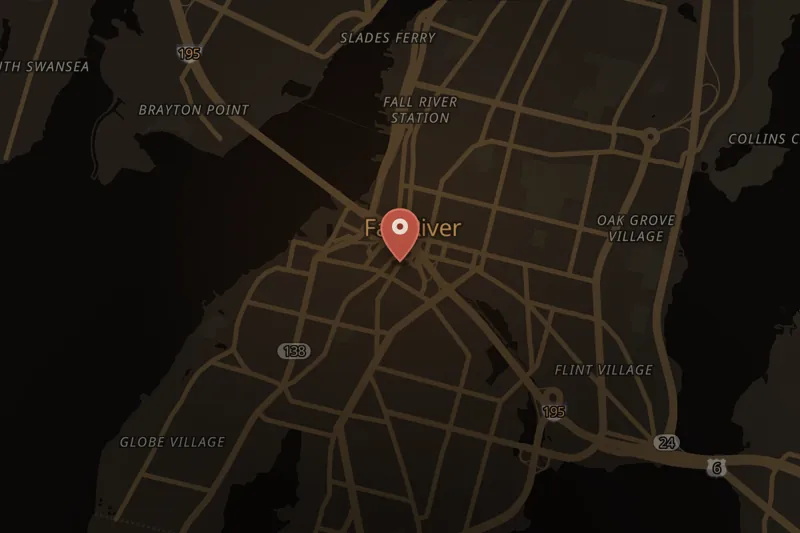
On the morning of August 4, 1892, Andrew Jackson Borden and his wife Abby Durfee Gray Borden were killed in their home at 92 Second Street in Fall River, Massachusetts. Andrew, a 70-year-old property investor and bank director, and Abby, 64, were each struck repeatedly with a hatchet-like weapon. Investigators determined that Abby was attacked first, in an upstairs guest room, and that Andrew was killed roughly an hour and a half later as he rested on a sitting-room sofa on the ground floor.
The household was small. Andrew and Abby lived with Andrew's two adult daughters from his first marriage and a live-in maid; on the morning of the killings only some members of the household were present, and one daughter was away visiting relatives. The maid was occupied with chores when the attacks occurred. There were no reported eyewitnesses to either killing, and no weapon was ever conclusively identified, though hatchets and axes recovered from the basement were examined.
Suspicion soon centered on Andrew's younger daughter, Lizzie Andrew Borden, who was at the property that morning. Police noted inconsistencies in her account of her movements, and she was arrested on August 11, 1892. A grand jury indicted her in December 1892, and her trial opened in New Bedford in June 1893. The prosecution's case was largely circumstantial, and several pieces of proposed evidence were excluded by the court. On June 20, 1893, after a short deliberation, the jury found her not guilty of both killings.
The acquittal was final. Lizzie Borden was never retried, and no other person was ever charged. She returned to Fall River, where she and her sister later bought a larger house, and she lived there until her death in 1927. Public opinion remained divided, and over the following decades writers and researchers proposed alternative theories and other possible suspects. None of these theories has been proven, and the identity of the person responsible has never been established.
The case became one of the most widely discussed unsolved crimes in American history, in part because of the violence of the attacks, the standing of the family, and the unusual spectacle of a woman of Lizzie Borden's background standing trial. It has been retold in books, films, plays, and a well-known folk rhyme, much of which departs from the documented record. As a matter of law and of the historical record, the killings of Andrew and Abby Borden remain unsolved: a jury acquitted the only person ever tried, and no verified account explains who was responsible.
Andrew and Abby Borden are killed with a hatchet-like weapon at 92 Second Street, Fall River, Massachusetts.
Lizzie Borden, Andrew's younger daughter, is arrested.
A grand jury indicts Lizzie Borden on charges related to the two killings.
Lizzie Borden's trial opens in New Bedford, Massachusetts.
The jury acquits Lizzie Borden of both killings; no other person is ever charged.
Lizzie Borden dies in Fall River. The case remains officially unsolved.
Victims first. Every legal label is set from public records and court outcomes, not from the prose.
Andrew Borden's 64-year-old wife and Lizzie's stepmother; killed in the same home on the same morning, apparently before Andrew.[2]
70-year-old property investor and bank director; killed in his Fall River home on the morning of August 4, 1892.[2]
Andrew Borden's younger daughter. She was charged with both killings and tried in New Bedford in 1893; on June 20, 1893 the jury found her not guilty. She was never retried, no other person was ever charged, and no court found her responsible.[2]
Coverage is not a source: every fact in this file rests on the records below.
Are you family of someone named in this file? Corrections and removal requests from victims’ families are prioritized.
 SOLVEDListen
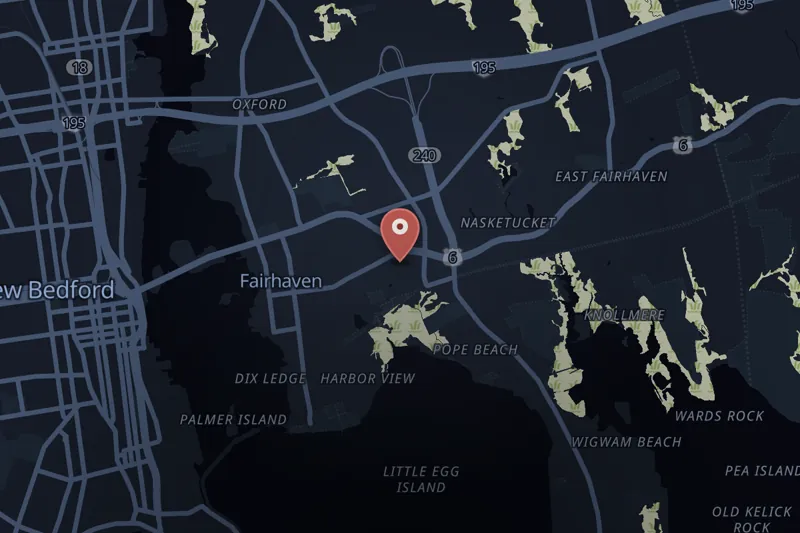
Fairhaven, Massachusetts · 2010s
Conrad Roy III, 18, died by suicide in his truck in Fairhaven, Massachusetts, in July 2014. His girlfriend, Michelle Carter, then 17, was later convicted of involuntary manslaughter for encouraging him via text and, on a final phone call, telling him to get back into his carbon-monoxide-filling truck.
 Credit: AllyfoundationPublic domainSourceSOLVEDListen
Rest area on Massachusetts Route 24, Bridgewater, Massachusetts · 2000s
Alexandra Zapp, a 30-year-old sailing enthusiast and charity volunteer, was stabbed to death in a Burger King restroom at a Massachusetts rest stop in July 2002 by a Burger King employee and repeat sex offender. He was convicted of first-degree murder in 2003 and sentenced to life without parole.
 Credit: NY Daily News, Photo copyright 2013 Lloyd family via the Boston BanditsEditorial useSourceSOLVEDListen
Industrial park, John Dietsch Boulevard, North Attleborough, Massachusetts · 2010s
Odin Lloyd, a semi-professional football player, was shot and killed in an industrial area of North Attleborough, Massachusetts, on June 17, 2013. Former NFL player Aaron Hernandez was convicted of his murder in 2015; two other men were convicted as accessories after the fact.
 Credit: Compiled by "a member of the Chicago Press"; published by Theo A. Patterson, Progressive…Public domainSourceSOLVEDListen
Carter Harrison III residence, Chicago, Illinois · 1893
On October 28, 1893, newspaper distributor Patrick Eugene Prendergast fatally shot Chicago Mayor Carter Harrison III inside Harrison's residence, driven by a delusion that Harrison had wrongfully denied him a city legal appointment. Prendergast was convicted of first-degree murder and hanged in 1894.
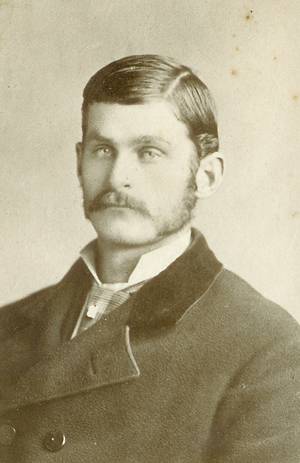 Credit: Wikipedia/Wikimedia Commons (Murder of George E. Bailey); studio portrait c.1885Public domainSourceSOLVEDListen
Breakheart Hill Farm, Saugus, Massachusetts · 1900
George E. Bailey was shot and dismembered at Breakheart Hill Farm in Saugus, Massachusetts, in October 1900. His employee, John C. Best, was convicted of the murder and executed in 1902.
 Credit: Photographer not creditedPublic domainSourceUNSOLVEDListen
Parish Prison, New Orleans, Louisiana · 1891
On March 14, 1891, a mob in New Orleans broke into Parish Prison and killed eleven Italian American men held in connection with the October 1890 killing of police chief David Hennessy, a day after several of the defendants were acquitted at trial. It remains the largest single mass lynching in American history.
 Credit: English WikipediaEditorial useSourceSOLVEDListen
Modesto, California · 2002
Laci Peterson, 27 and eight months pregnant, disappeared from her Modesto, California home on December 24, 2002; her body and that of her unborn son Conner were found in San Francisco Bay in April 2003, and her husband Scott Peterson was convicted in 2004 of murdering both.
 Credit: Family/Instagram photograph, widely distributed in press coverageEditorial useSourceSOLVEDListen
Moscow, Idaho · 2022
Four University of Idaho students—Madison Mogen, Kaylee Goncalves, Ethan Chapin, and Xana Kernodle—were fatally stabbed inside an off-campus house in Moscow, Idaho, in the early morning hours of November 13, 2022. Bryan Kohberger, a criminology PhD student at nearby Washington State University, was arrested that December and pleaded guilty in 2025, receiving four consecutive life sentences.
 Credit: English WikipediaEditorial useSourceSOLVEDListen
Delta, Fulton County, Ohio · 2016
Sierah Joughin, a 20-year-old Ohio college student, was abducted while bicycling home in Fulton County on July 19, 2016, and found dead three days later. James Dean Worley, a neighbor with a 1990 abduction conviction who was not listed in any offender database, was convicted of her murder in 2018 and sentenced to death, prompting Ohio's Sierah's Law, which created a searchable violent-offender registry.
 Credit: CBS News / Travis Alexander (personal photo)Editorial useSourceSOLVEDListen
Mesa, Arizona, United States · 2000s
Travis Alexander, 30, was stabbed, slashed, and shot to death in his Mesa, Arizona home on June 4, 2008. His ex-girlfriend, Jodi Arias, was convicted of first-degree murder in 2013 and sentenced to life without parole in 2015 after two juries deadlocked on the death penalty.
 Image recordEditorial useSourceSOLVEDListen
Austin, Texas · 2022
Moriah Wilson, a 25-year-old professional cyclist, was shot and killed at a friend's residence in Austin, Texas, on May 11, 2022, and Kaitlin Armstrong was later convicted and sentenced to 90 years in prison for the killing.
 Credit: Instagram/@gabspetito, widely distributed in press coverageEditorial useSourceSOLVEDListen
Bridger–Teton National Forest, Wyoming · 2021
Gabby Petito, a 22-year-old travel vlogger, was killed by strangulation and blunt-force trauma in August 2021 while on a cross-country van trip with her fiancé, Brian Laundrie. Laundrie returned to Florida alone, was named a person of interest, and later died by suicide, leaving a note admitting he had killed her.
