Case file
Murder of George E. Bailey

Background
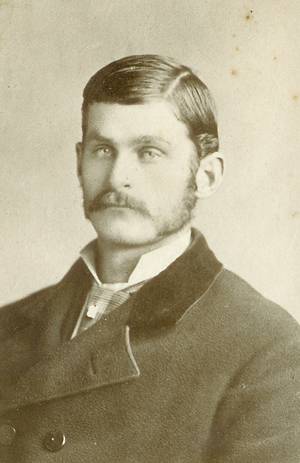
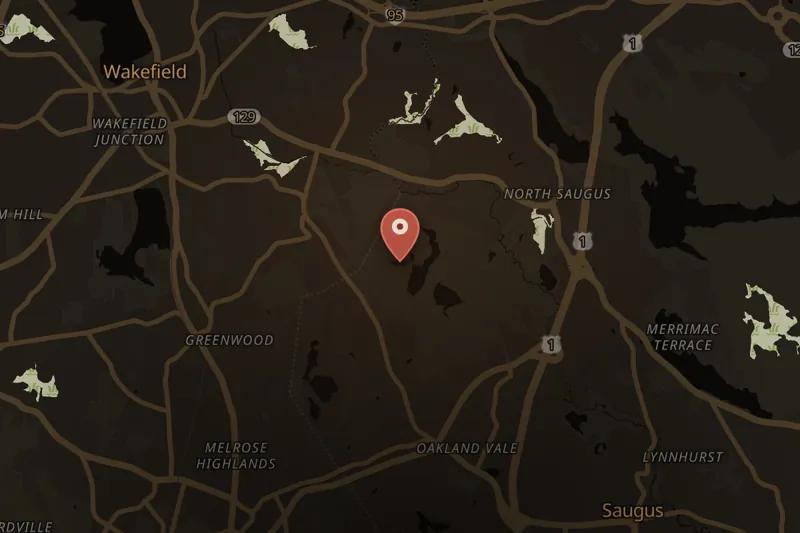
George E. Bailey was born in Whitefield, Maine. After his first wife died, he married Abbie Hilton of Wiscasset, Maine, and worked as a blacksmith. In the spring of 1897, Bailey abandoned Abbie and their six children and left with Susie Young, his wife's half-sister. The couple eventually leased Breakheart Hill Farm, an eighteen-acre farm within the larger Breakheart Hill Forest in Saugus, Massachusetts, from a group of Lynn businessmen known as the Breakheart Hill Forestry. Bailey also worked as a caretaker for the association's hunting camps.
John Courtney Best, born in Sackville, New Brunswick, moved to Lynn, Massachusetts, and worked in shoe manufacturing before being hired by Bailey to work at Breakheart Hill. By May 1900 Best had returned to the farm full-time, working the land in exchange for lodging and a share of crop profits. Bailey and Best each complained about the other to outsiders — Bailey called Best lazy and a drinker, while Best accused Bailey of cruelty to animals and withholding pay.
Disappearance and discovery
In late September 1900, Susie Young left the farm to visit her ailing mother in Maine, leaving Bailey and Best alone at Breakheart Hill. On the night of October 8, 1900, neighbors reported hearing gunshots and later the sounds of a wagon travelling to and from the farm and toward Floating Bridge Pond. Bailey was never seen alive again. Best told neighbors and the property's owners that Bailey had fled, suggesting he was avoiding Maine authorities over unpaid support for his abandoned family.
On October 17, 1900, the dismembered trunk of a body was recovered from Floating Bridge Pond, with two bullet wounds in the chest; the legs were found later that day. Police and witnesses identified the remains as Bailey's through clothing, shoes, and a watch bag made by Young. Investigators traced burlap sacks used to weigh down the remains to Bailey's grain supplier, quantities of which were also found at the farm.
Investigation and trial
The Massachusetts State Police, led by George C. Neal, along with Lynn and Saugus police, investigated the case. A search of the farmhouse turned up a recently fired rifle, a matching bullet, and blood stains. Best was taken into custody on suspicion of murder. He was indicted on January 25, 1901, and pleaded not guilty on January 30. At trial, which began March 18, 1901, evidence emerged that Best had hidden Bailey's watch, cash, and other items in the farm's barn. On March 28, 1901, a jury convicted Best of first-degree murder.
Appeals, sentence, and execution
Best's appeals were unsuccessful, and Governor Winthrop M. Crane denied a plea for clemency. Best was sentenced to death and was executed in the electric chair at Charlestown State Prison on September 9, 1902 — the first person from Essex County sentenced to that method of execution. Bailey was buried in Whitefield, Maine; Best was buried at the Concord Reformatory Cemetery.

Key facts
- Victims
- George E. Bailey
- Date
- 1897
- Location
- Breakheart Hill Farm, Saugus, Massachusetts
- Case status
- solved
Case timeline
1897
Bailey abandons his wife and children and leaves with Susie Young.
1897-10
Bailey and Young lease Breakheart Hill Farm in Saugus, Massachusetts.
1900-05
John C. Best returns to Breakheart Hill Farm to work full-time.
1900-09-27
Susie Young leaves the farm to visit her sick mother in Maine, leaving Bailey and Best alone.
1900-10-08
Gunshots are heard near Breakheart Hill Farm; Bailey is last seen alive and later found to have been killed.
1900-10-17
The dismembered trunk of Bailey's body is found in a bag at Floating Bridge Pond; legs are found later the same day.
1900-10-18
Search of the farmhouse yields a recently fired rifle and blood stains; Best is taken into custody on suspicion of murder.
1900-10-22
Susie Young returns from Maine and identifies apparent cleaned bloodstains in the farmhouse storeroom.
1900-10-23
Bailey's body is transported to Maine for burial in Whitefield.
1901-01-25
Best is indicted for the murder of George E. Bailey.
1901-01-30
Best is arraigned and pleads not guilty.
1901-03-18
Trial begins; jury selection occurs the same morning.
1901-03-28
Jury convicts Best of first-degree murder.
1902-01-06
Defense exceptions are argued before the Massachusetts Supreme Judicial Court.
1902-02-27
The Supreme Judicial Court overrules the defense's exceptions.
1902-03-15
Motion for new trial is overruled.
1902-06-14
Best is sentenced to death in the electric chair.
1902-08-06
Governor Winthrop M. Crane and Executive Council reject Best's plea for commutation.
1902-08-28
Best is transported from Salem jail to Charlestown State Prison.
1902-09-09
Best is executed by electric chair at Charlestown State Prison.
1901-04-12
Henry Cole, Bailey's successor as caretaker of Breakheart Hill, disappears and is never seen again.
1934
The Breakheart Hill property is sold and later becomes Breakheart Reservation state park.
Best coverage
No approved coverage links are attached yet.
People
George E. Bailey
VICTIMBlacksmith and farm caretaker killed at Breakheart Hill Farm in October 1900.
John C. Best
CONVICTEDConvicted of first-degree murder in the killing of George E. Bailey; executed by electric chair in 1902.
Roles reflect public records and court outcomes at the time of writing — supporting citations are on file under Sources.
Places
Common questions
- What happened to the victim?
- George E. Bailey was shot and dismembered at Breakheart Hill Farm in Saugus, Massachusetts, in October 1900. His employee, John C. Best, was convicted of the murder and executed in 1902.
- Where did the murder happen?
- Breakheart Hill Farm, Saugus, Massachusetts.
- Who was convicted?
- John C. Best (Convicted of first-degree murder in the killing of George E. Bailey; executed by electric chair in 1902.).
- What is the current status of the case?
- Status: solved.
Sources
- Murder of George E. Baileywikipedia · Wikipedia · 2026-07-07
- Contemporaneous coverage — masscases.comnews · masscases.com · 2026-07-07
- Contemporaneous coverage — digitalheritage.noblenet.orgnews · digitalheritage.noblenet.org · 2026-07-07