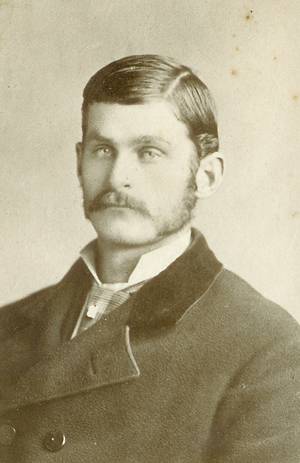
On May 25, 1893, eleven people, including an infant, were killed in a series of attacks in the Kawachi region of Japan. The episode became known as the Kawachi Jūningiri (河内十人斬り). It was carried out by two men, Kumatarō Kido (c. 1857–1893) and his pupil Yagorō Tani, who took their own lives afterward. Their remains were discovered on June 7, 1893, about two weeks later.
According to the historical account, the killings had both emotional and financial roots. Kido had been in a common-law marriage, but his partner left him for a rival named Torajirō Matsunaga. Kido had also lost part of his money through fraud and had been physically assaulted in a dispute connected to the same family. Holding the Matsunaga family responsible, Kido decided to kill them and recruited Tani, a pupil of his, to help carry out the plan.
The two men armed themselves with hunting guns and Japanese swords. On May 25, 1893, they first attacked one Matsunaga household, where four people were killed, and then attacked the home of a relative, where five more died. Among the dead were Kido's former common-law partner and her mother. The attackers did not manage to kill Torajirō Matsunaga, who had been a central target of the plan.
Both men died by suicide after the attacks, and their bodies were found on June 7, 1893. The available account records eleven deaths in total, including the infant, but does not individually name most of the people who were killed. It identifies the surviving intended target, Torajirō Matsunaga, and describes two of the victims through their family ties to Kido — his former common-law partner and his former mother-in-law. Because both men had died, the killings did not lead to a trial.
The case has remained part of Japanese cultural memory under the name Kawachi Jūningiri. A novel, Kokuhaku, by the Japanese punk-rock singer Kō Machida, was based on the events.


 Credit: MASA (talk)CC BY-SA 3.0SourceSOLVEDListen