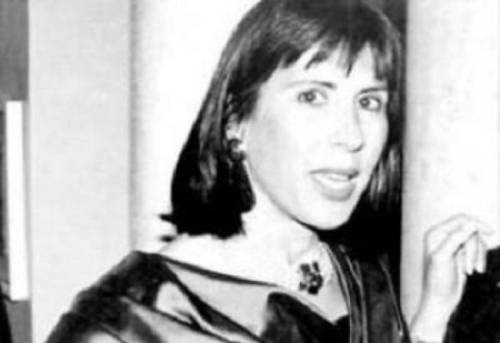
Wilma Montesi was a 21-year-old woman living in Rome who was engaged to be married and hoping to work in the film industry. On 9 April 1953 she left her family's apartment on via Tagliamento in Rome and did not return home. Her mother and sister had spent the afternoon at the cinema; the building's caretaker reported seeing Wilma leave around 5:30pm. Witnesses later claimed to have seen her on a train from Rome to Ostia and at a postcard kiosk near the beach there, though Ostia is roughly 20 km from where her body was ultimately found.
On the morning of Saturday, 11 April 1953 — the day before Easter — a labourer named Fortunato Bettini discovered a woman's body on the beach at Torvaianica, near Rome. The body was partially dressed, with the shoes, skirt, stockings, garter belt, and handbag missing, and was lying with its head in the water. Press access to the mortuary was officially barred, but a reporter for Il Messaggero, Fabrizio Menghini, gained access and published a description that allowed Wilma's father, Rodolfo Montesi, to identify the body.
An autopsy at Rome's Institute of Forensic Medicine concluded that the probable cause of death was a fainting episode ("syncope") triggered by a foot bath in cold seawater, compounded by menstruation, followed by drowning. The autopsy also found that Montesi was a virgin and showed no clear signs of violence, with her makeup and nail varnish undisturbed; no drugs or alcohol were detected. A different examining doctor, Professor Pellegrini, later suggested that sand found in her intimate area could indicate violence. Police initially closed the case as an accidental death, but the distance between the last reported sighting in Ostia and the discovery site fueled skepticism in the press.
Starting in May 1953, newspapers including the monarchist paper Roma, Corriere della Sera, Paese Sera, and the communist magazine Vie Nuove advanced theories of a cover-up protecting politically connected individuals. A journalist for Vie Nuove, Marco Cesarini Sforza, identified a figure known as "the blond" as Piero Piccioni, a film composer and son of Christian Democrat Deputy Prime Minister Attilio Piccioni, and reported links to Ugo Montagna. Piero Piccioni sued Cesarini Sforza and the magazine's editor for defamation. After interrogation and pressure, including from his own party and legal counsel, Cesarini Sforza recanted his statements on 31 May 1953 and made a charitable payment, after which Piccioni withdrew the suit.
Montagna and Piccioni were named in connection with the scandal but were subsequently absolved of all charges. The case remains officially unsolved, including the precise cause of Montesi's death. The affair became a landmark scandal in postwar Italian politics and media, and has been cited as an inspiration for works including Federico Fellini's 1960 film La Dolce Vita.


 Credit: a member of the Red BrigadesPublic domainSourceSOLVEDListen