
Start here
Coffee and Crime Time: Emanuela Orlandi and Vatican City

Stephanie Harlowe's 19-minute overview: the quickest complete way into the case.
Watch on YouTubeBefore you continue
This case involves sexual violence and crimes against children. Casepin presents the record in neutral, non-graphic language. Choose whether to continue.
Ongoing case · 1983
Ongoing case: this file carries charge-sheet facts only. Anyone charged is presumed innocent unless convicted.
The short answer
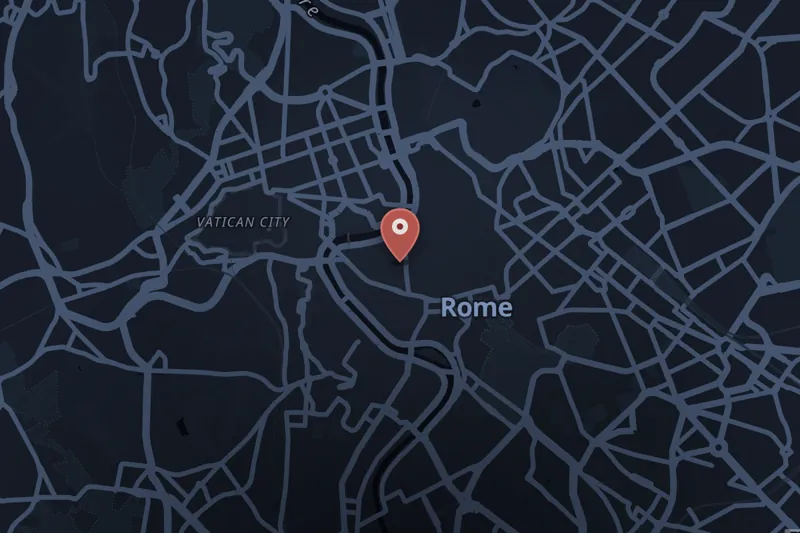
Emanuela Orlandi, a 15-year-old Vatican citizen, disappeared in Rome on 22 June 1983 after a flute lesson.
Start hereCoffee and Crime Time: Emanuela Orlandi and Vatican CityStephanie Harlowe · 19 minThe coverage index
1 piece from 1 creator: ranked, with duplicates removed and short clips set aside.
Start here
Video · YouTube · 19 min · 2019
Stephanie Harlowe's 19-minute overview: the quickest complete way into the case.
Watch on YouTubeTitles and descriptions are the creators’ own and may not reflect current legal status. The sourced facts are in the file below. Players load only when you press play. Suggest coverage we’re missing.
The case file
Emanuela Orlandi was born on 14 January 1968, the fourth of five children of a lay employee of the papal household; her family lived inside Vatican City, and she also sang in a Vatican parish choir. On 22 June 1983, the 15-year-old left home in the late afternoon for a flute lesson at a music school near Piazza Navona in Rome. After class, she told her sister by phone that a cosmetics-company representative had offered her paid work handing out flyers at a fashion show; her sister urged her to discuss it with their parents first. Leaving the school, Orlandi mentioned the offer to two classmates, who left her at a bus stop on Corso Rinascimento, in front of Palazzo Madama. She was last seen there, around 7:30 p.m., with another girl who was never identified. Her family searched for her that night and contacted police; she was declared officially missing the next morning, and notices ran in Rome's newspapers within two days.
On 3 July 1983, the Pope made a public appeal for her release, formally raising the possibility of kidnapping for the first time. Two days later, a caller identifying himself only as "the American" began the first of sixteen calls claiming to represent a group holding Orlandi hostage in exchange for the release of the Turkish gunman who had shot the Pope in May 1981; as proof, the caller played a recording of Orlandi's voice. On 17 July 1983, investigators recovered a cassette recording, left at the alleged kidnappers' instruction, that purported to capture a girl being tortured; police told the family they did not believe the recording was of Emanuela. On 4 August 1983, a previously unknown group calling itself the Turkish Anti-Christian Turkesh Liberation Front sent a written claim that it, too, was holding Orlandi along with another 15-year-old girl who had vanished in Rome six weeks earlier. None of the callers or letter-writers ever produced verifiable proof that Orlandi was alive. A first judicial investigation, running from 1983 to 1997, closed without resolution; prosecutors concluded the international-terrorism kidnapping narrative had been a deliberate misdirection and that Orlandi's actual fate remained unknown.
Over the next four decades, various theories emerged about her disappearance: a possible connection to a Rome organized-crime gang, publicized in 2005 after the unexplained burial of one of its leaders inside a Vatican-affiliated basilica crypt became public; unproven claims that she had been targeted by clergy connected to child sexual abuse within the Vatican; and a hypothesis that she was one of several girls killed by an unidentified offender active in Rome in the 1980s. None of these theories has been substantiated, and no one has ever been charged in connection with her disappearance. A second judicial investigation ran from 2008 to 2015 and also closed without resolution. In 2019, forensic examiners opened two nineteenth-century tombs inside a Vatican cemetery after an anonymous tip; neither Orlandi's remains nor the tombs' original occupants were found, though an unexplained empty chamber was discovered beneath them.
On 9 January 2023, the Vatican opened its first official investigation into Orlandi's disappearance, appointing prosecutor Alessandro Diddi to lead the inquiry. On 15 May 2023, Rome's public prosecutor opened a third, parallel investigation, and Italy's parliament moved to create a bicameral commission examining her case alongside another 1983 disappearance. More than four decades after she vanished, Orlandi's remains have never been found, no one has been charged, and her case remains open under simultaneous Vatican, Italian judicial, and parliamentary inquiry.
18 dated entries · 1968–2023
Emanuela Orlandi is born, the fourth of five children of a lay employee of the papal household; the family lives inside Vatican City.
Orlandi disappears in Rome after a flute lesson; she is last seen around 7:30 p.m. at a bus stop on Corso Rinascimento, in front of Palazzo Madama, with another girl who was never identified.
Orlandi is officially declared missing after her family searches for her overnight and contacts police.
The Pope makes a public appeal for Orlandi's release, formally raising the possibility of kidnapping for the first time.
A caller identifying himself only as "the American" begins a series of calls claiming to hold Orlandi in exchange for the release of the Turkish gunman who shot the Pope in 1981.
Investigators recover a cassette recording, left at the alleged kidnappers' instruction, purporting to capture a girl being tortured; police tell the family they do not believe it is a recording of Orlandi.
A previously unknown group calling itself the Turkish Anti-Christian Turkesh Liberation Front sends a written claim that it is holding Orlandi and another missing 15-year-old girl.
The Pope visits the Orlandi family and describes the case as one of international terrorism.
The first judicial investigation, opened in 1983, closes without resolution; prosecutors conclude the international-terrorism kidnapping narrative was a deliberate misdirection.
An anonymous call to an Italian television program leads to the discovery of a Rome organized-crime leader's grave inside a Vatican-affiliated basilica crypt, prompting theories linking his gang to Orlandi's disappearance.
A second judicial investigation into Orlandi's disappearance opens.
Weeks after his election, a newly chosen Pope tells the Orlandi family that Emanuela "is in heaven," a remark the family takes as an acknowledgment that the Vatican knows what happened to her.
The second judicial investigation closes without resolution.
Forensic examiners open two nineteenth-century tombs inside a Vatican cemetery following an anonymous tip; neither Orlandi's remains nor the tombs' original occupants are found, but an unexplained empty chamber is discovered beneath them.
A Netflix documentary series on Orlandi's disappearance is released, renewing public attention on the case.
The Vatican opens its first official investigation into Orlandi's disappearance, appointing prosecutor Alessandro Diddi to lead the inquiry.
Rome's public prosecutor opens a third, parallel investigation into the case.
The Italian Senate unanimously approves a bicameral parliamentary commission to investigate Orlandi's disappearance alongside the other 1983 case.
2 named in this file
Victims first. Every legal label is set from public records and court outcomes, not from the prose.
Vatican citizen who disappeared in Rome on 22 June 1983 at age 15; the case remains unresolved as of the Vatican, Italian, and parliamentary investigations reopened in 2023.[3]
Prosecutor appointed in January 2023 to lead the Vatican's first official investigation into Emanuela Orlandi's disappearance.[3]
3 cited
Coverage is not a source: every fact in this file rests on the records below.
PressThe GuardianAccessed Jul 12, 2026
PressThe TelegraphAccessed Jul 12, 2026
EncyclopedicWikipediaAccessed Jul 12, 2026
Trust
Are you family of someone named in this file? Corrections and removal requests from victims’ families are prioritized.
Near this case
 Credit: a member of the Red Brigades·Public domain·SourceSOLVEDListen
Via Michelangelo Caetani, Rome, Italy · 1970s
On 16 March 1978, Red Brigades gunmen ambushed former Italian prime minister Aldo Moro's car in Rome, killing his five bodyguards and kidnapping him. After 54 days in captivity, Moro was shot and killed on 9 May 1978. An Italian court sentenced 32 Red Brigades members to life imprisonment in 1983.
 Credit: Riccardov·Public domain·SourceSOLVEDListen
Sapienza University of Rome campus · 1990s
Marta Russo, a 22-year-old law student, was fatally shot on the grounds of Sapienza University of Rome in May 1997, in a heavily publicised and contested case that ended in manslaughter convictions.
 Credit: Italian Wikipedia ; newspaper photo circulated at the time of the 1991 murder·Editorial use·SourceSOLVEDListen
Villa in Olgiata, Rome, Italy · 2000s
Alberica Filo della Torre, a 42-year-old Roman noblewoman, was beaten and strangled in her locked bedroom at a villa in Olgiata, Rome, on 10 July 1991. The case went unsolved for 20 years until 2011 DNA evidence and a confession led to the conviction of Manuel Winston Reyes, a former domestic employee of the family.
 Credit: Naitsabes101·CC BY-SA 4.0·SourceUNSOLVEDListen
Prince George, British Columbia, Canada · 1989
In August 1989, an Indigenous family of four — Ronald and Doreen Jack and their sons Russell and Ryan — vanished from Prince George, British Columbia, after accepting a purported logging-camp job offer from an unidentified man who drove them away in his pickup truck. None have been seen since.
 OVERTURNEDListen
Bush near Thames, Coromandel Peninsula, New Zealand · 1989
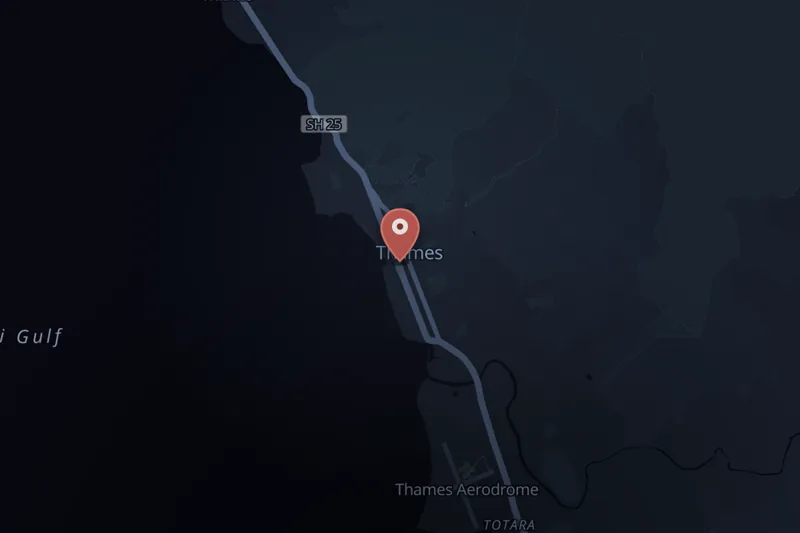
Swedish tourists Urban Höglin and Heidi Paakkonen disappeared while tramping on New Zealand's Coromandel Peninsula in April 1989. David Wayne Tamihere was convicted of their murder in 1990, largely on testimony from prison informants, one of whom was later convicted of perjury. His conviction was upheld on appeal in 2024 despite findings of a miscarriage of justice, but was quashed by the Supreme Court of New Zealand in March 2026; the Crown had until 30 September 2026 to decide whether to seek a retrial.
 Credit: Dadnarg·CC BY-SA 4.0·SourceUNSOLVEDListen
Sutton High Street, Sutton, London · 1988
Lee Boxell, a 15-year-old schoolboy from Cheam, London, disappeared on 10 September 1988 after being seen on Sutton High Street. He has never been found, and investigators later theorised he may have died intervening in sexual abuse at an unofficial youth club linked to a convicted abuser.
Also covered by
 Credit: CBS News / Travis Alexander (personal photo)·Editorial use·SourceSOLVEDListen
Mesa, Arizona, United States · 2000s
Travis Alexander, 30, was stabbed, slashed, and shot to death in his Mesa, Arizona home on June 4, 2008. His ex-girlfriend, Jodi Arias, was convicted of first-degree murder in 2013 and sentenced to life without parole in 2015 after two juries deadlocked on the death penalty.
 Credit: English Wikipedia·Editorial use·SourceSOLVEDListen
Modesto, California · 2002
Laci Peterson, 27 and eight months pregnant, disappeared from her Modesto, California home on December 24, 2002; her body and that of her unborn son Conner were found in San Francisco Bay in April 2003, and her husband Scott Peterson was convicted in 2004 of murdering both.
 Image record·Editorial use·SourceSOLVEDListen
Austin, Texas · 2022
Moriah Wilson, a 25-year-old professional cyclist, was shot and killed at a friend's residence in Austin, Texas, on May 11, 2022, and Kaitlin Armstrong was later convicted and sentenced to 90 years in prison for the killing.
 Credit: Instagram/@gabspetito, widely distributed in press coverage·Editorial use·SourceSOLVEDListen
Bridger–Teton National Forest, Wyoming · 2021
Gabby Petito, a 22-year-old travel vlogger, was killed by strangulation and blunt-force trauma in August 2021 while on a cross-country van trip with her fiancé, Brian Laundrie. Laundrie returned to Florida alone, was named a person of interest, and later died by suicide, leaving a note admitting he had killed her.