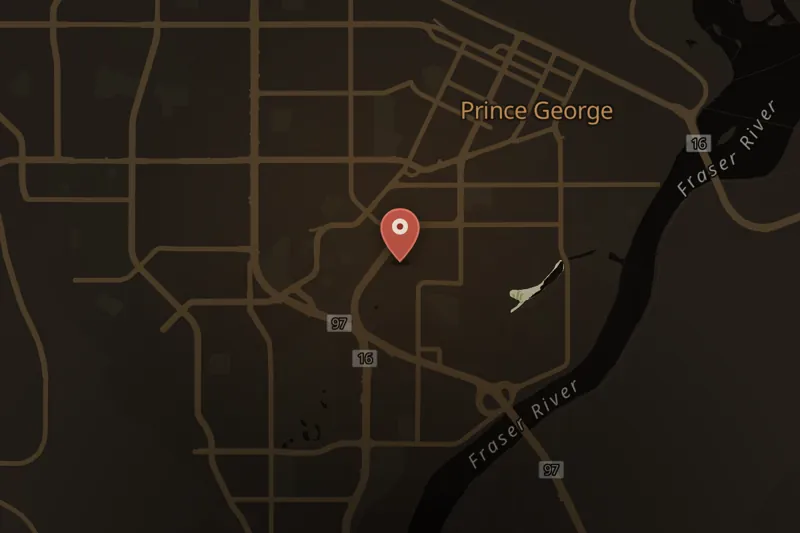
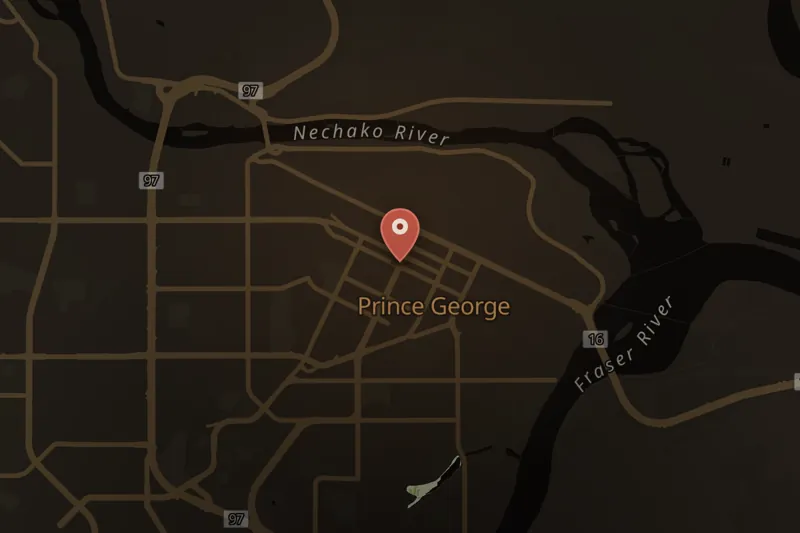
Ronald Jack (born March 29, 1963) and Doreen Jack (born April 24, 1963), both members of the Cheslatta Carrier Nation, disappeared along with their sons Russell, 9, and Ryan, 4, on or around August 2, 1989. The couple had relocated to Prince George, British Columbia, roughly a year earlier after Ronald lost his sawmill job to a back injury, and the family was living on welfare with mounting debts by the time of the disappearance.
On the night of August 1, 1989, Ronald visited the First Litre pub near the family's rented home on Strathcona Avenue. There he was approached by an unidentified white man, described as in his late 30s, 183–198 cm tall and 91–125 kg, with reddish-brown hair, a full beard, and wearing a ball cap, red checkered work shirt, blue jeans, a blue nylon jacket, and boots with leather toe fringes. The man offered Ronald and Doreen jobs at a logging camp near Cluculz Lake, roughly 40 kilometres west of Prince George, with Doreen working as camp cook and childcare provided for the boys. The man offered to drive the family to the camp that night in his four-wheel-drive pickup truck.
In the early morning hours of August 2, Ronald called relatives in Burns Lake, first trying unsuccessfully to arrange care for his sons, then speaking to his mother, Mabel Jack, and telling her to look for him if he did not return. Relatives of Doreen, including her sister Lorene, witnessed the family loading belongings into the man's pickup truck. The family was not seen again.
Ronald's mother reported the family missing in late August 1989 after losing contact with her son for several weeks. Investigators found the family's furniture, clothing, and the children's school records still at the Strathcona Avenue residence. Family members have said they received inadequate support from outside organizations during the initial search, which they attributed to the family's Indigenous background. On September 7, 1989, the RCMP's Prince George detachment mistakenly reported the family had been found, temporarily closing the case. A CrimeStoppers reenactment aired in 1990, and fundraising efforts for reward money continued into 1992.
On January 28, 1996, an anonymous caller to the RCMP's Vanderhoof detachment stated that "the Jack family are buried at the south end" of an unnamed ranch before hanging up. The call was traced to a house in Stoney Creek where a party was underway; police were unable to identify all attendees, and the caller never came forward again despite public appeals, including one renewed in 2018. In August 2019, police used ground-penetrating radar to search property of the Saik'uz First Nation south of Vanderhoof but found no evidence related to the family. As of August 2020, the RCMP maintained an open case file. The case is frequently discussed alongside other unsolved disappearances and killings of Indigenous people along British Columbia's Highway 16, known as the Highway of Tears.


 COLDListen