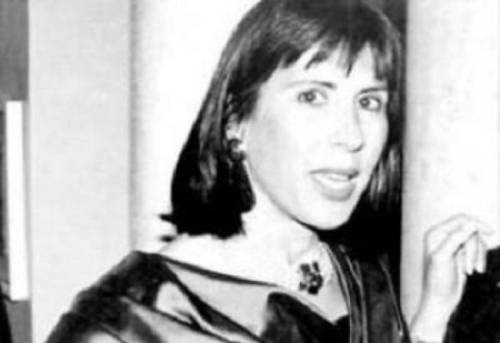
On 9 May 1997, Marta Russo, a 22-year-old law student at the Sapienza University of Rome, was struck by a .22 calibre bullet at about 11:42 as she walked with a friend along a driveway between the university's schools of Statistical Sciences, Law and Political Science. She was taken to the nearby Policlinico Umberto I, where she died on 14 May without regaining consciousness. In keeping with a wish she had expressed earlier, her parents donated her organs. The shooting drew intense national attention, partly because the victim appeared to have been struck at random and no motive was ever established.
Forensic tests initially reported traces of gunpowder on the sill of a second-floor reading-room window in the legal philosophy department, but in 1998 an expert concluded that the residues were environmental pollution rather than gunpowder. Investigators focused on the roughly 25 people who regularly used the room. Telephone records and a series of contested witness statements led to accusations against two junior lecturers in the department and a department usher, none of whom had a criminal record or an apparent motive. The inquiry became controversial after a secret-service recording of a witness interrogation emerged, and Prime Minister Romano Prodi publicly described the conduct of two prosecutors as a "very serious matter."
The case received extraordinary coverage; proceedings were broadcast live on radio, and campus shootings were essentially unknown in Italy at the time. More than 10,000 students attended Russo's funeral, alongside Prime Minister Prodi and Italian President Oscar Luigi Scalfaro, while Pope John Paul II sent a message of condolence. Public opinion was sharply divided over the guilt of the accused, and several prominent figures publicly asserted their innocence.
The trial began in June 1998. In June 1999 Giovanni Scattone was convicted of involuntary manslaughter and Salvatore Ferraro of aiding and abetting, while a third accused man, Francesco Liparota, was acquitted. An appeal confirmed the convictions in 2001, but that December the Supreme Court of Cassation annulled the verdict for lack of evidence. A further appeal reinstated the convictions in 2002, and they were confirmed definitively in 2003, with final sentences of five years and four months for Scattone and four years and two months for Ferraro. Liparota, convicted on appeal, was ultimately dismissed of all charges, as was a law professor earlier accused of reticence.
Scattone and Ferraro have consistently maintained their innocence and said they were framed. Both served their sentences, and in 2011 they were ordered to pay civil compensation to Russo's parents and sister. The prosecutors whose conduct had been criticised were themselves accused of misconduct but were absolved by the criminal court of Perugia.


 Credit: a member of the Red BrigadesPublic domainSourceSOLVEDListen