Start here
3 people saw something NO ONE else could, right before they VANISHED

MrBallen's 14-minute overview: the quickest complete way into the case.
Watch on YouTubeUnsolved case · 2008
 BRANDON VICTOR SWANSON - MARSHALL, MINNESOTACredit: FBIPublic domainSource
The short answer
Brandon Swanson, a Minnesota college student, disappeared in the early hours of May 14, 2008, after a phone call to his parents ended abruptly when he exclaimed "Oh, shit!" and went silent.
3 people saw something NO ONE else could, right before they VANISHEDMrBallen · 14 min2 pieces from 2 creators: ranked, with duplicates removed and short clips set aside.
Start here
MrBallen's 14-minute overview: the quickest complete way into the case.
Watch on YouTubeCollege Student Disappears from Field While Talking to Father on Phone | Brandon Swanson Analysis
 Dr. Todd GrandeVideo · YouTube · 15 min · 2023
Titles and descriptions are the creators’ own and may not reflect current legal status. The sourced facts are in the file below. Players load only when you press play. Suggest coverage we’re missing.
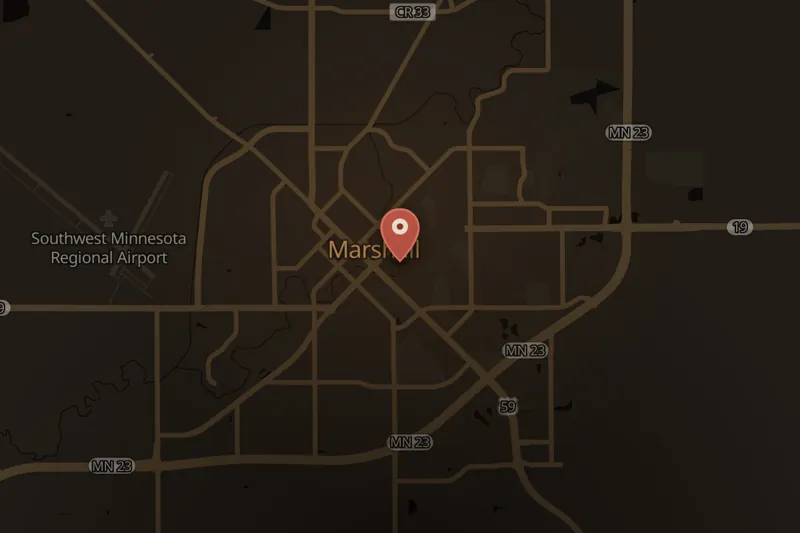
Brandon Swanson, born January 30, 1989, lived in Marshall, Minnesota. After graduating from Marshall High School in 2007, he spent a year studying wind turbines at Minnesota West Community and Technical College's Canby campus. Classes ended for the academic year on May 13, 2008, and Swanson stayed in Canby that evening to celebrate with friends at two parties, where he drank alcohol but did not appear visibly intoxicated.
Swanson left Canby before midnight for the roughly 30-mile drive home. Just before 2 a.m. on May 14, 2008, he called his parents, Annette and Brian Swanson, and said he had driven his Chevrolet Lumina into a ditch and could not free it. Unhurt, he asked them to pick him up. His parents drove out in their pickup truck toward where they believed he was, staying on the phone through occasional hangups and dropped signal; Swanson flashed his headlights to signal them, and they did the same, but neither saw the other's lights. He eventually left the car to walk toward distant lights he believed marked the town of Lynd, about seven miles southwest of Marshall, and told his father to wait for him in a bar parking lot there. About 47 minutes into the call, shortly after 2:30 a.m., Swanson interrupted himself, exclaiming "Oh, shit!", then fell silent. His parents' repeated attempts to call him back went unanswered, and he has not been seen or heard from since.
Swanson's parents reported him missing to police in Lynd at 6:30 a.m.; officers initially told them it was not unusual for a young man his age to stay out overnight after the last day of classes. A search of the town found no trace of him, and the Lyon County sheriff's office, led by Joel Dahl, joined the investigation. Cell phone records showed his calls had actually come from near Taunton, along State Highway 68, about 25 miles from Lynd in a different direction than described. Searching that area, deputies found Swanson's car abandoned in a ditch off a gravel road near the Lincoln County line, its doors open and keys missing, bringing Lincoln County Sheriff Jack Vizecky's office into the case; the car was otherwise undamaged, and the surrounding grass and gravel left no tracks. Extensive searches — including aerial flyovers, bloodhounds, boats, horses, and all-terrain vehicles — focused on the Yellow Medicine River, where a bloodhound trail followed field roads toward the water, but no body was found. Vizecky said he could not rule out foul play, though no evidence supported it, while Annette Swanson has said she does not believe her son drowned there, noting the trail crossed to the far bank rather than ending at the water; she told CNN, "there really is nothing to indicate that he's in the river."
Seasonal ground searches continued through 2011, covering 122 square miles, and Sheriff Vizecky walked a stretch of the river daily for 30 days after the initial search, while Swanson's parents left their porch light on nightly for years. The Minnesota Bureau of Criminal Apprehension took over the case in 2010 and ran a tip line that had logged 90 leads by 2015, by which time investigators' focus had shifted toward Mud Creek, a Yellow Medicine River tributary.
Frustrated by the initial police response, Swanson's parents lobbied Minnesota lawmakers for a change in how missing-adult reports are handled; the resulting "Brandon's Law" requires police to begin investigating a missing-adult report promptly and assess whether the person may be in danger. It passed the legislature and was signed by Governor Tim Pawlenty in May 2009, taking effect that July.
Brandon Swanson is born.
Swanson graduates from Marshall High School.
Classes end for the academic year at Minnesota West Community and Technical College's Canby campus; Swanson stays in Canby to celebrate with friends.
Swanson drives into a ditch on the way home from Canby and calls his parents; 47 minutes into the call he exclaims "Oh, shit!" and goes silent, and he is not seen or heard from again.
Swanson's parents report him missing to Lynd police; cell phone records and a search later place his abandoned car in a ditch near the Lincoln County line, close to Taunton.
Brandon's Law passes the Minnesota Legislature and is signed by Governor Tim Pawlenty.
Brandon's Law, requiring police to promptly investigate reports of missing adults, takes effect.
The Minnesota Bureau of Criminal Apprehension takes over as lead agency on the case and sets up a tip line.
Seasonal ground searches, ongoing since 2008, have by this point covered a cumulative 122 square miles.
The tip line has logged 90 leads, and investigators' focus has shifted toward Mud Creek, a tributary of the Yellow Medicine River.
Victims first. Every legal label is set from public records and court outcomes, not from the prose.
Missing since May 14, 2008, after driving into a ditch near Taunton, Minnesota, and going silent partway through a phone call to his parents.[3]
Lincoln County sheriff whose office located Swanson's abandoned car and led search efforts along the Yellow Medicine River.[3]
Lyon County sheriff whose office joined the search after Swanson's disappearance was reported.[3]
Coverage is not a source: every fact in this file rests on the records below.
Are you family of someone named in this file? Corrections and removal requests from victims’ families are prioritized.
 Credit: UnknownPublic domainSourceSOLVEDListen
Gitchie Manitou State Preserve, Lyon County, Iowa · 1970s
On the night of November 17, 1973, three brothers ambushed five teenagers camping at Gitchie Manitou State Preserve in Iowa, shooting four of them dead and kidnapping and raping the fifth, a 13-year-old girl, who survived and later helped identify the killers.
 SOLVEDListen
Near Lake Alvin, Lincoln County, South Dakota · 1990s
Nine-year-old Becky O'Connell was abducted, raped, and murdered in Sioux Falls, South Dakota, in May 1990. Donald Eugene Moeller was convicted of the crime and executed by lethal injection in 2012 after confessing shortly before his death.
 SOLVEDListen
Rocori High School, Cold Spring, Minnesota, United States · 2000s
On September 24, 2003, a 15-year-old freshman shot two students at Rocori High School in Cold Spring, Minnesota, killing 17-year-old Aaron Rollins that day and fatally wounding 14-year-old Seth Bartell, who died 16 days later.
 Credit: FBIPublic domainSourceONGOINGListen
Orlando, Florida, United States · 2006
Jennifer Joyce Kesse, a 24-year-old finance manager, disappeared from her home in Orlando, Florida, between January 23 and 24, 2006; her car was found abandoned about a mile away two days later, and she has never been found.
 Credit: AuburnPilot at English WikipediaPublic domainSourceUNSOLVEDListen
Oranjestad, Aruba · 2005
Natalee Holloway, an 18-year-old Alabama high school graduate, disappeared during a graduation trip to Aruba on May 30, 2005, and has never been found; Joran van der Sloot, last seen with her that night, was never charged over her disappearance in Aruba but later pleaded guilty to related U.S. extortion and wire-fraud charges and confessed to killing her.
 Credit: Federal Bureau of InvestigationPublic domainSourceUNSOLVEDListen
Washington, D.C. · 2014
An 8-year-old girl living at a Washington, D.C., homeless shelter disappeared in early 2014 while in the custody of a shelter janitor who had befriended her family; she has never been found.
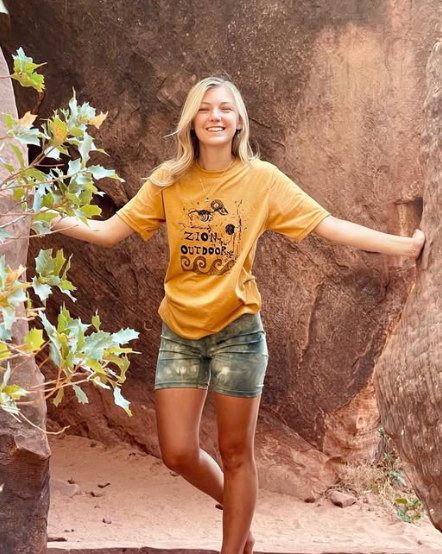 Credit: Instagram/@gabspetito, widely distributed in press coverageEditorial useSourceSOLVEDListen
Bridger–Teton National Forest, Wyoming · 2021
Gabby Petito, a 22-year-old travel vlogger, was killed by strangulation and blunt-force trauma in August 2021 while on a cross-country van trip with her fiancé, Brian Laundrie. Laundrie returned to Florida alone, was named a person of interest, and later died by suicide, leaving a note admitting he had killed her.
 Credit: BKA Germany/ Federal Criminal Police Office (Germany)Public domainSourceUNSOLVEDListen
Varna Airport, Varna, Bulgaria · 2014
German tourist Lars Mittank vanished after fleeing Varna Airport in Bulgaria on 8 July 2014 and has not been seen since.
El Pianista trail, near Boquete, Panama · 2014
Two Dutch students, Kris Kremers and Lisanne Froon, disappeared while hiking a jungle trail in Panama in April 2014, and their remains were recovered along a riverbank months later, but no official cause of death has ever been established.
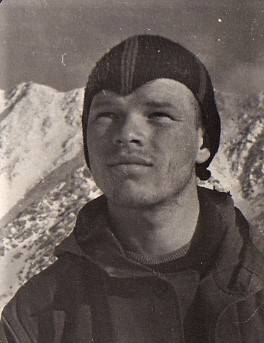 Credit: Petr Bartolomey / Wikimedia CommonsCC BY-SA 2.0SourceCOLDListen
Dyatlov Pass, Ural Mountains, Sverdlovsk Oblast, Russia · 1959
Nine experienced Soviet ski hikers led by Igor Dyatlov died in the northern Ural Mountains on 1 or 2 February 1959 after cutting their way out of their tent and fleeing into a snowstorm inadequately dressed for the cold; Russian authorities reopened the case in 2019 and announced in 2020 that an avalanche was the most likely cause, though the deaths remain widely described as unexplained and some researchers dispute that conclusion.
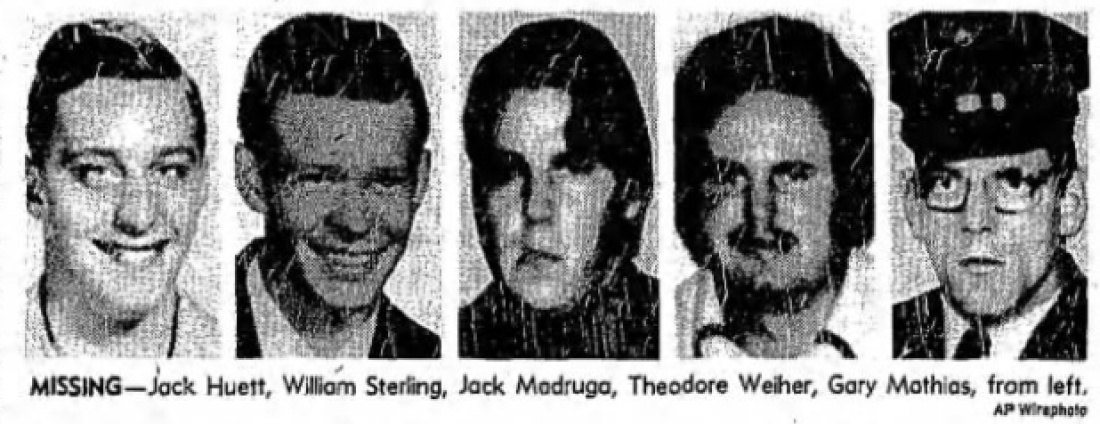 Credit: AP Wirephoto (1978) via dyatlovpass.comEditorial useSourceUNSOLVEDListen
Marysville, Yuba County, California · 1978
Four members of a Yuba County, California basketball team for people with disabilities were found dead in the Sierra Nevada mountains months after a February 1978 disappearance, and the fifth, Gary Mathias, has never been found.
 Credit: https://wellcomeimages.org/indexplus/obf_images/02/72/d61ea26e749b5ec38f6104f035b5.jpg…CC BY 4.0SourceSOLVEDListen
Hammersmith, London · 1803
In 1804, London excise officer Francis Smith shot and killed bricklayer Thomas Millwood after mistaking him for a rumoured Hammersmith ghost, in a trial whose legal reasoning on mistaken belief was not resolved until a 1984 Court of Appeal decision.
 SOLVEDListen
Norfolk, Nebraska, United States · 2002
On September 26, 2002, three armed robbers shot and killed five people in under a minute during a botched bank robbery at a U.S. Bank branch in Norfolk, Nebraska. Three of the four men involved were sentenced to death; a fourth received five consecutive life sentences.