
Start here
Loophole allows man who confessed to killing Cheryl Grimmer to walk free | 60 Minutes Australia
60 Minutes Australia's 41-minute breakdown, the fullest single telling on file.
Watch on YouTubeBefore you continue
This case involves crimes against children. Casepin presents the record in neutral, non-graphic language. Choose whether to continue.
Cold case · 1970
Also known as Cheryl Gene Grimmer
 Cheryl Grimmer and her fatherCredit: Unknown, personal family picture. Likely a relative or family friend.·Editorial use·Source

The short answer
Three-year-old Cheryl Grimmer vanished from a shower block at Fairy Meadow Beach, Wollongong, Australia, on 12 January 1970. A suspect was charged with her abduction and murder in 2017 based on a 1971 confession, but the charge was dropped in 2019 after a key piece of evidence was ruled inadmissible.
Start hereLoophole allows man who confessed to killing Cheryl Grimmer to walk free | 60 Minutes Australia60 Minutes Australia · 41 minThe coverage index
3 pieces from 1 creator: ranked, with duplicates removed and short clips set aside.
Start here
Video · YouTube · 41 min · 2019
60 Minutes Australia's 41-minute breakdown, the fullest single telling on file.
Watch on YouTubeEx-cop breaks silence on 70s case of toddler Cheryl Grimmer’s disappearance | 60 Minutes Australia
 60 Minutes AustraliaVideo · YouTube · 11 min · 2025

Identity of Cheryl Grimmer suspect | 60 Minutes Australia
60 Minutes AustraliaVideo · YouTube · 1 min · 2025Titles and descriptions are the creators’ own and may not reflect current legal status. The sourced facts are in the file below. Players load only when you press play. Suggest coverage we’re missing.
The case file
Cheryl Gene Grimmer, born 30 October 1966 in Knowle, a suburb of Bristol, England, disappeared on 12 January 1970 at the age of three. Her family had emigrated to Australia in 1968 and were living at the Fairy Meadow Migrant Hostel near Wollongong, New South Wales. On the day of her disappearance, Cheryl's mother, Carole Grimmer, took the children to Fairy Meadow Beach while her father, Vince, was away working. When the family prepared to leave, Cheryl's brother Ricki reported that she would not come out of the shower block; when Carole went to check, Cheryl had vanished. Witnesses initially claimed a man had been seen holding Cheryl at a water fountain and running off with her, though this account is now considered to have conflated an earlier, innocuous moment when her brother Ricki had lifted her to drink.
The disappearance triggered a large search and multiple police theories, including that she had wandered off, entered the ocean, or been abducted. A ransom note demanding $10,000 was received on the third day, and police staged a money drop in Bulli, but no one appeared to collect it, and the note was later presumed a hoax. In 1971, a then-17-year-old local resident confessed to abducting and killing Cheryl, describing details of the crime scene, but inconsistencies in his account—including a disputed cattle guard and gate—led police at the time, per a report from Detective Sergeant Phillip Findlay, to conclude there was insufficient evidence to act on the confession. The case went cold for decades despite public appeals and a reward.
The investigation was reopened in 2011 after a coroner ruled Cheryl had died shortly after her disappearance from an undetermined cause. A new task force, Strike Force Wessell, was formed, and both of Cheryl's parents died before the case was resolved. A 2016 evidence review renewed focus on the 1971 confession, with a witness offering a different account of the property in question. In March 2017, a suspect—the same individual who had confessed in 1971—was arrested in Frankston, Victoria, extradited to New South Wales, and charged with Cheryl's abduction and murder. He pleaded not guilty at a September 2018 court appearance. His trial, scheduled for May 2019 in the Supreme Court of New South Wales, did not proceed after a judge ruled his 1971 confession inadmissible because it had not been obtained in the presence of a parent or guardian, a requirement applied retroactively. The prosecution subsequently dropped the charge in February 2019.
In October 2025, a New South Wales parliamentary inquiry into unsolved murders and long-term missing persons cases named Cheryl Grimmer's case in its terms of reference. Later that month, the previously charged suspect was named under parliamentary privilege in the New South Wales Legislative Council. In February 2026, the state's Director of Public Prosecutions announced a special review of the case.
17 dated entries · 1966–2026
Cheryl Gene Grimmer is born in Knowle, Bristol, England.
The Grimmer family emigrates from England to Australia, settling near Fairy Meadow Beach, Wollongong.
Cheryl Grimmer disappears from a shower block at Fairy Meadow Beach.
A ransom note demanding $10,000 is received; a police money drop in Bulli is staged but no one collects it.
A 17-year-old local resident confesses to abducting and killing Cheryl, but inconsistencies lead police not to pursue charges.
A woman comes forward believing she may be Cheryl; DNA testing does not match.
A coroner formally rules that Cheryl died shortly after her disappearance from an undetermined cause; police reopen the investigation as Strike Force Wessell.
A review of evidence, including the 1971 confession, is computerised and reexamined; new witness statements emerge.
Police focus on the Mount Penang Training School for Boys as part of the renewed investigation.
A suspect is arrested in Frankston, Victoria.
The suspect is charged at Wollongong Police Station with Cheryl's abduction and murder.
The defendant appears via video link at the Supreme Court of New South Wales and pleads not guilty.
The prosecution drops the charge after a judge rules the 1971 confession inadmissible.
The BBC releases an eight-part documentary podcast series, Fairy Meadow, covering the case.
A New South Wales parliamentary inquiry into unsolved murders and long-term missing persons cases is established, naming Cheryl Grimmer's case in its terms of reference.
The previously charged suspect is named under parliamentary privilege in the New South Wales Legislative Council.
The NSW Director of Public Prosecutions announces a special review into the case.
1 named in this file
Victims first. Every legal label is set from public records and court outcomes, not from the prose.
Three-year-old girl who disappeared from Fairy Meadow Beach on 12 January 1970 and was later declared legally dead in 2011.[3]
3 cited
Coverage is not a source: every fact in this file rests on the records below.
PressBBC NewsAccessed Jul 7, 2026
PressABC News (Australia)Accessed Jul 7, 2026
EncyclopedicWikipediaAccessed Jul 7, 2026
Trust
Are you family of someone named in this file? Corrections and removal requests from victims’ families are prioritized.
Near this case
 UNSOLVEDListen
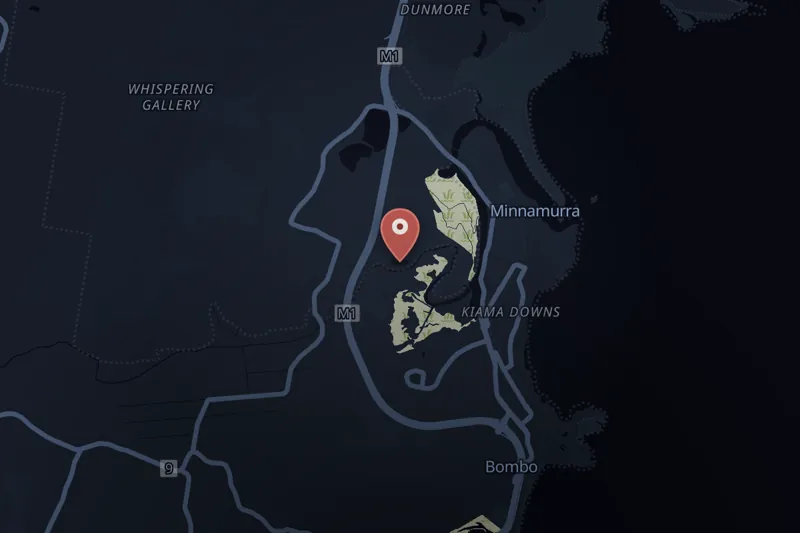
Minnamurra River, north of Kiama, Illawarra region · 1810s
On 1 October 1818, approximately six Wodiwodi people were killed along the Minnamurra River in the Illawarra region of New South Wales during a clash with nine armed colonial settlers.
 Credit: Ben Holzwart·CC BY-SA 4.0·SourceSOLVEDListen
Appin, near Cataract River, South Western Sydney · 1810s
On 17 April 1816, soldiers of the 46th Regiment under Captain James Wallis, acting on Governor Lachlan Macquarie's orders, attacked a camp of Dharawal and Gandangara people near the Cataract River at Appin, south-west of Sydney, killing at least 14 people through gunfire and falls from cliffs.
 SOLVEDListen
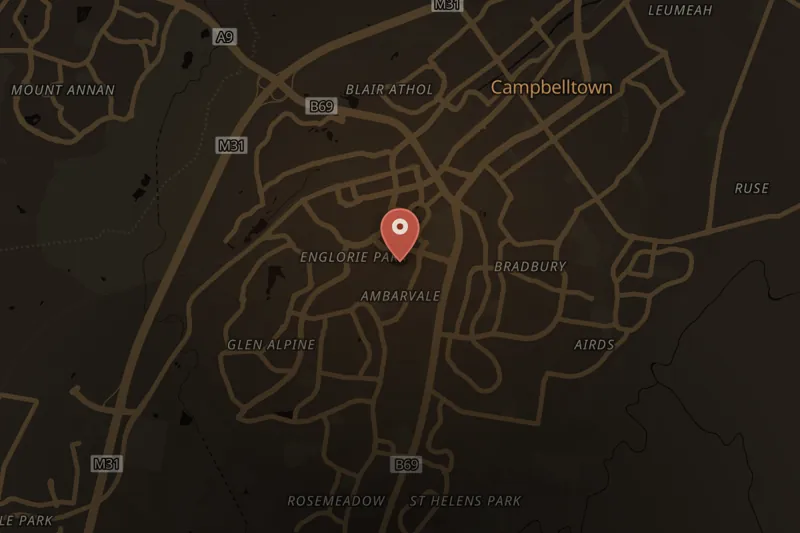
Mandurama Reserve, Ambarvale, New South Wales, Australia · 2000s
Dean Shillingsworth, a two-year-old boy, was found dead in a suitcase submerged in a pond at Ambarvale, New South Wales, in October 2007. His mother, Rachel Pfitzner, was later convicted of his murder and sentenced to a maximum of 25½ years in prison.
 Credit: Santa Barbara County Sheriff’s Office·Public domain·SourceSOLVEDListen
Sacramento, California (crimes spanned multiple California counties) · 1970s
Across California between 1974 and 1986, at least 13 people were murdered in a crime series that also included more than 50 rapes, burglaries, kidnappings, and assaults. Forensic genetic genealogy identified former police officer Joseph James DeAngelo in 2018; he pleaded guilty in 2020 to murder and kidnapping charges.
 Credit: United States Air Force·Public domain·SourceSOLVEDListen
Wichita and Park City, Kansas · 1974
Dennis Rader, a Wichita-area man who worked as an ADT security installer and later a Park City compliance officer, murdered at least ten people in Wichita and Park City, Kansas, between 1974 and 1991, taunting police and media with letters as "BTK." He was identified through DNA and computer metadata and arrested in February 2005, later pleading guilty to ten counts of first-degree murder.
Berenda Slough / Chowchilla, California (abduction site); victims later held at a quarry in Livermore, California · 1976
On July 15, 1976, three armed men hijacked a school bus in Chowchilla, California, abducting the driver and 26 children and burying them in a trailer at a Livermore quarry; all victims escaped and survived, and the three kidnappers were later convicted and, by 2022, all paroled.
Also covered by
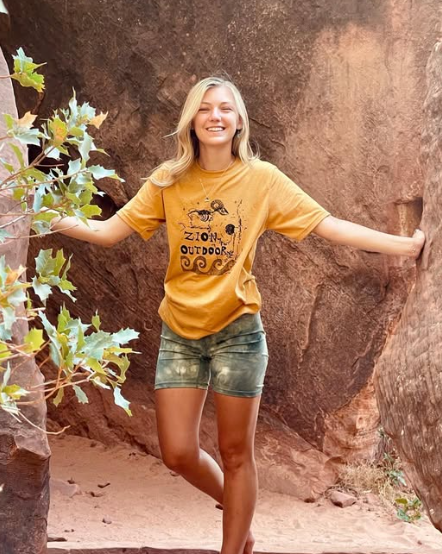 Credit: Instagram/@gabspetito, widely distributed in press coverage·Editorial use·SourceSOLVEDListen
Bridger–Teton National Forest, Wyoming · 2021
Gabby Petito, a 22-year-old travel vlogger, was killed by strangulation and blunt-force trauma in August 2021 while on a cross-country van trip with her fiancé, Brian Laundrie. Laundrie returned to Florida alone, was named a person of interest, and later died by suicide, leaving a note admitting he had killed her.
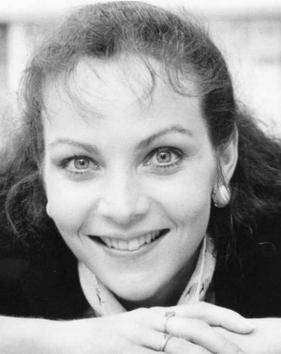 Credit: English Wikipedia·Editorial use·SourceSOLVEDListen
Brookfield (family home), Brisbane · 2011
Allison Baden-Clay, a 43-year-old Brisbane mother of three, was murdered by her husband Gerard Baden-Clay in April 2012; his murder conviction was downgraded on appeal and then restored by the High Court of Australia in 2016.
 Credit: Mark Stahl·Public domain·SourceSOLVEDListen
World Trade Center, New York City · 2001
On September 11, 2001, hijacked commercial aircraft were crashed into the World Trade Center and the Pentagon, and a fourth crashed in Pennsylvania, killing 2,977 people in the deadliest terrorist attack in history.
