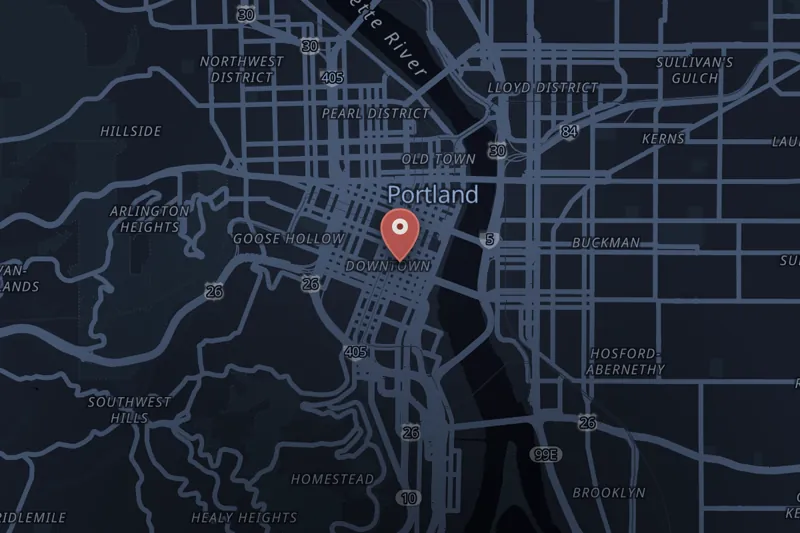
On October 30, 1926, Marvin Alvin Clark, an elderly resident of Tigard, Oregon, left his home around 1 p.m. to travel to Portland to visit his daughter, Mrs. Sidney McDougall, manager of the Hereford Hotel on Hoyt Street in Northwest Portland. He never arrived. Newspaper accounts from the time gave conflicting details about how he traveled — one report said stagecoach, another said bus — but agreed that this was the last confirmed sighting of him. Clark reportedly suffered from paralysis affecting his right arm and walked with a limp, details police hoped would help the public identify him if seen. His daughter offered a $100 reward for information about his whereabouts.
On November 9, 1926, a newspaper in Bellingham, Washington reported that Clark's wife, Mary, had received a postcard postmarked from Bellingham that appeared to be from her husband, describing its contents as "disconnected" and suggesting his mind was "wandering." Witnesses reportedly saw a man matching Clark's description at two Bellingham hotels around November 2–3, 1926. No further confirmed trace of Clark exists after this point.
In 1986, loggers discovered a nearly complete human skeleton in wooded land between Tigard and Portland. Items found near the remains — including an 1888 Liberty Head nickel, a 1919 penny, a pocket watch, leather shoes, a Fraternal Order of Eagles pocket knife, tokens marked "D&P," a .38 caliber revolver with a spent shell, and wire-rimmed glasses — were consistent with the era of Clark's disappearance. A state medical examiner found a bullet hole in the skull and ruled the death a suicide. The remains were estimated to belong to a man aged 35 to 55 at death. Clark's granddaughter, Dorothy Willoughby, came forward suspecting a connection, but no identification was made before her death in 1991.
The case drew renewed attention starting in 2011, when a medical examiner's office revisited the file and retrieved usable DNA from the stored skeletal remains. A 2014 news article noted investigators were struggling to locate maternal-line descendants needed to confirm a match. In 2018, a great-great-granddaughter of Clark, Pam Knowles, and her son submitted DNA samples, which were compared at the University of North Texas. Testing determined the remains were not Clark's, leaving both the identity of the 1986 John Doe and Clark's actual fate unresolved. Clark's DNA profile remains on file with the National Missing and Unidentified Persons System for any future comparison, and law enforcement have noted the possibility that his remains could still be discovered.



 Credit: GsamieCC BY-SA 4.0SourceSOLVEDListen