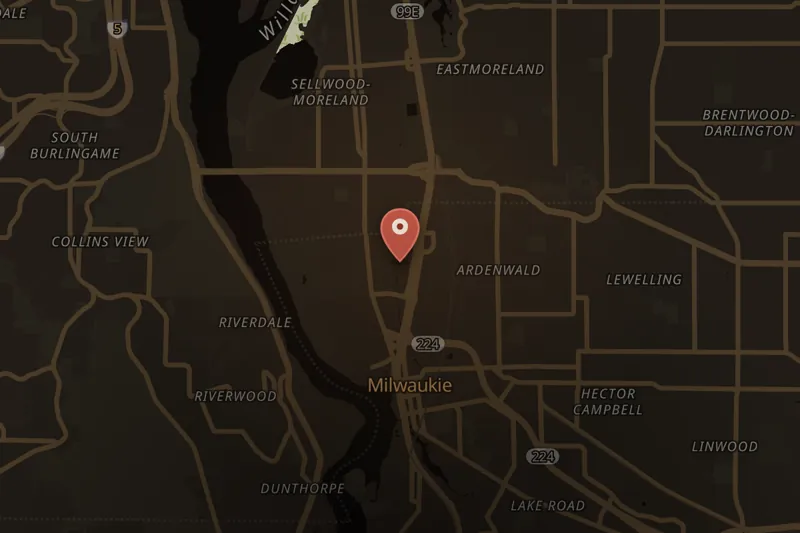
In the early morning hours of June 9, 1911, four members of the Hill family were killed with an axe in their cottage in Ardenwald, Oregon, then a rural community south of Portland. The victims were William Hill, his wife Ruth (née Cowing), and Ruth's two children from a previous marriage, Philip Rintoul, age 8, and Dorothy Rintoul, age 5. The family had moved into the home, which William had built himself, in early May 1911. The bodies were discovered around 8:00 a.m. on June 9 by a neighbor, Mrs. C. W. Matthews, after her husband noticed William had not left for his usual commute to his job at the Portland Natural Gas Company. Investigators estimated the murders occurred around 12:45 a.m., based on a stopped clock and a neighbor's report of dogs barking. William was killed first, followed by Ruth, then Philip, with Dorothy killed last. Both female victims had been sexually assaulted, leading Clackamas County Sheriff Ernest Mass to believe the killings were sexually motivated rather than committed for robbery, since valuables including money were left at the scene, though some jewelry was missing. The axe used in the murders had been stolen from a neighboring property and was left at the scene, and windows in the home had been covered with cloth and clothing.
Several suspects were investigated. A vagrant found near the scene on the morning the bodies were discovered was initially suspected but ultimately cleared. Nathan Harvey, a 55-year-old nursery owner and neighbor of the Hills who had been in a land dispute with William Hill, was charged with all four murders on December 20, 1911. Harvey had prior loose connections to other violent deaths within his family and a murder that occurred decades earlier on his property. Sheriff Mass stated he had evidence placing Harvey near Ardenwald on the night of the murders via witnesses who saw him disembark from a train. Despite this, Harvey had substantial community support, with mass meetings and hundreds of signatures gathered calling for the charges to be dropped. The charges against Harvey were dropped on December 27, 1911, and in February 1912 a Clackamas County judge formally closed the investigation into him.
In 1917, a man confessing to an unrelated killing claimed to have participated in or witnessed the Hill murders, but he gave two significantly differing accounts naming different alleged accomplices, and his statements contained inconsistencies regarding the crime scene and other details.
The case has been described by historians as among the most brutal in Oregon's history and has remained a topic of local historical interest. No one has ever been convicted in connection with the murders, and the case remains officially unsolved.


 Credit: GsamieCC BY-SA 4.0SourceSOLVEDListen