
Unsolved case
Lynching of Allen Brooks
Allen Brooks, a Black handyman, was lynched by a mob of thousands in Dallas, Texas, on March 3, 1910, after being accused of raping a young white girl. He was dragged from the Dallas County Courthouse and hanged from a telephone pole at Elks Arch; no one was ever charged.

Allen Brooks was a Black man living in Dallas, Texas, believed to have been born into slavery around 1852 in Maryland. He was in his late 50s or 60s at the time of his death and worked as a handyman in Dallas. In late February 1910, Brooks was accused of raping Mary Beuvens, a two-and-a-half-year-old girl, after he had been fixing her family's furnace and the child went missing before the two were found together. George Keaton Jr., director of the nonprofit Remembering Black Dallas, has stated there was no proof that Brooks was guilty of the alleged rape. Brooks was jailed and formally indicted the following day, and due to fears for his safety he was moved among several jails outside Dallas, eventually being held in Sherman, Texas, by early March.
On March 3, 1910, Brooks was brought to the Dallas County Courthouse to face trial. A crowd had gathered before his arrival, and he was held in the courthouse's jury room as the building filled with people by 9:00 a.m. Proceedings were recessed after his newly assigned lawyer requested time to consult, and by 10:00 a.m. at least 1,000 people were inside the courthouse; a ladder was placed against the building. Around 11:15 a.m., the mob overwhelmed between 70 and 150 law enforcement officers, including Ben E. Cabell, none of whom used firearms in defense. The mob reached Brooks on the second floor, tied a rope around his neck, and pulled him out a window. He landed on his head on the street, was further beaten by the crowd, and may have died from these injuries. His body was dragged by car to Elks Arch at Main and Akard streets, where he was hanged from a telephone pole or iron spike. Onlookers took pieces of the pole and his clothing as souvenirs. Estimates of the mob's size ranged from 2,000 to 6,000 people.
In the aftermath, Dallas Sheriff A. L. Ledbetter said protecting Brooks had been impossible. State Senator Erasmus Gilbert Senter publicly criticized the mob, though this view was not widely shared locally, and many newspapers defended the mob's actions. An official investigation never identified any mob members, and no one was ever charged. Postcards depicting the lynching were printed and mailed by the thousands; a federal prosecutor declined to intervene, saying only "the law of common decency" had been violated. The Fort Worth Star-Telegram produced a special edition on the lynching within hours, selling thousands of copies. Elks Arch was removed within a year.
The lynching site remained unmarked for 111 years. In 2018, the Dallas City Council approved efforts toward a memorial, and the nonprofit Remembering Black Dallas, through its subsidiary the Dallas County Justice Initiative, secured funding from the Equal Justice Initiative to place a historical marker in 2021 — Dallas County's first such marker — along with scholarships for students studying the history of racist violence and the civil rights movement in Dallas. A second marker was placed at the Dallas County Courthouse in July 2023.
Key facts
- Victims
- Allen Brooks
- Date
- 1910
- Location
- Dallas County Courthouse / Elks Arch (Main & Akard Streets), Dallas, Texas
- Case status
- unsolved
Case timeline
1852
Allen Brooks is believed to have been born, possibly into slavery, in Maryland.
1910-02
Brooks is accused of raping two-and-a-half-year-old Mary Beuvens in Dallas, Texas.
1910-03-03
A mob of thousands storms the Dallas County Courthouse, drags Brooks from a second-story window, and hangs him from a telephone pole at Elks Arch; he dies without anyone being charged.
2018
Dallas City Council approves efforts to create a memorial to Allen Brooks.
2021
The Dallas County Justice Initiative, with funding from the Equal Justice Initiative, places a historical marker at the lynching site.
2023-07
A second historical marker is placed at the Dallas County Courthouse where Brooks was held before being lynched.
Best coverage
No coverage has been attached to this file yet.
People
Allen Brooks
VICTIMBlack handyman lynched by a mob in Dallas, Texas, on March 3, 1910, after being accused of rape; no one was ever charged in connection with his death.
Roles reflect public records and court outcomes at the time of writing — supporting citations are on file under Sources.
Archival records

Places
Common questions
- What happened to the victim?
- Allen Brooks, a Black handyman, was lynched by a mob of thousands in Dallas, Texas, on March 3, 1910, after being accused of raping a young white girl. He was dragged from the Dallas County Courthouse and hanged from a telephone pole at Elks Arch; no one was ever charged.
- Where did the crime happen?
- Dallas County Courthouse / Elks Arch (Main & Akard Streets), Dallas, Texas.
- What is the current status of the case?
- Status: unsolved. Last verified July 2026.
Related cases
View all cases
Texas Slave Insurrection Panic of 1860
Dallas and surrounding North/East Texas towns

Murder of Angela Samota
Amesbury Drive, Dallas, Texas
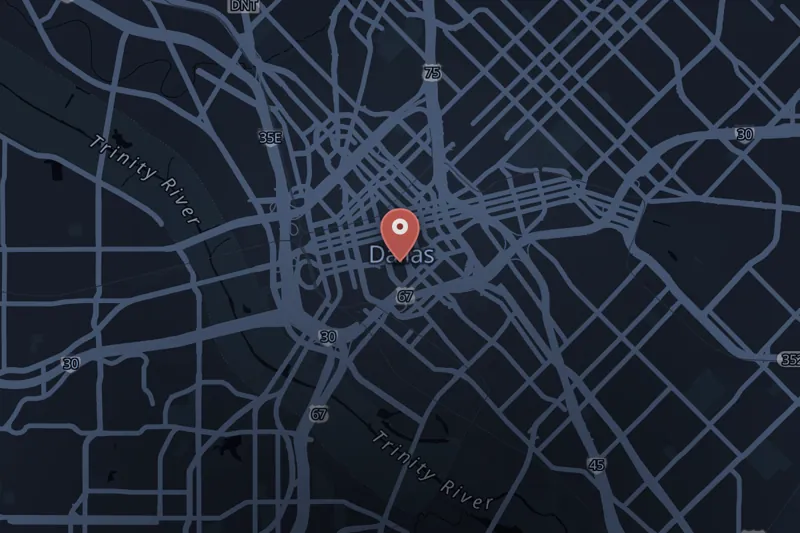
Murder of Kendra Hatcher
Dallas, Texas, United States

Lynching of Ell Persons
Near Macon Road bridge over the Wolf River, Memphis, Tennessee
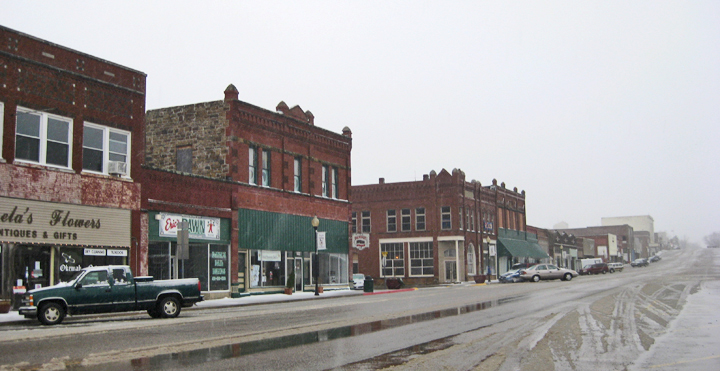
Lynching of Laura and L. D. Nelson
Bridge over the North Canadian River near Okemah, Okfuskee County, Oklahoma

Newberry Six lynchings
Newberry, Alachua County, Florida
Sources
- ENCYCLOPEDICLynching of Allen BrooksWikipedia · 2026-07-07
- PRESSContemporaneous coverage — The New York TimesThe New York Times · 2026-07-07
- PRESSContemporaneous coverage — CBS NewsCBS News · 2026-07-07
Record history
- First published
- JUL 07, 2026
- Last verified against sources
- JUL 07, 2026
When a file you follow changes — a new development, a correction, fresh coverage — the Dispatch is how you hear about it.
The Casepin Dispatch
A calm weekly briefing from the archive — one case worth understanding, meaningful updates to files you follow, and the best new coverage. You’ll also get the one-time note when the apps land. No gore, no rumor, no drip.