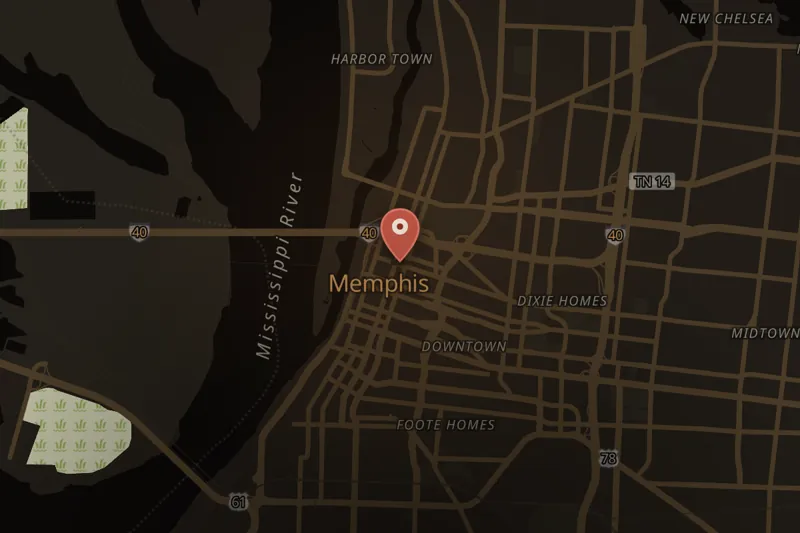
On 30 April 1917, 15-year-old Antoinette Rappel, a student at Treadwell School in Memphis, Tennessee, disappeared on her way to school. She was later found dead in woods near Macon Road, close to the home of Ell Persons, a woodcutter of nearly fifty. She had been raped and decapitated with an axe. After arresting several Black men, police detained Persons and, according to contemporaneous press accounts, subjected him to roughly 24 hours of brutal interrogation by Sheriff Mike Tate, Deputy Sheriff M.W. Palmer, and City Detectives C. A. Brunner and J. W. Hoyle, after which police said he confessed. Authorities also exhumed Rappel's body in a since-discredited attempt to find an image of her killer preserved in her eyes. Persons was then transported to Tennessee State Prison in Nashville, encountering hostile crowds en route.
On 19 May, Sheriff Tate ordered Persons returned to Memphis to stand trial on 25 May. While being transported by train on 21 May, he was seized by an organized lynch party — reported as having monitored rail lines and possibly raised funds to track him in Nashville — after having earlier stormed Memphis police headquarters searching for him. County criminal court judges had unsuccessfully petitioned Governor Thomas Clarke Rye on 17 May to provide protection for Persons. According to researchers Margaret Vandiver and Michel Coconis, there is no evidence authorities attempted to recover Persons or prevent the lynching.
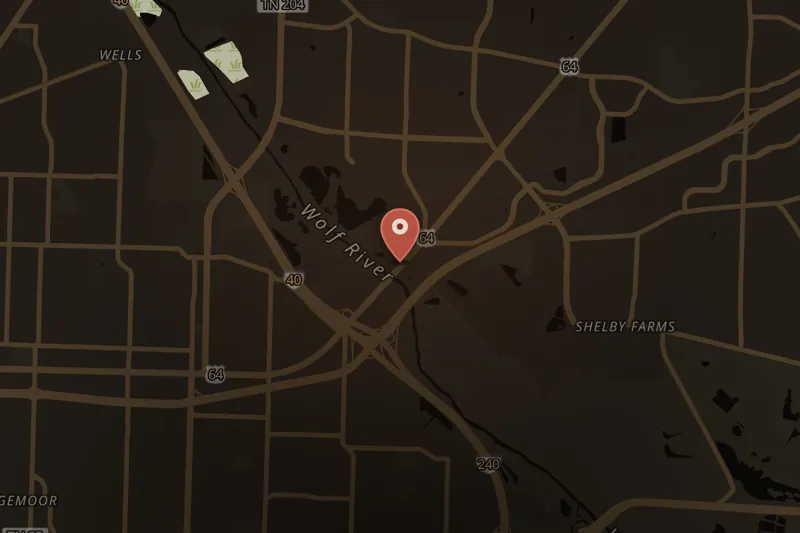
On the morning of 22 May 1917, local newspapers announced the time and place of the planned lynching. A crowd estimated at about 5,000 gathered near the Wolf River bridge on Macon Road in a reported "carnival" or "holiday" atmosphere, with vendors selling food and drinks and parents excusing children from school. Rappel's mother addressed the crowd, and the mob's leader offered her the chance to light the fire, which she declined. Persons was chained to a log, doused in gasoline, and burned alive. His body was subsequently dismembered; his remains, including his head, were driven to Beale Street — the center of Memphis's Black community — and thrown at Black pedestrians. Souvenir photographs of his head were later sold on postcards.
No one was charged in connection with either Rappel's killing or Persons's lynching. NAACP field secretary James Weldon Johnson investigated shortly afterward and found no positive evidence of Persons's guilt. In response, Rabbi William Fineshriber organized a congregational protest, and community leader Charles W. Cansler publicly condemned the lynching in a 1918 letter to Governor Rye. The lynching contributed to the founding of the Memphis branch of the NAACP in June 1917 by Robert Church Jr., Bert M. Roddy, and other Black businessmen; by 1919 it was reportedly the largest NAACP branch in the South. Historians have since described the event as one of the most vicious lynchings in American history and the last major incident of publicly sponsored racial violence in Memphis. Two historical markers commemorating the lynching were unveiled in 2017, and the lynching site has been listed on the National Register of Historic Places.