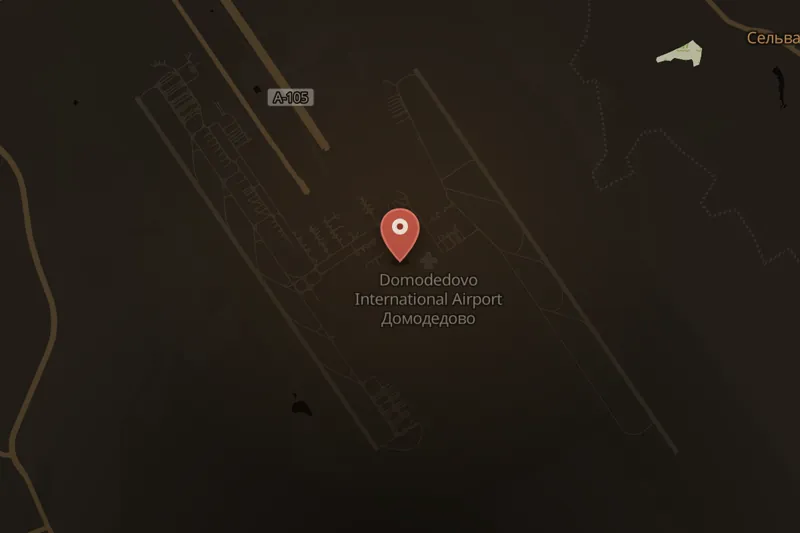
On 24 January 2011, a suicide bombing struck the international arrival hall of Moscow Domodedovo Airport, Russia's second-largest airport, located in Domodedovsky District, Moscow Oblast. The explosion, caused by an improvised device packed with shrapnel and chopped wire with a force equivalent to two to five kilograms of TNT, killed 37 people and injured 173 others, including 86 who required hospitalisation. Of those killed, 31 died at the scene, three later in hospitals, one en route to hospital, one on 2 February after being placed in a coma, and another on 24 February while hospitalised in grave condition. Investigators found a male head at the scene believed to belong to the bomber. Russia's Investigative Committee stated the attack was aimed "first and foremost" at foreign citizens, noting it was no accident that it occurred in the international arrivals hall.
The first identified victim was 29-year-old Ukrainian playwright Anna Yablonskaya, who had just arrived from Odesa to receive an award. Casualties also included foreign nationals; a British citizen, Gordon Cousland, and a German citizen were confirmed among the dead, while other nationality reports were later corrected or clarified. Slovak actors Zuzana Fialová and Ľuboš Kostelný were among those injured.
In the aftermath, flights were diverted to Vnukovo International Airport, airports across Russia began inspecting visitors (a practice later ruled illegal by an appellate court in June 2011), and commuter trains to and from Moscow airports ran free of charge. The Moscow stock exchange (MICEX) fell nearly two percent following the blast.
On 8 February 2011, a faction of the Caucasus Emirate led by Doku Umarov claimed responsibility and threatened further attacks. Russian officials identified the suicide bomber as 20-year-old Magomed Yevloyev from Ingushetia. Several associates were arrested in 2011, including Islam Yandiyev, Ilez Yandiyev, Bashir Khamkhoyev, and Magomed's 15-year-old brother Akhmed Yevloyev, who allegedly helped assemble the bomb. On 11 November 2013, following trial, Islam Yandiyev, Ilez Yandiyev, and Bashir Khamkhoyev were sentenced to life imprisonment, while Akhmed Yevloyev received a 10-year sentence as he was a minor at the time. Investigators said the bombing was carried out by Magomed Yevloyev on the orders of Doku Umarov, who was never apprehended. Yevloyev's sister and a friend were initially detained as suspected collaborators but were cleared of all charges by September 2011.
Domestically, President Dmitry Medvedev dismissed several officials over security failures, and Prime Minister Vladimir Putin condemned the bombing, vowing that "retribution is inevitable." World leaders including Barack Obama, David Cameron, Nicolas Sarkozy, Angela Merkel, and Benjamin Netanyahu, along with the UN Secretary-General and NATO's chief, expressed condolences to Russia.


 SOLVEDListen


