
 SOLVEDListen
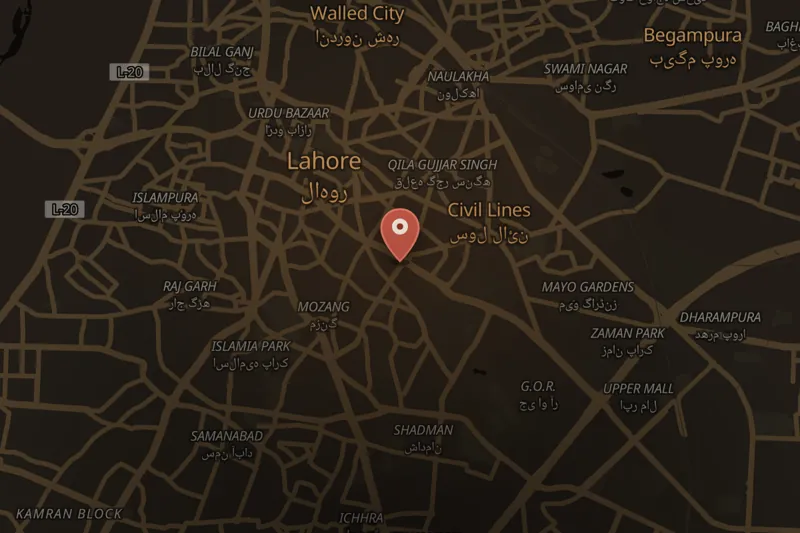
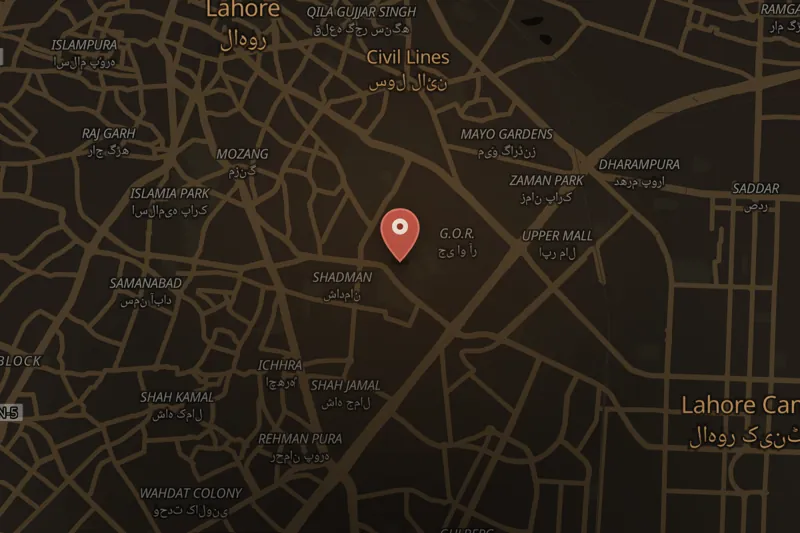
Lahore, Punjab, Pakistan · 2010s
2010 attack on Ahmadiyya mosques
On 28 May 2010, gunmen and suicide bombers attacked two Ahmadiyya mosques in Lahore, Pakistan, during Friday prayers, killing 94 people and injuring more than 120 others.
Solved case · 2017
 Islamic Summit Minar Charing CrossCredit: SohaibTahirSTCC BY-SA 3.0Source
The short answer
A suicide bomber killed at least 18 people, including several police officers, and wounded more than 87 at a pharmacists' and chemists' protest on Mall Road in Lahore, Pakistan, on 13 February 2017. Jamaat-ul-Ahrar, a faction of the banned Tehrik-i-Taliban Pakistan, claimed responsibility.
No one's coverage is attached to this file yet.
Know great coverage of this case?
A documentary, a podcast episode, a careful long-form video. Suggest it and an editor will review it before it appears here.
Suggest coverage for February 2017 Lahore Suicide BombingOn 13 February 2017, at around 18:10 local time, a suicide bomber detonated an explosive device on Mall Road in Lahore, Pakistan, at Charing Cross in front of the Punjab provincial assembly building. The location was the site of a protest by chemists and pharmaceutical manufacturers, with at least 400 people demonstrating against a Punjab government crackdown on illegal drugs following amendments to the Drug Act, 1976 passed on 8 February 2017. According to Punjab Police sources, at least 18 people were killed and more than 87 were injured. Seven police personnel were among the dead, including senior officers Zahid Gondal, a senior superintendent of the Punjab Police, and Ahmad Mobin, a deputy inspector general of Lahore's Traffic Police, who had been seen negotiating with protesters shortly before the attack.
Jamaat-ul-Ahrar, a faction of the banned Tehrik-i-Taliban (TTP), claimed responsibility via text message, describing the bombing as revenge for Pakistani military operations against militants in the northwestern tribal areas near the Afghan border. The group had issued threats three days earlier under a campaign it called "Operation Ghazi." Authorities said intelligence warnings had been issued in the weeks before the attack, including a 7 February notification from the National Counter Terrorism Authority and a 29 January warning from the Punjab Home Department referencing TTP training of suicide bombers in Kunar, Afghanistan.
In the attack's aftermath, injured victims were taken to Mayo Hospital and Sir Ganga Ram Hospital, and a state of emergency was declared for Lahore hospitals. Pakistani authorities said the attack had been orchestrated from Afghanistan. On 15 February, Pakistan's Foreign Office summoned the Afghan Deputy Head of Mission and presented a dossier alleging Afghan-based terrorist sanctuaries and handlers linked to the bombing. A Joint Investigation Team was formed, and police detained 43 people, mostly Afghan nationals, in raids across Lahore. On 17 February, Punjab Chief Minister Shehbaz Sharif announced the arrest of an alleged facilitator, from FATA's Bajaur Agency; two of his brothers were subsequently detained during a raid in Bajaur on 18 February.
On 23 February 2017, Pakistani security forces killed a man identified as the attack's mastermind, Wajihullah, near the Afghan border, during the launch of Operation Radd-ul-Fasaad, a nationwide counter-terrorism campaign. A separate bombing occurred the same day in Quetta, where an improvised explosive device killed at least three bomb disposal officers.
The attack drew condemnation from the Pakistani government, military leadership, and numerous foreign governments and organizations, including China, Iran, Turkey, Saudi Arabia, France, Bahrain, the United Kingdom, the United States, and the European Union. The bombing occurred less than a year after the March 2016 Gulshan-e-Iqbal Park suicide bombing, also in Lahore.
Punjab government's Home Department issues warning of a possible terrorist attack in Lahore, citing TTP training of suicide bombers in Kunar, Afghanistan.
National Counter Terrorism Authority shares intelligence with Punjab authorities about a possible terrorist threat in Lahore.
Provincial Assembly of Punjab passes amendments to the Drug Act, 1976, prompting protests by pharmacists and chemists.
Suicide bomber detonates explosives at a chemists' and pharmacists' protest on Mall Road, Lahore, killing at least 18 and wounding over 87; Jamaat-ul-Ahrar claims responsibility.
Separate bombing in Quetta kills at least three bomb disposal officers.
Pakistan's Foreign Office summons Afghan Deputy Head of Mission and presents dossier on alleged Afghan-based terrorist sanctuaries.
Punjab Chief Minister Shehbaz Sharif announces arrest of alleged facilitator of the attack.
Two brothers of the alleged facilitator are taken into custody during a raid in Bajaur Agency.
Pakistani security forces kill Wajihullah, identified as the attack's mastermind, near the Afghan border amid Operation Radd-ul-Fasaad.
Victims first. Every legal label is set from public records and court outcomes, not from the prose.
Deputy inspector general of Lahore Traffic Police killed in the bombing; had been negotiating with protesters shortly before the attack.[3]
Senior superintendent of Punjab Police killed in the bombing.[3]
Identified by Pakistani authorities as the attacker who masterminded the bombing; killed by security forces near the Afghan border on 23 February 2017, so was never prosecuted.[3]
Officially named a person of interest by Pakistani authorities; not charged. He was arrested on 17 February 2017 and admitted to police that he was a member of Jamaat-ul-Ahrar and had received terrorist training in Afghanistan, but no formal chargesheet or trial verdict was found in available reporting.[3]
Officially named a person of interest by Pakistani authorities as the brother of alleged facilitator Anwar-ul-Haq; not charged. He was taken into custody during a raid in Bajaur Agency for interrogation; no formal charge was confirmed in available reporting.[3]
Officially named a person of interest by Pakistani authorities as the brother of alleged facilitator Anwar-ul-Haq; not charged. He was taken into custody during a raid in Bajaur Agency for interrogation; no formal charge was confirmed in available reporting.[3]
Coverage is not a source: every fact in this file rests on the records below.
Are you family of someone named in this file? Corrections and removal requests from victims’ families are prioritized.
SOLVEDListenLahore, Punjab, Pakistan · 2010s
On 28 May 2010, gunmen and suicide bombers attacked two Ahmadiyya mosques in Lahore, Pakistan, during Friday prayers, killing 94 people and injuring more than 120 others.
 ONGOINGListen
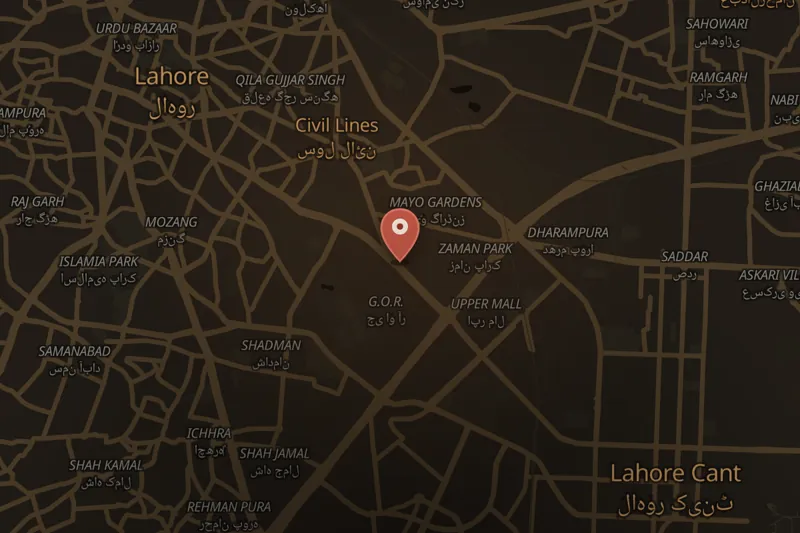
Lahore, Pakistan · 2020s
Ali Bilal, a PTI political worker also known as Zilleh Shah, died on 8 March 2023 shortly after being released from police custody in Lahore. Punjab authorities officially declared the death a traffic accident, while PTI and Bilal's family alleged he had been tortured in custody, citing a post-mortem report; the conflicting accounts led to competing investigations, arrests, and a court case.
 UNSOLVEDListen
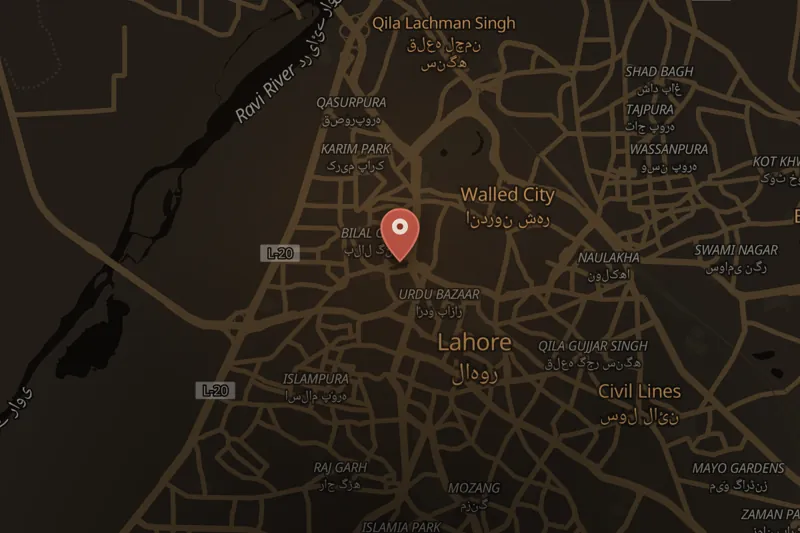
Data Darbar Complex, Lahore, Punjab, Pakistan · 2000s
On 1 July 2010, suicide bombers attacked the Data Darbar Sufi shrine in Lahore, Pakistan, killing at least 50 people and injuring around 200 others in the deadliest attack on a Sufi shrine in the country since 2001.
 Credit: Pax Ahimsa GethenCC BY-SA 4.0SourceSOLVEDListen
Pulse nightclub, Orlando, Florida, United States · 2016
On June 12, 2016, Omar Mateen, identified by police as the gunman, shot and killed 49 people and wounded 58 others at Pulse, a gay nightclub in Orlando, Florida, during a Latin Night event, before being fatally shot by police after a three-hour standoff.
 Credit: uploader and the RNAOCC BY-SA 3.0SourceSOLVEDListen
Yonge Street, North York City Centre, Toronto, Ontario, Canada · 2018
On April 23, 2018, a man drove a rented van into pedestrians along Yonge Street in Toronto's North York City Centre, killing 11 people and injuring 15 others before being arrested; he was later convicted on all counts and sentenced to life in prison.
Birstall, West Yorkshire, England · 2016
On 16 June 2016, British Labour MP Jo Cox was shot and stabbed to death in Birstall, West Yorkshire, by Thomas Alexander Mair. He was convicted in November 2016 of murder and related offences, with the judge finding the killing was an act of terrorism motivated by white supremacist and neo-Nazi ideology. Mair received a whole life order.
