
Start here
Kidnapped, Stabbed 27 Times, and Left to Die I 1978, India I The Geeta and Sanjay Chopra Murders
The creator's telling of the case, the strongest entry point on file.
Watch on YouTubeBefore you continue
This case involves sexual violence and crimes against children. Casepin presents the record in neutral, non-graphic language. Choose whether to continue.
Solved case · 1978
Also known as Geeta and Sanjay Chopra kidnapping case · Ranga-Billa case
The short answer
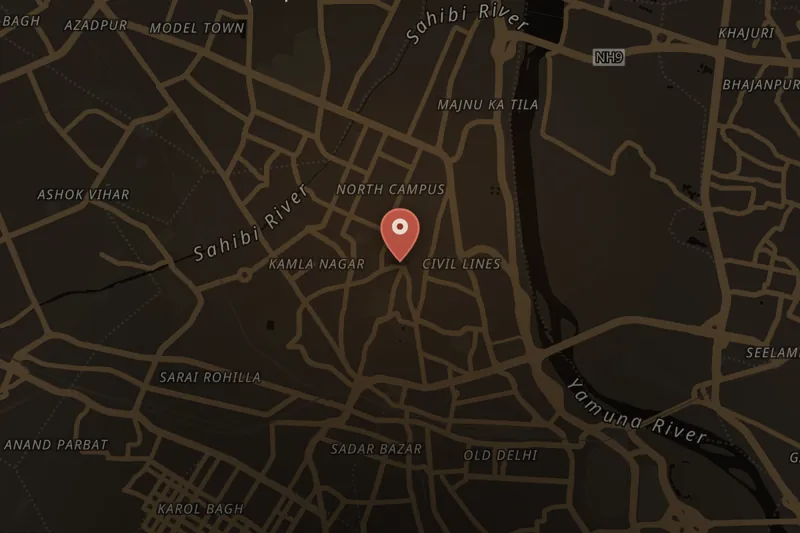
In 1978, siblings Geeta and Sanjay Chopra were kidnapped and killed in New Delhi, and two men were convicted of the murders and executed in 1982.
Start hereKidnapped, Stabbed 27 Times, and Left to Die I 1978, India I The Geeta and Sanjay Chopra MurdersThe coverage index
6 pieces from 6 creators: ranked, with duplicates removed and short clips set aside.
Start here
Video · YouTube · 2025
The creator's telling of the case, the strongest entry point on file.
Watch on YouTubeRanga Billa Case: ভারতের সবচেয়ে নৃশংস Kidnapping | Geeta–Sanjay Chopra Murder | True Crime Bengali

The Heartbreaking Case of Geeta and Sanjay Chopra: Kidnapped for Ransom | Legal Genie


Ranga Billa Case | The Crime That Changed Every Indian Parent Forever | Vijender Masijeevi


Titles and descriptions are the creators’ own and may not reflect current legal status. The sourced facts are in the file below. Players load only when you press play. Suggest coverage we’re missing.
The case file
The Geeta and Sanjay Chopra kidnapping case, also known as the Ranga-Billa case, was a kidnapping and murder that took place in New Delhi in 1978. Geeta Chopra, a 16½-year-old college student, and her 14-year-old brother Sanjay were the children of Madan Mohan Chopra, a captain in the Indian Navy, and lived in the Officer's Enclave at Dhaula Kuan. The siblings were abducted by two men, Kuljeet Singh (alias Ranga) and Jasbir Singh (alias Billa). Although the children were taken for ransom, the case record states they were killed after the abductors learned their father was a naval officer and assumed the family was not wealthy.
On the evening of 26 August 1978, Geeta and Sanjay left home to take part in a radio programme on All India Radio. Several bystanders later reported seeing a struggle inside a mustard-coloured Fiat car and tried to stop the vehicle, noting its licence number for the police. The response was delayed partly by questions over jurisdiction. When the children did not return, their father searched for them and contacted the police. Their bodies were discovered by a cowherd in the Delhi Ridge area on 28 August 1978 and were identified by their parents. An autopsy on 29 August found multiple stab wounds on both children; decomposition prevented the surgeon from establishing whether the girl had been sexually assaulted.
Investigators recovered the stolen car, which had been fitted with false number plates, and the Central Forensic Science Laboratory obtained fingerprints, hair samples and bloodstains from it. The case drew national attention, and then–Prime Minister Morarji Desai took a personal interest in it. The two suspects were arrested on 8 September 1978 aboard a train after a soldier recognised them from a newspaper photograph.
Both men were charged and pleaded not guilty, each offering an alibi. Each made a confession before a magistrate that he later retracted; because the two were held in non-adjoining cells, the confessions were treated as independent. Forensic evidence linked both men to the crime through matching hair, fingerprints and blood groups, and hospital records connected one of them to treatment for a head injury on the night of the abduction. An additional sessions judge convicted Kuljeet Singh and Jasbir Singh of murder under Section 302 of the Indian Penal Code, read with Section 34, together with kidnapping offences, and sentenced both to death.
The Delhi High Court upheld the convictions on 16 November 1979, and the Supreme Court of India affirmed the death sentences on 21 April 1981; a clemency petition to the President was rejected. In a decision regarded as a landmark for press access, the Supreme Court ruled in November 1981 that journalists could interview the condemned men. Both were hanged at Tihar Jail on 31 January 1982. The Kirti Chakra was awarded to Geeta and Sanjay Chopra, and the Indian Council for Child Welfare established the Geeta Chopra Award and Sanjay Chopra Award to recognise bravery in children.
9 dated entries · 1978–1982
Geeta and Sanjay Chopra are abducted in New Delhi while on their way to an All India Radio programme.
The siblings' bodies are discovered by a cowherd in the Delhi Ridge area.
An autopsy finds multiple stab wounds on both children.
The two suspects are arrested aboard a train after being recognised from a newspaper photograph.
The Delhi High Court upholds the convictions and death sentences.
The Kirti Chakra is awarded to Geeta and Sanjay Chopra.
The Supreme Court of India affirms the death sentences.
The Supreme Court rules that journalists may interview the condemned men, a landmark decision on press access.
Both men are hanged at Tihar Jail.
4 named in this file
Victims first. Every legal label is set from public records and court outcomes, not from the prose.
16½-year-old college student abducted and killed in New Delhi in 1978.[3]
14-year-old school student abducted and killed alongside his sister.[3]
Also known by the alias Billa; convicted of murder under Section 302 IPC read with Section 34 and of kidnapping offences, sentenced to death, and executed in 1982.[3]
Also known by the alias Ranga; convicted of murder under Section 302 IPC read with Section 34 and of kidnapping offences, sentenced to death, and executed in 1982.[3]
From the record
3 cited
Coverage is not a source: every fact in this file rests on the records below.
Court recordSupreme Court of IndiaAccessed Jul 5, 2026
PressHindustan TimesAccessed Jul 5, 2026
EncyclopedicWikipediaAccessed Jul 5, 2026
Trust
Are you family of someone named in this file? Corrections and removal requests from victims’ families are prioritized.
Near this case
 SOLVEDListen
Delhi, Mughal Empire (present-day India) · 1750s
In early 1757, Durrani Empire forces under Ahmad Shah Durrani occupied Delhi, extorted vast wealth from the Mughal capital's nobility and residents through torture and coercion, and left the city devastated, weakening the Mughal Empire ahead of the British victory at Plassey later that year.
 SOLVEDListen
Sant Nagar, Burari, India · 2010s
Eleven members of the Chandawat family were found dead in their home in Burari, India, on 1 July 2018, in a case police ruled a mass suicide caused by shared psychosis rather than a homicide.
 SOLVEDListen
Delhi, India · 1980s
On 4 September 1985, Delhi Metropolitan Council member and Congress leader Arjun Dass was shot dead along with his bodyguard by three Sikh assailants in Delhi, in what was described as revenge for his alleged role in leading mobs during the 1984 anti-Sikh riots.
 Credit: Santa Barbara County Sheriff’s Office·Public domain·SourceSOLVEDListen
Sacramento, California (crimes spanned multiple California counties) · 1970s
Across California between 1974 and 1986, at least 13 people were murdered in a crime series that also included more than 50 rapes, burglaries, kidnappings, and assaults. Forensic genetic genealogy identified former police officer Joseph James DeAngelo in 2018; he pleaded guilty in 2020 to murder and kidnapping charges.
 Credit: United States Air Force·Public domain·SourceSOLVEDListen
Wichita and Park City, Kansas · 1974
Dennis Rader, a Wichita-area man who worked as an ADT security installer and later a Park City compliance officer, murdered at least ten people in Wichita and Park City, Kansas, between 1974 and 1991, taunting police and media with letters as "BTK." He was identified through DNA and computer metadata and arrested in February 2005, later pleading guilty to ten counts of first-degree murder.
Berenda Slough / Chowchilla, California (abduction site); victims later held at a quarry in Livermore, California · 1976
On July 15, 1976, three armed men hijacked a school bus in Chowchilla, California, abducting the driver and 26 children and burying them in a trailer at a Livermore quarry; all victims escaped and survived, and the three kidnappers were later convicted and, by 2022, all paroled.
