
 SOLVEDListen
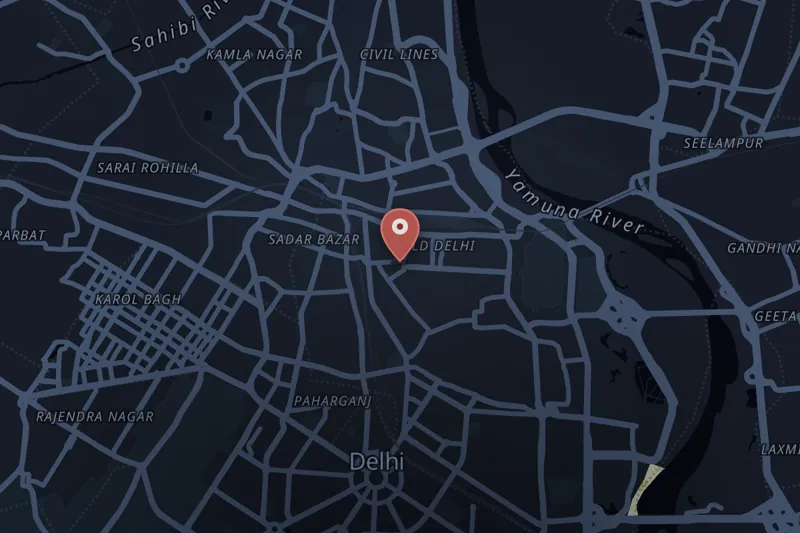
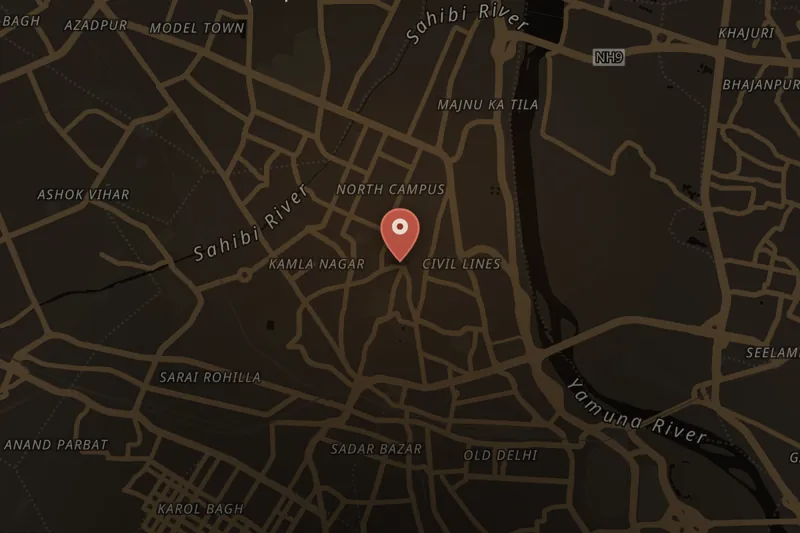
New Delhi, India · 1970s
Murder of Geeta and Sanjay Chopra
In 1978, siblings Geeta and Sanjay Chopra were kidnapped and killed in New Delhi, and two men were convicted of the murders and executed in 1982.
6 to watch & hear
Solved case · 1757
The short answer
In early 1757, Durrani Empire forces under Ahmad Shah Durrani occupied Delhi, extorted vast wealth from the Mughal capital's nobility and residents through torture and coercion, and left the city devastated, weakening the Mughal Empire ahead of the British victory at Plassey later that year.
No one's coverage is attached to this file yet.
Know great coverage of this case?
A documentary, a podcast episode, a careful long-form video. Suggest it and an editor will review it before it appears here.
Suggest coverage for Sack of Delhi (1757)The sack of Delhi took place from 28 January to 22 February 1757, carried out by the Durrani Empire under the Afghan king Ahmad Shah Durrani. Delhi, then capital of the declining Mughal Empire, had already suffered multiple 18th-century invasions, including one by Nader Shah. Following Nader Shah's death, Ahmad Shah Durrani consolidated eastern territories into the Durrani Empire, based in Kandahar.
The Mughal Empire's decline accelerated after Emperor Aurangzeb's death in 1707, amid Maratha incursions and succession disputes. Ahmad Shah Durrani launched successive invasions of Mughal India beginning in 1747. A 1749 campaign forced Punjab's governor, Moin-ul-Mulk, to cede regional revenues after the Mughal emperor authorized concessions rather than send reinforcements. A third invasion in 1751–1752 ended with the siege and sack of Lahore, the capture of Moin-ul-Mulk, and Afghan annexation of Punjab and Kashmir. After Moin-ul-Mulk's 1753 death, internal Mughal power struggles — including the imprisonment of his successor, Mughlani Begum, by vizier Imad ul-Mulk — led Mughlani Begum to invite the Afghans to invade again.
Citing the vizier's misrule, other nobles, including Najib ud-Daula and Mughal emperor Alamgir II, also invited Ahmad Shah to intervene. He launched a fourth invasion in November 1756 with roughly 80,000 men, taking Lahore in December with little resistance and advancing toward Delhi despite limited Maratha resistance under Antaji Mankeshwar. Delhi's defenders largely capitulated, and Ahmad Shah's forces arrived before the city on 28 January 1757.
Ahmad Shah met Alamgir II at the Fatehpuri Mosque and entered Delhi, though residents fled or barricaded themselves indoors. Alamgir was placed under house arrest. Despite initial orders against sacking, bazaars were plundered from 29 January, tribute was extracted from Feroz Shah Kotla, and Ahmad Shah minted coins in his own name and arranged a marriage between his son, Timur Shah Durrani, and a daughter of Alamgir II. Discriminatory measures were imposed on Hindus, and Mughal nobles faced extortionate demands enforced through torture, including foot whipping; many died, were crippled, or died by suicide. Imad ul-Mulk and Intizam-ud-Daulah were forced to surrender large sums of gold, coin, and property. An elderly woman, Sholapuri Begum, was coerced under threat of torture into revealing the location of buried family wealth, which Afghan forces subsequently excavated.
After further campaigning against the Marathas and Jats, Ahmad Shah briefly sacked Delhi again in March 1757 before departing for Afghanistan in April. Estimates of the total loot range from 30 million to 300 million rupees, transported by thousands of pack animals. The invasion diverted and weakened Mughal and Bengal Subah forces, contributing to their defeat months later at the Battle of Plassey, a turning point in British colonial expansion in India.
Mughal emperor Aurangzeb dies, beginning the empire's decline.
Ahmad Shah Durrani launches his first invasion of Mughal India, seizing Kabul and Peshawar.
Ahmad Shah's second invasion forces Punjab governor Moin-ul-Mulk to cede regional revenues to the Afghans.
Ahmad Shah launches a third invasion after tribute is withheld.
Lahore is besieged, sacked, and its population massacred; Moin-ul-Mulk is captured.
Ahmad Shah annexes Punjab and Kashmir.
Moin-ul-Mulk dies; Mughlani Begum succeeds him as governor.
Mughal vizier Imad ul-Mulk imprisons Mughlani Begum and installs Adina Beg.
Ahmad Shah begins his fourth invasion of India with about 80,000 men.
Afghan forces seize Lahore with little resistance.
Ahmad Shah's forces cross the Sutlej River at Ludhiana.
Afghan general Jahan Khan besieges Shahdara; Ahmad Shah's name is read in the Delhi Jama Masjid khutbah.
Afghan forces arrive before Delhi; sack of Delhi begins.
Bazaars in Delhi are sacked and tribute extracted from Feroz Shah Kotla.
Ahmad Shah mints coins in his own name and arranges his son's marriage to a daughter of Alamgir II.
Afghan forces rout a Maratha force under Antaji Mankeshwar near Delhi.
Sack of Delhi ends.
Ahmad Shah returns to Delhi and sacks the city again.
Ahmad Shah begins preparations to return to Afghanistan after campaigning against Marathas and Jats.
The Bengal Subah's weakened army is defeated at the Battle of Plassey.
Victims first. Every legal label is set from public records and court outcomes, not from the prose.
Mughal emperor forced to submit to Ahmad Shah and placed under house arrest during the sack of Delhi.[3]
Mughal vizier forced to surrender gold, ornaments, and gold coins to Ahmad Shah's forces.[3]
Mughal noble whose wealth, including over 10 million rupees and household members, was confiscated by Afghan forces.[3]
Punjab governor captured by Afghan forces after the 1752 siege of Lahore, which was sacked with its population massacred.[3]
Elderly woman coerced under threat of torture into revealing the location of buried family wealth during the sack.[3]
Coverage is not a source: every fact in this file rests on the records below.
Are you family of someone named in this file? Corrections and removal requests from victims’ families are prioritized.
SOLVEDListenNew Delhi, India · 1970s
In 1978, siblings Geeta and Sanjay Chopra were kidnapped and killed in New Delhi, and two men were convicted of the murders and executed in 1982.
 SOLVEDListen
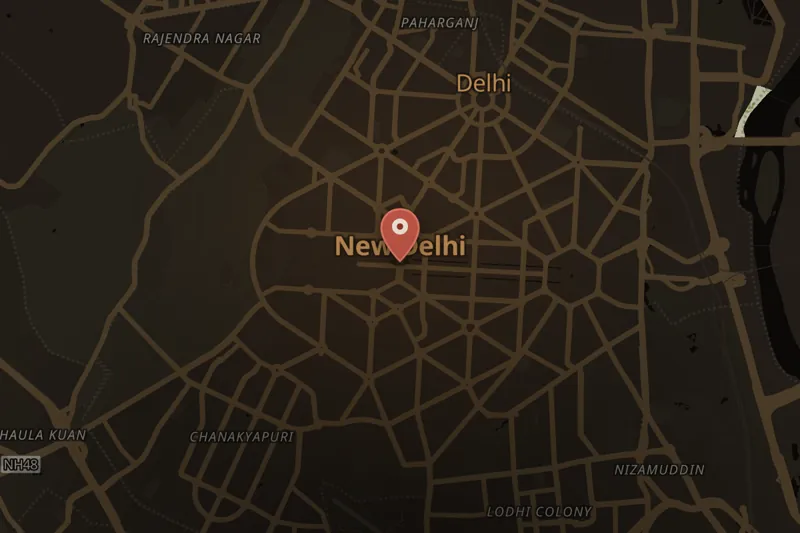
Delhi, India · 1980s
On 4 September 1985, Delhi Metropolitan Council member and Congress leader Arjun Dass was shot dead along with his bodyguard by three Sikh assailants in Delhi, in what was described as revenge for his alleged role in leading mobs during the 1984 anti-Sikh riots.
 ONGOINGListen
Delhi High Court, New Delhi · 2010s
A briefcase bomb exploded outside Gate No. 5 of the Delhi High Court on 7 September 2011, killing 15 people and injuring 79; Harkat-ul-Jihad al-Islami claimed responsibility, citing the commutation demand for 2001 Parliament attack convict Afzal Guru, and one man was later charged by the NIA.
 Credit: Bart Molendijk / AnefoCC BY-SA 3.0 NLSourceSOLVEDListen
Sriperumbudur, Tamil Nadu, India · 1991
Former Indian Prime Minister Rajiv Gandhi was killed by a suicide bomber tied to the LTTE at a campaign rally in Sriperumbudur, Tamil Nadu, on 21 May 1991, along with 14 other people. Twenty-six people were convicted at trial; the Supreme Court later reduced death sentences to four, and in 2022 the Supreme Court ordered the release of the last six convicts still imprisoned.
 Credit: Warren K. Leffler, U.S. News & World Report / U.S. Library of CongressPublic domainSourceSOLVEDListen
1 Safdarjung Road, New Delhi, India · 1984
Indian Prime Minister Indira Gandhi was shot dead by two of her own bodyguards at her New Delhi residence on 31 October 1984, months after she ordered a military operation against Sikh militants at the Golden Temple. Her assassination triggered widespread anti-Sikh violence across India.
 Credit: Sumita Roy DuttaCC BY-SA 4.0SourceSOLVEDListen
R. G. Kar Medical College and Hospital, Kolkata, West Bengal, India · 2024
A 31-year-old postgraduate resident doctor was raped and murdered inside a seminar room at R. G. Kar Medical College and Hospital in Kolkata in August 2024, sparking nationwide protests and a strike by junior doctors; civic volunteer Sanjay Roy was convicted of the crime and sentenced to life imprisonment in January 2025.