

 SOLVEDListen
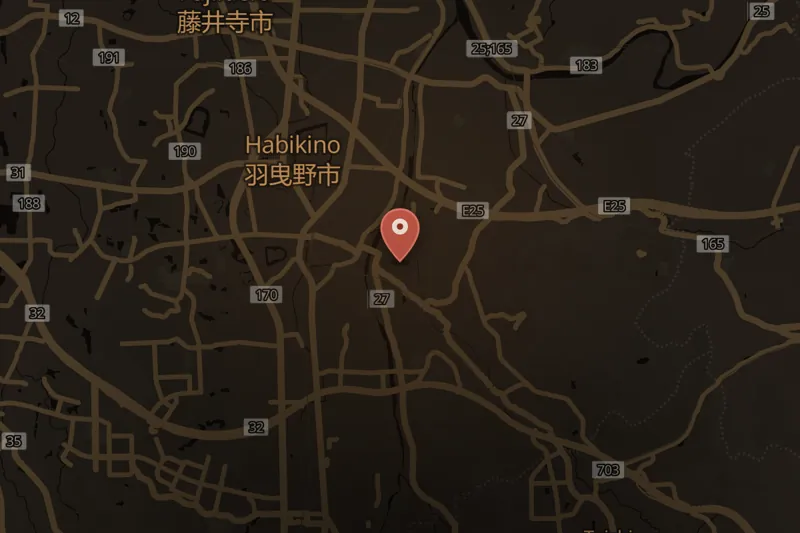
Kawachi (historical province), Osaka Prefecture, Japan · 1890s
Kawachi killings of 1893
Two men killed eleven people, including an infant, in a revenge attack in the Kawachi region of Japan in 1893, then died by suicide.
Solved case · 0645
Also known as Isshi no Hen · 乙巳の変
The short answer
In 645 CE, Prince Naka no Ōe and Nakatomi no Kamatari led a court conspiracy that killed Soga no Iruka during a palace ceremony, triggering the fall of the Soga clan's main branch and Empress Kōgyoku's abdication.
No one's coverage is attached to this file yet.
Know great coverage of this case?
A documentary, a podcast episode, a careful long-form video. Suggest it and an editor will review it before it appears here.
Suggest coverage for this caseThe Isshi incident (乙巳の変, Isshi no Hen) refers to the assassination of Soga no Iruka and the political upheaval that followed, named for the zodiacal designation of the year 645. The killing was orchestrated by Nakatomi no Kamatari (later Fujiwara no Kamatari) and Prince Naka no Ōe as part of a plot to eliminate the main branch of the powerful Soga clan.
The assassination took place on July 10, 645 (12th day of the 6th month by the traditional Japanese calendar), during a court ceremony at which memorials from the Three Kingdoms of Korea were being read to Empress Kōgyoku by Ishikawa no Maro. Prince Naka no Ōe had reportedly made detailed preparations: closing the palace gates, bribing palace guards, concealing a spear in the ceremonial hall, and arranging for four armed men to attack Iruka. When those men hesitated out of fear, Naka no Ōe himself rushed at Iruka and wounded his head and shoulder. Iruka survived the initial attack long enough to protest his innocence and request an investigation before Empress Kōgyoku. While she withdrew to consider the matter, the four guards returned and killed Iruka. Soon afterward, Iruka's father, Soga no Emishi, took his own life by setting fire to his residence, a blaze that destroyed the manuscript copy of the Tennōki and other imperial records, though Fune no Fubitoesaka is said to have rescued the burning Kokki from the flames before presenting it to Naka no Ōe; no surviving copies of that work are known.
The violence occurred in Empress Kōgyoku's presence, and in the context of Asuka-period sensitivities around ritual "pollution," the event prompted her decision to abdicate. Although she initially wished to pass the throne directly to Naka no Ōe, Nakatomi no Kamatari advised that succession instead go to her older brother, Furuhito no Ōe, or her maternal uncle, Prince Karu. Furuhito no Ōe resolved this by renouncing his claim and taking Buddhist tonsure at Hōkō-ji on the same day, traditionally dated July 12, 645. Kōgyoku then abdicated in favor of her brother, who became Emperor Kōtoku. Kōgyoku later returned to the throne as Empress Saimei, and Naka no Ōe eventually became Emperor Tenji.
This is a historical incident from 7th-century Japan; no individuals are named as criminally "convicted," "charged," "acquitted," or "exonerated" under the categories used for modern case documentation, and no living victims or law-enforcement figures are involved.
Assassination of Soga no Iruka during a court ceremony, carried out by Prince Naka no Ōe with assistance from armed guards, as orchestrated with Nakatomi no Kamatari.
Furuhito no Ōe renounces his claim to the throne by taking Buddhist tonsure at Hōkō-ji; Empress Kōgyoku abdicates in favor of her brother, who becomes Emperor Kōtoku.
Victims first. Every legal label is set from public records and court outcomes, not from the prose.
No public people records are attached to this file yet.
Coverage is not a source: every fact in this file rests on the records below.
Jul 13, 2026Correction
Catalog QA: Added the proleptic-Gregorian incident date and narrowed the title to the assassination.
Are you family of someone named in this file? Corrections and removal requests from victims’ families are prioritized.
SOLVEDListenKawachi (historical province), Osaka Prefecture, Japan · 1890s
Two men killed eleven people, including an infant, in a revenge attack in the Kawachi region of Japan in 1893, then died by suicide.
Near Yamato-Saidaiji Station, Nara City, Nara Prefecture, Japan · 2020s
On 8 July 2022, former Japanese prime minister Shinzo Abe was fatally shot with a homemade firearm while giving a campaign speech in Nara City, Japan. Tetsuya Yamagami was arrested at the scene, later convicted of murder, and sentenced to life in prison in January 2026.
 Credit: MASA (talk)CC BY-SA 3.0SourceSOLVEDListen
Nanba, Osaka, Japan · 2000s
On 1 October 2008, a man deliberately set fire to an adult video arcade in Nanba, Osaka, killing 16 people and injuring nine others; he was convicted of arson resulting in death and sentenced to death.
 Credit: L26CC BY-SA 4.0SourceSOLVEDListen
Kyoto Animation Studio 1, Fushimi Ward, Kyoto, Japan · 2019
On 18 July 2019, an arsonist set fire to Kyoto Animation's Studio 1 building in Kyoto, Japan, killing 36 people and injuring 34 others in one of the deadliest attacks in Japan since World War II. Shinji Aoba was convicted of murder and sentenced to death in January 2024.
 SOLVEDListen
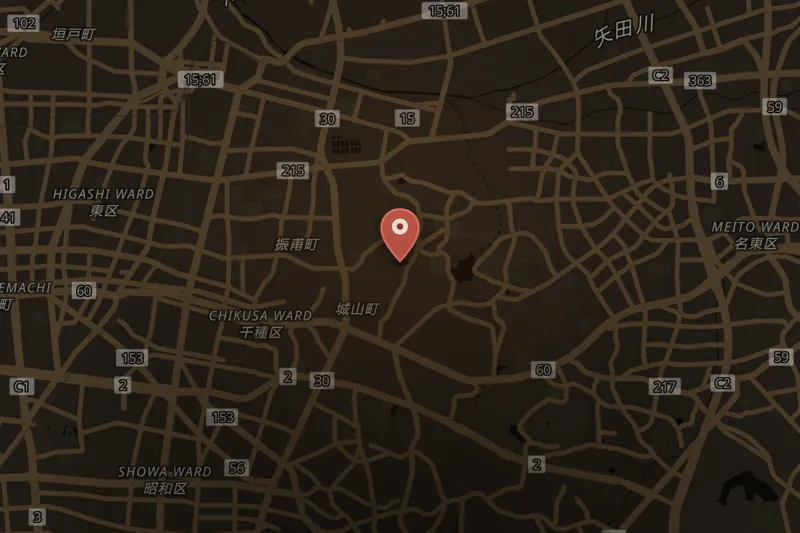
Chikusa-ku, Nagoya, Aichi Prefecture, Japan · 2007
Rie Isogai, a 31-year-old office clerk, was abducted, robbed, and killed near Nagoya, Japan, in 2007 by three men who had met through an underground website, and all three were convicted.
Ashikaga, Tochigi Prefecture, Japan · 1990
Four-year-old Mami Matsuda was abducted from a pachinko parlor in Ashikaga, Japan, in 1990 and found dead nearby. Toshikazu Sugaya was convicted based on flawed early DNA testing, then exonerated in 2009 after seventeen years' imprisonment when retesting proved his innocence; the case remains unsolved.

