Casepin
Back to cases

Case file

John Brown's Raid on Harpers Ferry

SOLVED1859Harpers Ferry, Virginia (now West Virginia)3 SOURCESUPDATED JUL 2026
Jail in Charles Town, Virginia, in 1859
Jail in Charles Town, Virginia, in 1859 — Credit: Merle Johnson · Public domain

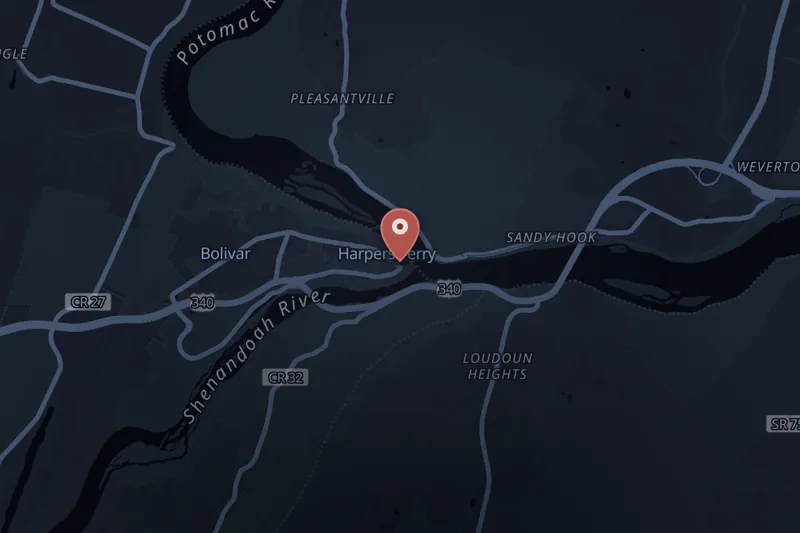
On the night of October 16, 1859, John Brown led a party of 22 men — 16 white and five Black — across the Potomac bridge into Harpers Ferry, Virginia (now West Virginia), intending to seize the federal armory and arsenal and use captured weapons to arm enslaved people in a general uprising. Brown had spent months preparing at the rented Kennedy Farmhouse in Maryland, stockpiling breech-loading carbines and pikes and drilling a small, mostly untrained force. He had earlier sought support from Harriet Tubman and Frederick Douglass; Tubman was ill and could not join, and Douglass declined, believing the plan amounted to suicide, though one of Douglass's associates, Shields Green, chose to join Brown.

The raiders cut telegraph lines, captured the armory's night watchman, took hostages including Colonel Lewis Washington, and briefly held the town. A free Black railroad baggage handler, Heyward Shepherd, became the raid's first fatality when he was shot after failing to halt on the orders of Brown's sentinels. As word spread, local militia companies converged on Harpers Ferry through the day of October 17, cutting off the raiders' escape routes and trapping Brown's remaining men in the armory's fire engine house. Fighting through the day killed four townspeople, including the mayor, and wounded several militiamen; among Brown's own losses were his sons Watson and Oliver, and raider William H. Leeman, shot while attempting to swim the Potomac.

President Buchanan ordered a detachment of U.S. Marines from the Washington Navy Yard to the scene, commanded on site by Lieutenant Israel Greene under the overall direction of Colonel Robert E. Lee, who arrived that evening. On the morning of October 18, after Brown refused a surrender offer delivered under a truce flag by Lieutenant J.E.B. Stuart, Marines led by Greene broke into the engine house using a ladder as a battering ram. Greene wounded Brown with his saber in a struggle lasting about three minutes; two raiders were killed in the assault and the rest were captured. Of the original 22-man party, ten were killed during the raid, seven — including Brown — were later tried and executed, and five escaped, with some sheltered afterward by Northern abolitionists.

Brown was interviewed at length while wounded, by figures including Virginia Governor Henry Wise, Senator James Mason, and Representatives Charles Faulkner and Clement Vallandigham, with a stenographic transcript of one interview later published widely by the New York Herald. Extensive press coverage — aided by the first significant national use of the electric telegraph to report a breaking crisis — spread news of the raid and Brown's own statements, which contributed to a rapid shift in Northern public perception of Brown from "fanatic" to a figure regarded by many as a martyr, while Southern audiences saw the raid as confirmation of a Northern threat to slavery. Individuals present at the raid, including Lee, Stuart, and Stonewall Jackson (who helped guard Brown after arrest), and spectator John Wilkes Booth at Brown's later execution, would go on to prominent roles in the American Civil War, and the raid is widely cited as one of the precipitating events of that conflict.

Key facts

Victims
Oliver Brown, Heyward Shepherd, Watson Brown, William H. Leeman
Date
1859
Location
Harpers Ferry, Virginia (now West Virginia)
Case status
solved

Case timeline

  1. 1859-10-16

    John Brown leads his party of raiders across the Potomac bridge into Harpers Ferry, Virginia, capturing the armory watchman and taking hostages including Colonel Lewis Washington.

  2. 1859-10-17

    Free Black railroad worker Heyward Shepherd is shot and killed by raiders after failing to halt; local militia companies converge on Harpers Ferry and trap Brown's men in the armory fire engine house; Brown's sons Watson and Oliver are mortally wounded; raider William H. Leeman is shot while attempting to escape.

  3. 1859-10-17

    President Buchanan orders U.S. Marines from the Washington Navy Yard to Harpers Ferry; Colonel Robert E. Lee arrives that evening to take command of the operation.

  4. 1859-10-18

    Marines under Lieutenant Israel Greene storm the engine house after Brown refuses a surrender offer delivered by Lt. J.E.B. Stuart; Brown is wounded and captured, two raiders are killed, and the raid ends after about three minutes of fighting.

  5. 1859-10-19

    Colonel Lee and most of the Marines depart Harpers Ferry for Washington; Lee submits his report on the raid to the War Department; Governor Wise continues investigating the affair.

  6. 1859-10-22

    Governor Henry Wise gives a widely reported speech in Richmond describing his interview and impressions of John Brown.

Best coverage

No approved coverage links are attached yet.

People

  • John Brown

    CONVICTED

    Led the raid on the Harpers Ferry armory; captured, wounded, tried in Virginia v. John Brown, and later executed.

  • Oliver Brown

    VICTIM

    Son of John Brown; shot during the standoff and died beside his father.

  • Heyward Shepherd

    VICTIM

    Free Black baggage handler at the Harpers Ferry train station; the raid's first fatality, shot by Brown's raiders after failing to halt.

  • Robert E. Lee

    LAW ENFORCEMENT

    Brevet Colonel who commanded the overall federal operation to retake the armory and capture Brown's party.

  • J.E.B. Stuart

    LAW ENFORCEMENT

    Lieutenant who served as aide-de-camp to Lee, delivered a surrender ultimatum to Brown under a flag of truce, and later helped search for fugitive raiders.

  • Watson Brown

    VICTIM

    Son of John Brown; mortally wounded by a shot from a townsman while carrying a white flag, died after more than 24 hours.

  • William H. Leeman

    VICTIM

    Member of Brown's raiding party; shot and killed while attempting to swim across the Potomac River to escape.

  • Israel Greene

    LAW ENFORCEMENT

    First Lieutenant who led the U.S. Marine platoon that stormed the engine house and wounded and captured John Brown.

Roles reflect public records and court outcomes at the time of writing — supporting citations are on file under Sources.

Archival records

  • HWFireHouseBrown

    newspaper

    HWFireHouseBrown

    Credit: Frank Leslie's illustrated newspaper · Public domain · Source

  • Jail in Charles Town, Virginia, in 1859

    archival location

    Jail in Charles Town, Virginia, in 1859

    Credit: Merle Johnson · Public domain · Source

  • John Brown being interrogated

    newspaper

    John Brown being interrogated

    Credit: Unknown authorUnknown author · Public domain · Source

  • John brown interior engine house

    newspaper

    John brown interior engine house

    Credit: This image is available from the United States Library of Congress's Prints and Photographs division under the digital ID cph.3c32541.This tag does not indicate the copyright status of the attached work. A normal copyright tag is still required. See Commons:Licensing. · Public domain · Source

  • Map of Harpers Ferry

    other document

    Map of Harpers Ferry

    Credit: Book is by w:W.E.B. DuBois · Public domain · Source

  • Railroad map of Harpers Ferry in 1859

    archival location

    Railroad map of Harpers Ferry in 1859

    Credit: Unknown authorUnknown author · Public domain · Source

  • T-john-brown-last-prophecy

    other document

    T-john-brown-last-prophecy

    Credit: John Brown · Public domain · Source

Places

Common questions

What happened to the victim?
From October 16–18, 1859, abolitionist John Brown led a group of 22 men in an attempt to seize the federal armory at Harpers Ferry, Virginia, hoping to spark a slave uprising. The raid failed after a standoff and an assault by U.S. Marines under Robert E. Lee; ten raiders were killed, seven were later tried and executed, and five escaped.
Where did the crime happen?
Harpers Ferry, Virginia (now West Virginia).
Who was convicted?
John Brown (Led the raid on the Harpers Ferry armory; captured, wounded, tried in Virginia v. John Brown, and later executed.).
What is the current status of the case?
Status: solved.

Sources

  1. ENCYCLOPEDICJohn Brown's raid on Harpers FerryWikipedia · 2026-07-07
  2. OFFICIAL / AGENCYContemporaneous coverage — chroniclingamerica.loc.govchroniclingamerica.loc.gov · 2026-07-07
  3. PRESSContemporaneous coverage — HistoryHistory · 2026-07-07

Record history

First published
JUL 07, 2026