
Start here
The Strange Life of Dr Schwartz | Full Episode

The full 48 Hours episode, 42 min: the case told start to finish in one sitting.
Watch on YouTubeSolved case · 1992
Also known as Robert Schwartz's murder · Robert Schwartz's killing
The short answer
Robert Schwartz, a renowned biotechnology scientist, was stabbed to death at his Leesburg, Virginia home in December 2001 in a killing orchestrated by his daughter Clara Jane Schwartz and carried out by her friend Kyle Hulbert, with two others assisting. All four were convicted for their roles in the crime.
The Strange Life of Dr Schwartz | Full Episode48 Hours · 42 min2 pieces from 2 creators: ranked, with duplicates removed and short clips set aside.
Start here
The full 48 Hours episode, 42 min: the case told start to finish in one sitting.
Watch on YouTubeDateline Episode Trailer: The Death of Dr. Schwartz | Dateline NBC
 Dateline NBCVideo · YouTube · 2 min · 2025
Titles and descriptions are the creators’ own and may not reflect current legal status. The sourced facts are in the file below. Players load only when you press play. Suggest coverage we’re missing.
Robert Schwartz was a nationally recognized scientist in biometrics and DNA research. In 1978 he co-authored a key paper in *Science* with Margaret Dayhoff providing the first experimental evidence for Lynn Margulis' theory of the symbiogenetic origin of cellular mitochondria and chloroplasts. In 1992, he was a founding member of the Virginia Biotechnology Association. He was the father of three children, including Catherine Michele, Jesse, and Clara Jane Schwartz.
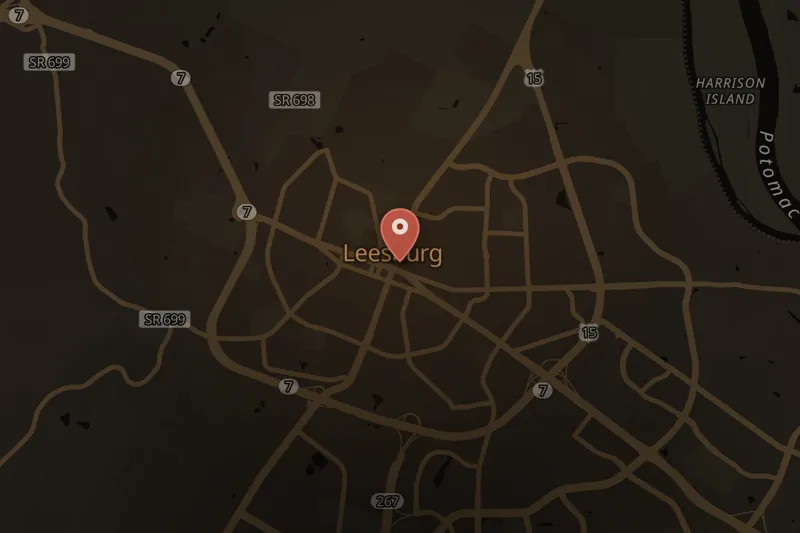
On December 8, 2001, Robert Schwartz was killed at his farmhouse in Leesburg, Virginia. Michael Pfohl drove Kyle Hulbert to the Schwartz residence, accompanied by Pfohl's girlfriend, Katherine Inglis. Schwartz let Hulbert into the house, and Hulbert stabbed him to death with a two-foot sword. Schwartz's body was discovered two days later.
Police identified Pfohl through a car that had called for a tow truck near the house around the time of the murder, and brought Pfohl and Inglis in for questioning. On December 11, 2001, Inglis told police that Schwartz's daughter Clara had discussed the murder with the three of them beforehand, and that the stated motive was that Schwartz had allegedly hit Clara and that she believed he had tried to poison her. Clara Jane Schwartz, then a sophomore at James Madison University, was charged on February 2, 2002, and formally indicted on March 31, 2002, for murder, conspiracy to commit murder, and solicitation of murder. Inglis, Pfohl, and Hulbert had each been indicted previously in connection with the killing.
Clara Schwartz was the first of the four co-defendants to stand trial, in October 2002. Prosecutors, including Jennifer Wexton, argued that Clara used a role-playing game called Underworld to manipulate her friends into killing her father, asserting that she had long hated him and wanted him dead. The defense contended that Hulbert had taken Clara's in-game directives out of context and that she never intended for anyone to actually kill her father. A witness referred to as Patrick testified for the prosecution that Clara had increasingly spoken of killing her father, researched herbal poisons to make his death look natural, discussed the inheritance she stood to gain, and grew frustrated when he did not act, eventually finding a willing participant in Hulbert.
On October 15, 2002, a jury convicted Clara Schwartz of first-degree murder, and on February 10, 2003, she was sentenced to 48 years in prison. She has pursued multiple unsuccessful appeals, the most recent affirmed by the U.S. Court of Appeals for the Fourth Circuit on March 9, 2010. Kyle Hulbert was sentenced to life imprisonment without parole; Michael Pfohl received eighteen years; Katherine Inglis served one year for conspiracy to commit murder.
Robert Schwartz co-authors a key paper with Margaret Dayhoff in Science providing early experimental evidence for the symbiogenetic origin theory of mitochondria and chloroplasts.
Schwartz becomes a founding member of the Virginia Biotechnology Association.
Robert Schwartz is stabbed to death at his Leesburg, Virginia farmhouse by Kyle Hulbert, who was driven there by Michael Pfohl and Katherine Inglis.
Schwartz's body is discovered, two days after the killing.
Katherine Inglis tells police that Clara Schwartz discussed the murder with the group beforehand.
Clara Jane Schwartz is charged in connection with her father's murder.
Clara Schwartz is formally indicted for murder, conspiracy to commit murder, and solicitation of murder.
Clara Schwartz's trial begins, the first of the four co-defendants to go to trial.
A jury convicts Clara Schwartz of first-degree murder.
Clara Schwartz is sentenced to 48 years in prison.
The United States Court of Appeals for the Fourth Circuit affirms Clara Schwartz's conviction in her most recent appeal.
Victims first. Every legal label is set from public records and court outcomes, not from the prose.
Nationally renowned scientist in biometrics and DNA research, killed at his Leesburg, Virginia home on December 8, 2001.[3]
Daughter of victim; convicted of first-degree murder on October 15, 2002, and sentenced to 48 years in prison for orchestrating the killing.[3]
Accessory to the crime who accompanied Pfohl and Hulbert; served a one-year sentence for conspiracy to commit murder.[3]
Carried out the stabbing of Robert Schwartz with a sword; sentenced to life imprisonment without the possibility of parole.[3]
Drove Kyle Hulbert to the crime scene as an accessory to the murder; sentenced to eighteen years.[3]
From the record
Coverage is not a source: every fact in this file rests on the records below.
Are you family of someone named in this file? Corrections and removal requests from victims’ families are prioritized.
 UNSOLVEDListen
Leesburg, Virginia (site of former rail freight depot) · 1880s
Orion Anderson, a 14-year-old African American boy, was taken from a Leesburg, Virginia jail by an armed mob on November 8, 1889, and shot and hanged at the town's freight depot after being accused of assaulting a white schoolgirl. No one was convicted.
 SOLVEDListen
Herndon, Fairfax County, Virginia · 2020s
Christine Banfield and Joseph Ryan were killed inside the Banfield home in Herndon, Virginia, on February 24, 2023, in an attack prosecutors said was staged to look like a home invasion. Christine's husband, Brendan Banfield, was convicted of both murders in 2026, and the family's au pair, Juliana Peres Magalhães, pleaded guilty to involuntary manslaughter in Ryan's death and testified against him.
 Credit: Unknown authorPublic domainSourceSOLVEDListen
Harpers Ferry, Virginia (now West Virginia) · 1850s
From October 16–18, 1859, abolitionist John Brown led a group of 22 men in an attempt to seize the federal armory at Harpers Ferry, Virginia, hoping to spark a slave uprising. The raid failed after a standoff and an assault by U.S. Marines under Robert E. Lee; ten raiders were killed, seven were later tried and executed, and five escaped.
Robin Hood Hills, West Memphis, Arkansas · 1990s
Three eight-year-old boys were found murdered in West Memphis, Arkansas, in 1993; three teenagers were convicted the following year in a case marked by disputed evidence, allegations of coerced confession, and claims of a Satanic motive, and were released in 2011 after entering Alford pleas.
 Credit: Photo by Calvin Beale, as an employee of the Economic Research Service, part of the…Public domainSourceSOLVEDListen
Madison, Jefferson County, Indiana · 1992
In January 1992, twelve-year-old Shanda Sharer was abducted and killed in southern Indiana by four teenage girls, all charged as adults; each pleaded guilty and received prison sentences.
 Credit: en:User:Paul.hPublic domainSourceSOLVEDListen
Petaluma, California, United States · 1993
Polly Hannah Klaas, a 12-year-old girl, was abducted at knifepoint from her home in Petaluma, California, on October 1, 1993, and later found murdered. Richard Allen Davis was convicted of first-degree murder in 1996 and sentenced to death.
 Credit: Family/Instagram photograph, widely distributed in press coverageEditorial useSourceSOLVEDListen
Moscow, Idaho · 2022
Four University of Idaho students—Madison Mogen, Kaylee Goncalves, Ethan Chapin, and Xana Kernodle—were fatally stabbed inside an off-campus house in Moscow, Idaho, in the early morning hours of November 13, 2022. Bryan Kohberger, a criminology PhD student at nearby Washington State University, was arrested that December and pleaded guilty in 2025, receiving four consecutive life sentences.
 Image recordEditorial useSourceSOLVEDListen
New Canaan, Connecticut, United States · 2019
Jennifer Dulos, a mother of five in New Canaan, Connecticut, disappeared on May 24, 2019, after being attacked at her home; her body has never been found, and she was declared legally dead in 2023. Her estranged husband, Fotis Dulos, was charged with her murder but died by suicide in January 2020 before trial, while his girlfriend, Michelle Troconis, was convicted in 2024 of related charges.
 Credit: Instagram/@gabspetito, widely distributed in press coverageEditorial useSourceSOLVEDListen
Bridger–Teton National Forest, Wyoming · 2021
Gabby Petito, a 22-year-old travel vlogger, was killed by strangulation and blunt-force trauma in August 2021 while on a cross-country van trip with her fiancé, Brian Laundrie. Laundrie returned to Florida alone, was named a person of interest, and later died by suicide, leaving a note admitting he had killed her.
 Credit: Wikimedia Commons, photo by Glenn Francis (PacificProDigital.com)Editorial useSourceSOLVEDListen
Hollywood Hills, Los Angeles, California · 2014
Amie Harwick, a Los Angeles marriage and family therapist and author, was strangled and thrown from her third-floor Hollywood Hills balcony on February 15, 2020, by an ex-boyfriend who had a history of stalking her. He was convicted of first-degree murder in 2023 and sentenced to life without parole.
 Credit: Courtesy Kerry Smith / CNNEditorial useSourceSOLVEDListen
Pretoria, South Africa · 2010s
Model Reeva Steenkamp was shot and killed by her boyfriend, Paralympic and Olympic runner Oscar Pistorius, at his Pretoria home in the early hours of 14 February 2013. After a highly publicized trial, Pistorius was initially convicted of culpable homicide, but South Africa's Supreme Court of Appeal later overturned that verdict and convicted him of murder, ultimately sentencing him to 15 years in prison.
 Image recordEditorial useSourceSOLVEDListen
Lakewood Ranch, Florida, United States · 2016
Ashley Benefield, a former ballerina, shot and killed her estranged husband Douglas Benefield at her mother's home in Lakewood Ranch, Florida, in September 2020; she was convicted of manslaughter with a firearm in 2024 after claiming self-defense.
