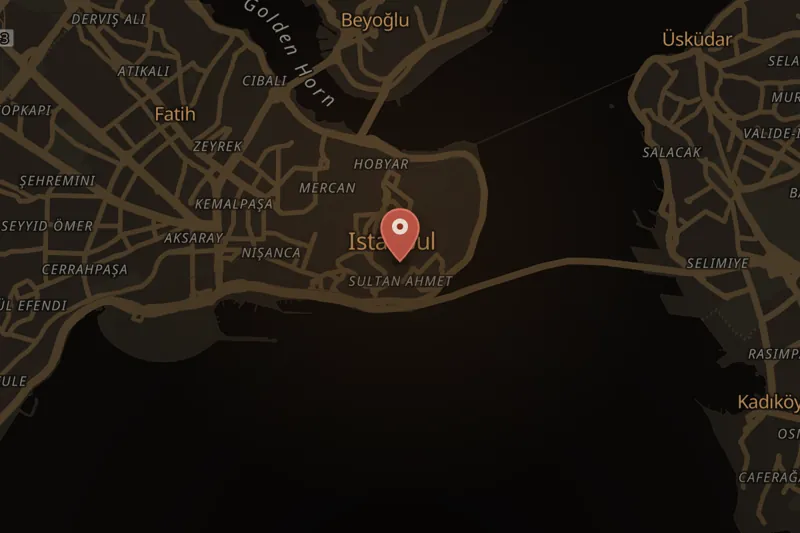
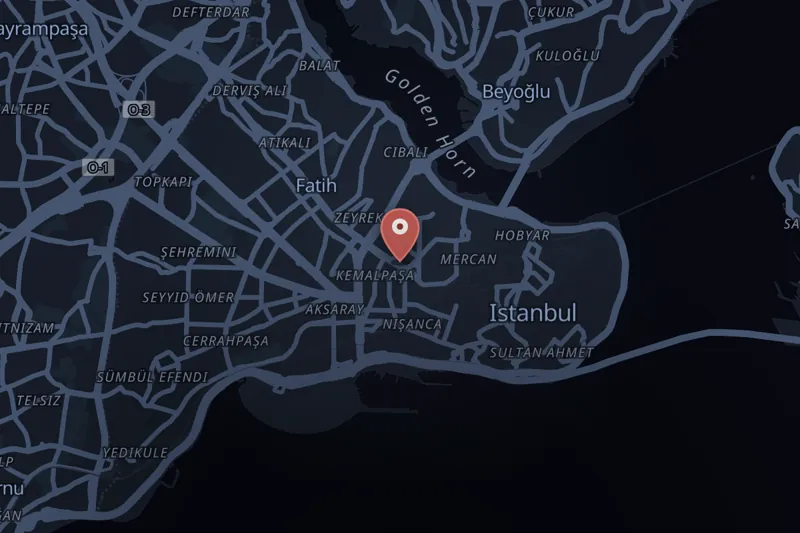
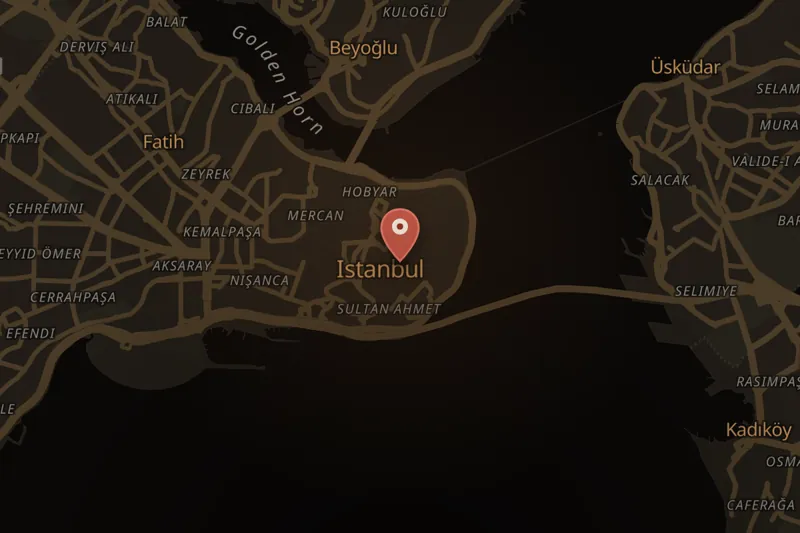
On the morning of 7 June 2016, at around 08:40 local time, a bombing occurred in central Istanbul, Turkey, killing 12 people and injuring 51 others, three of them seriously. The attack targeted a bus carrying Çevik Kuvvet (riot police) forces that were changing guard in front of the Faculty of Sciences and Literature of Istanbul University. The explosion took place on Şehzadebaşı Avenue, near the Vezneciler Metro station and the historic Şehzade Mosque, close to the Beyazıt Square tourist area, during morning rush hour.
The bomb was reportedly remotely detonated from a car; it remained under investigation at the time whether the vehicle was moving or parked when it exploded. The blast overturned the police bus, damaged nearby vehicles, and heavily damaged the entrance of a nearby hotel. A student dormitory close to the site was also damaged, with bomb fragments shattering windows and entering rooms. Damage was reported over a wide area, including at the centuries-old Şehzade Mosque.
The bombing came amid a period of heightened attacks in Turkey. Istanbul had already suffered two deadly bombings in January and March 2016, both claimed by the Islamic State of Iraq and the Levant (ISIL). Separately, two attacks in Ankara in February and March 2016 that killed dozens had been claimed by the Kurdistan Freedom Hawks (TAK), described as a radical offshoot of the outlawed Kurdistan Workers' Party (PKK).
No group immediately claimed responsibility for the Istanbul bombing. Security analyst Mete Yarar said the PKK, ISIL, or the Revolutionary People's Liberation Party/Front (DHKP-C) could all plausibly be responsible. Cevat Öneş, a former Assistant Undersecretary of Turkey's National Intelligence Organization, said there was a high probability the PKK was responsible, while not ruling out ISIL. On 10 June 2016, TAK claimed responsibility for the attack, stating that Turkey was no longer safe for foreign tourists. TAK identified the assailant as Eylem Yaşa, using the codename "Eylem Nawroz," describing her as having joined TAK in 2011, aged 32 at the time of the bombing, originally from Diyarbakır but having spent most of her life in Antalya, and a member of TAK's "Brigade of the Immortal."
In the aftermath, Turkish President Recep Tayyip Erdoğan visited Haseki hospital, where victims were being treated, and stated that terrorist organizations' distinctions between civilians, soldiers, or police were irrelevant to the state. Prime Minister Binali Yıldırım and Foreign Minister Mevlüt Çavuşoğlu also responded, with Çavuşoğlu noting the attack occurred on the second day of Ramadan. Selahattin Demirtaş, co-leader of the pro-Kurdish Peoples' Democratic Party, called for a summit of party leaders. The Indian Ministry of External Affairs, the U.S. ambassador to Turkey John R. Bass, and the European Union issued statements of condolence and solidarity. Authorities closed the avenue and metro station, evacuated the area, conducted a controlled explosion, and imposed a broadcast ban roughly four hours after the bombing. All exams at Istanbul University were cancelled. Presidential spokesman İbrahim Kalın later said indicators pointed to the PKK or another Kurdish separatist group.

 ONGOINGListen