Skip to content
Casepin

Solved case · 2022

Killing of Ayman al-Zawahiri

Also known as Ayman al-Zawahiri's death · Ayman al-Zawahiri death

SOLVED
Updated
Updated Jul 7, 2026
Zawahiri house modelZawahiri house modelCredit: Central Intelligence AgencyPublic domainSource

The short answer

Killing of Ayman al-Zawahiri in brief

On 31 July 2022, al-Qaeda leader Ayman al-Zawahiri was killed by a U. S. drone strike on a safe house in Kabul, Afghanistan, in an operation authorized by President Joe Biden.

Key facts

Year
2022
Place
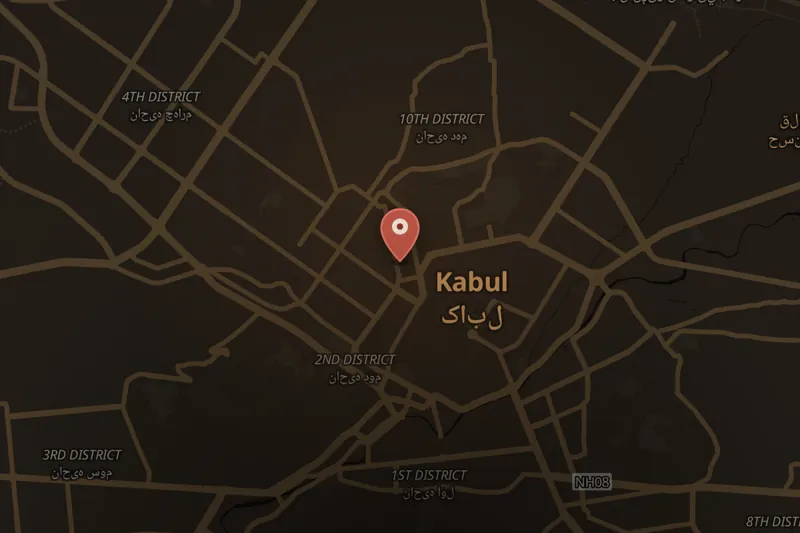
Sherpur, Kabul, Afghanistan
Status
SOLVEDSolved
Victim
Ayman al-Zawahiri
Outcome
No conviction on file

The coverage index

Where to watch & listen

No one's coverage is attached to this file yet.

Know great coverage of this case?

A documentary, a podcast episode, a careful long-form video. Suggest it and an editor will review it before it appears here.

Suggest coverage for Killing of Ayman al-Zawahiri

The case file

What happened

On 31 July 2022, Ayman al-Zawahiri, the leader of the Salafi jihadist group al-Qaeda, was killed by a United States drone strike in Kabul, Afghanistan. Al-Zawahiri had been one of the planners of the September 11 attacks against the United States and succeeded Osama bin Laden as leader of al-Qaeda after bin Laden was killed by U.S. forces in Pakistan on 2 May 2011.

The Central Intelligence Agency tracked and located al-Zawahiri months before the strike. U.S. intelligence had followed the movements of his family, learning they had relocated to a safe house in Sherpur, a Kabul neighborhood, after the Taliban's 2021 recapture of Afghanistan; al-Zawahiri himself later joined them there after relocating from Pakistan. Officials briefed President Biden on the plan in stages during 2022, using a scale model of the building constructed by the National Geospatial-Intelligence Agency to minimize harm to other occupants. On 25 July, Biden received a final briefing at which involved officials unanimously approved the strike.

On 31 July 2022, at 6:18 a.m. local time, a U.S.-operated drone fired two AGM-114 Hellfire missiles — reportedly the R9X variant, a non-explosive, kinetic weapon designed to limit collateral damage — at al-Zawahiri while he stood on the balcony of the house. He was killed; other occupants of the house were unharmed.

News of the strike broke two days later, after intelligence confirmed al-Zawahiri's death. Biden publicly confirmed he had authorized the strike a week earlier, describing it as a "deliverance of justice." According to a senior American official, al-Zawahiri's family was subsequently moved by members of the Haqqani network, part of the Taliban government, which also attempted to cover up his death; the Taliban did not confirm the killing and characterized the operation as a strike on an empty residential house. Anti-American protests occurred in Afghanistan on 5 August 2022.

U.S. officials, including Secretary of State Antony Blinken, said the Taliban had violated the 2020 U.S.–Taliban withdrawal agreement by sheltering al-Zawahiri. International reactions were mixed: allied governments including Australia and Canada praised the operation, Saudi Arabia's foreign ministry condemned al-Zawahiri as a terrorist leader, and China's foreign ministry said counter-terrorism efforts should not infringe on other states' sovereignty. Legal scholars disagreed on the strike's legality under international law. Al-Qaeda had not publicly confirmed al-Zawahiri's death or named a successor as of February 2023, though the United Nations reported that many member states believed Saif al-Adel was the de facto successor.

13 dated entries · 2001–2023

Timeline

  1. Ayman al-Zawahiri and Osama bin Laden evade American forces during the U.S. invasion of Afghanistan.

  2. Osama bin Laden is killed by U.S. forces in Abbottabad, Pakistan; al-Zawahiri succeeds him as al-Qaeda leader.

  3. The U.S. government negotiates a withdrawal agreement with the Taliban, under which the Taliban agree not to provide safe haven to al-Qaeda members.

  4. The Taliban recapture Afghanistan as U.S. forces withdraw; al-Zawahiri's family relocates to a safe house in Kabul.

  5. U.S. deputy national security advisor Jonathan Finer and Homeland Security Advisor Elizabeth Sherwood-Randall are first briefed on al-Zawahiri's location.

  6. President Biden is briefed on the strike plan and views a scale model of al-Zawahiri's house.

  7. Biden receives a final briefing; officials unanimously approve the strike.

  8. A U.S. drone fires two Hellfire missiles at al-Zawahiri on his house's balcony in Kabul, killing him.

  9. News of the strike becomes public; a senior Biden administration official confirms a drone strike in Afghanistan, and Biden confirms he authorized it a week earlier.

  10. Anti-American protests break out in Afghanistan condemning the U.S. strike.

  11. CIA deputy director David Cohen and Special Representative for Afghanistan Tom West meet a Taliban delegation in Doha, the first U.S.–Taliban meeting since al-Zawahiri's death.

  12. Al-Qaeda releases a new recording attributed to al-Zawahiri, without indication of when it was made.

  13. The United Nations reports that many member countries believe Saif al-Adel is the de facto successor to al-Zawahiri; al-Qaeda has not formally confirmed the killing or named a successor.

1 named in this file

People

Victims first. Every legal label is set from public records and court outcomes, not from the prose.

  • Ayman al-Zawahiri

    VICTIM

    Leader of al-Qaeda and a planner of the September 11 attacks; killed in the drone strike.[3]

3 cited

Sources

Coverage is not a source: every fact in this file rests on the records below.

  • 2 Press
  • 1 Encyclopedic
  1. Contemporaneous coverage of Zawahiri's killing

    PressThe Washington PostAccessed Jul 7, 2026

  2. Killing of Ayman al-Zawahiri

    EncyclopedicWikipediaAccessed Jul 7, 2026

Trust

Record history

First published
Jul 7, 2026
Last verified against sources
Jul 7, 2026
Corrections
None

Are you family of someone named in this file? Corrections and removal requests from victims’ families are prioritized.