
Start here
Wrong House Halloween Disaster | Rodney Peairs / Yoshihiro Hattori Case Analysis

Dr. Todd Grande's 13-minute overview: the quickest complete way into the case.
Watch on YouTubeSolved case · 1992
Also known as Yoshihiro Hattori's shooting · Yoshihiro Hattori's murder
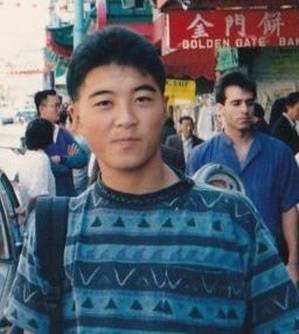 Yoshihiro HattoriCredit: Hattori family, via English WikipediaEditorial useSource
The short answer
In 1992, 16-year-old Japanese exchange student Yoshihiro Hattori was fatally shot by homeowner Rodney Peairs in Baton Rouge, Louisiana, after Hattori and his host brother mistakenly went to the wrong house for a Halloween party. Peairs was acquitted of manslaughter but later found civilly liable for Hattori's death.
Wrong House Halloween Disaster | Rodney Peairs / Yoshihiro Hattori Case AnalysisDr. Todd Grande · 13 min1 piece from 1 creator: ranked, with duplicates removed and short clips set aside.
Start here
Dr. Todd Grande's 13-minute overview: the quickest complete way into the case.
Watch on YouTubeTitles and descriptions are the creators’ own and may not reflect current legal status. The sourced facts are in the file below. Players load only when you press play. Suggest coverage we’re missing.
Yoshihiro Hattori, a 16-year-old exchange student from Nagoya, Japan, was fatally shot on October 17, 1992, in Baton Rouge, Louisiana. Hattori was staying with host family Richard and Holley Haymaker as part of the American Field Service exchange program. On the night of the shooting, Hattori and his host brother, Webb Haymaker, set out for a Halloween party but mistakenly went to the home of Rodney and Bonnie Peairs due to similarities in address and Halloween decorations.
After ringing the doorbell and receiving no answer at the front, the two teens went to a side door, where Bonnie Peairs opened it, saw Haymaker, and then Hattori approaching, and panicked, telling her husband to get his gun. Rodney Peairs, a 30-year-old supermarket butcher, emerged armed with a .44 Magnum revolver. According to accounts of the incident, Hattori said "We're here for the party" and continued moving toward Peairs; Peairs shouted "Freeze!" but Hattori, who had limited English proficiency and was not wearing his contact lenses, may not have understood or seen the weapon. Peairs shot Hattori once in the chest from about five feet away. Hattori died from blood loss in an ambulance shortly afterward.
Baton Rouge police initially declined to charge Peairs, reportedly viewing him as within his rights to shoot a suspected trespasser. Following protests from Louisiana Governor Edwin Edwards and the Japanese consul in New Orleans, Peairs was charged with manslaughter. At the criminal trial, the defense argued that Hattori's movements were unusual and frightening, while the prosecution argued it was unreasonable for an armed, 6-foot-2-inch man to fear an unarmed, 130-pound teenager. After a seven-day trial, a jury acquitted Peairs following approximately three hours of deliberation; some courtroom spectators applauded the verdict.
In a subsequent civil trial, Peairs was found liable for Hattori's death, and the court awarded Hattori's parents US$650,000 in damages. Forensic evidence presented at the civil trial indicated Hattori had been moving slowly or not at all, with his arms away from his body, contradicting Peairs's account. The Peairses' appeals were rejected by the Louisiana Court of Appeals in 1995 and the Louisiana Supreme Court in 1996. Peairs's insurance covered $100,000 of the judgment, leaving him responsible for the remaining $550,000; as of 2022, the Hattoris reportedly had received only the initial $100,000.
The case drew international attention and prompted discussion of race relations and attitudes toward Asians in the United States, with some observers, including the Haymakers, suggesting Hattori's race contributed to Bonnie Peairs's reaction; Bonnie Peairs denied this. Hattori's parents and the Haymakers became gun control activists, meeting with President Bill Clinton in 1993 and supporting passage of the Brady Handgun Violence Prevention Act. Webb Haymaker died by suicide in March 2022, reportedly having struggled for years with survivor's guilt.
Yoshihiro Hattori is born in Nagoya, Aichi Prefecture, Japan.
Hattori arrives in Baton Rouge, Louisiana, as an AFS exchange student, hosted by the Haymaker family.
Hattori and host brother Webb Haymaker go to the wrong house looking for a Halloween party; Rodney Peairs fatally shoots Hattori.
Criminal trial of Rodney Peairs takes place; he is acquitted of manslaughter after roughly three hours of jury deliberation.
Hattori's parents and the Haymakers meet with President Bill Clinton and present a gun-control petition signed by 1.7 million Japanese citizens.
President Clinton signs the Brady Handgun Violence Prevention Act into law.
Walter Mondale presents Hattori's parents with a copy of the Brady Act.
Louisiana Court of Appeals upholds the civil judgment against Rodney Peairs.
Louisiana Supreme Court rejects a second appeal by the Peairses.
Filmmaker Christine Choy releases the documentary 'The Shot Heard Round The World' about Hattori's death.
The Hattoris participate in the March for Our Lives following the Stoneman Douglas High School shooting.
Webb Haymaker dies by suicide at age 46.
Victims first. Every legal label is set from public records and court outcomes, not from the prose.
Coverage is not a source: every fact in this file rests on the records below.
Are you family of someone named in this file? Corrections and removal requests from victims’ families are prioritized.
 Credit: Harris & Ewing, photographerPublic domainSourceCOLDListen
Louisiana State Capitol, Baton Rouge, Louisiana · 1930s
On September 8, 1935, U.S. Senator and former Louisiana Governor Huey Long was shot at the Louisiana State Capitol in Baton Rouge and died 31 hours later. Carl Weiss, son-in-law of a judge Long had just moved to remove from office, was killed at the scene by Long's bodyguards; the exact circumstances of Long's fatal wound remain disputed.
 Credit: UnknownEditorial useSourceSOLVEDListen
Slaughter, Louisiana, United States · 2020s
Lacey Fletcher, a 36-year-old autistic woman in Slaughter, Louisiana, died in January 2022 after years of medical neglect by her parents, who were later convicted of manslaughter in her death.
 SOLVEDListen
Lafayette, Louisiana · 2010s
Schanda Handley survived an armed abduction from her Lafayette home in 2017; her estranged husband later pleaded guilty to second-degree kidnapping and received a 35-year sentence.
 Credit: Woodlawn High SchoolEditorial useSourceSOLVEDListen
Leakin Park, Baltimore, Maryland · 1999
Hae Min Lee, an 18-year-old Baltimore County high school student, was strangled and found buried in Leakin Park in February 1999. Her ex-boyfriend Adnan Syed was convicted of first-degree murder in 2000; the case gained international attention after the 2014 podcast Serial, and Syed's conviction underwent multiple vacaturs, appeals, and reinstatements through 2025.
 Image recordEditorial useSourceSOLVEDListen
California Polytechnic State University (Cal Poly), San Luis Obispo, California · 1996
Kristin Smart, a 19-year-old Cal Poly San Luis Obispo student, disappeared in the early hours of May 25, 1996, after leaving an off-campus party with fellow student Paul Flores, the last person known to have seen her. Flores was convicted of her murder in 2022 and his conviction was upheld on appeal; Smart's remains have never been recovered.
 Credit: Via WikipediaEditorial useSourceUNSOLVEDListen
Fulham, London · 1990s
English television presenter Jill Dando was shot dead outside her London home in 1999, and the case remains unsolved.
Credit: Woodlawn High SchoolEditorial useSourceSOLVEDListenLeakin Park, Baltimore, Maryland · 1999
Hae Min Lee, an 18-year-old Baltimore County high school student, was strangled and found buried in Leakin Park in February 1999. Her ex-boyfriend Adnan Syed was convicted of first-degree murder in 2000; the case gained international attention after the 2014 podcast Serial, and Syed's conviction underwent multiple vacaturs, appeals, and reinstatements through 2025.
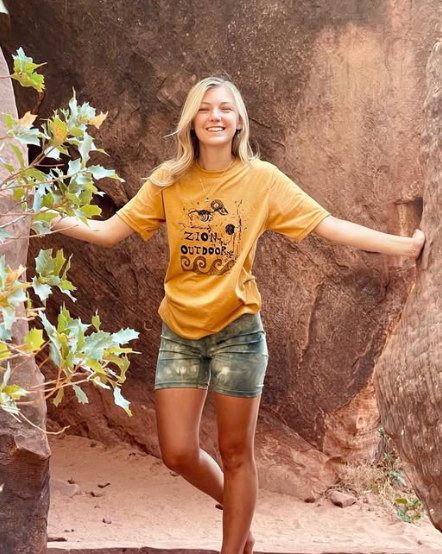 Credit: Instagram/@gabspetito, widely distributed in press coverageEditorial useSourceSOLVEDListen
Bridger–Teton National Forest, Wyoming · 2021
Gabby Petito, a 22-year-old travel vlogger, was killed by strangulation and blunt-force trauma in August 2021 while on a cross-country van trip with her fiancé, Brian Laundrie. Laundrie returned to Florida alone, was named a person of interest, and later died by suicide, leaving a note admitting he had killed her.
 Image recordEditorial useSourceSOLVEDListen
Austin, Texas · 2022
Moriah Wilson, a 25-year-old professional cyclist, was shot and killed at a friend's residence in Austin, Texas, on May 11, 2022, and Kaitlin Armstrong was later convicted and sentenced to 90 years in prison for the killing.
 Credit: Wikimedia Commons, photo by Glenn Francis (PacificProDigital.com)Editorial useSourceSOLVEDListen
Hollywood Hills, Los Angeles, California · 2014
Amie Harwick, a Los Angeles marriage and family therapist and author, was strangled and thrown from her third-floor Hollywood Hills balcony on February 15, 2020, by an ex-boyfriend who had a history of stalking her. He was convicted of first-degree murder in 2023 and sentenced to life without parole.
 COLDListen
Cumming, Georgia · 2018
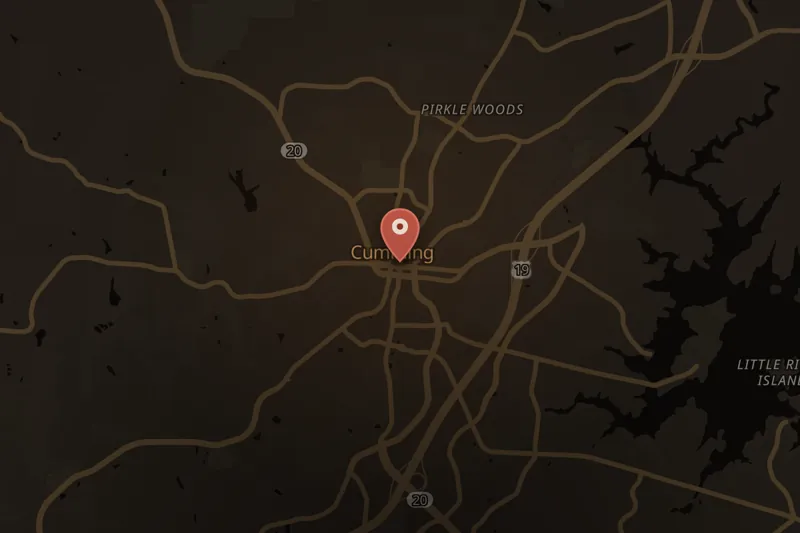
Tamla Horsford, a 40-year-old mother of five, died from a fall at a home in Cumming, Georgia, during a gathering on November 3-4, 2018; two separate investigations ruled her death accidental, though her family has disputed that finding and pushed for further inquiry.