Background
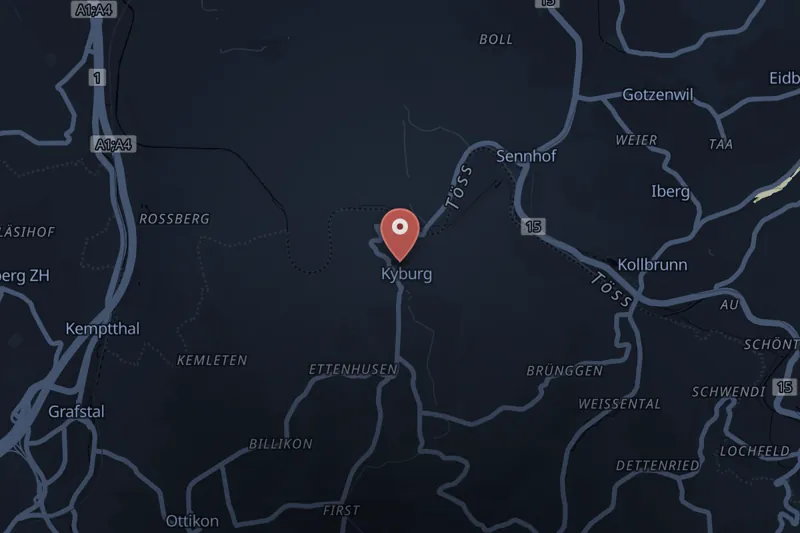
Following the outbreak of the Black Death in the 14th century, waves of persecution against Jewish communities spread across Europe, with many being blamed for the plague. In Switzerland, Jews from Winterthur, Diessenhofen, Aarau, and other towns under the hegemony of the Duke of Austria sought refuge at Kyburg castle, near present-day Winterthur. According to sources, Jews probably began gathering at the fortress as early as November 1348, when the first wave of Black Death–related persecutions began. It is also possible that some survivors of the earlier Zurich massacre of February 1349 made their way to Kyburg seeking safety.
The Duke of Austria, Albert II, was noted at the time as a protector of Jewish communities in his territories, including those at Kyburg as well as in Pfirt and Alsace, described in a contemporary source as "who protected them" (Alliis oppidis ducis Austrie qui ipsos defendebat).
The Massacre
Despite his role as protector, Albert II came under mounting pressure from other Imperial cities — which had already exterminated their own Jewish populations — to kill the Jews sheltering at Kyburg. Sources indicate the Duke was effectively given an ultimatum: burn the Jews himself, or the cities would carry out the killing themselves. Historian Augusta Steinberg is quoted as observing that the Duke "wanted to maintain the authority over his own lands and play the executioner," suggesting his decision was motivated in part by a desire to preserve his own authority rather than cede power to the cities.
In September 1349, Albert II ordered the burning of the Jews gathered at Kyburg, recorded in a contemporary source as "Sed dux per suis iudices madavit eos cremari" (the Duke ordered through his judges that they be burned). On 18 September 1349, 330 Jews who had taken refuge in the castle were burned within the fortress.
Significance
The Kyburg massacre is described as one of the deadliest massacres of Jews in Swiss areas during the Black Death persecutions of the mid-14th century.

 Credit: Stadtpolizei ZürichPublic domainSourceSOLVEDListen