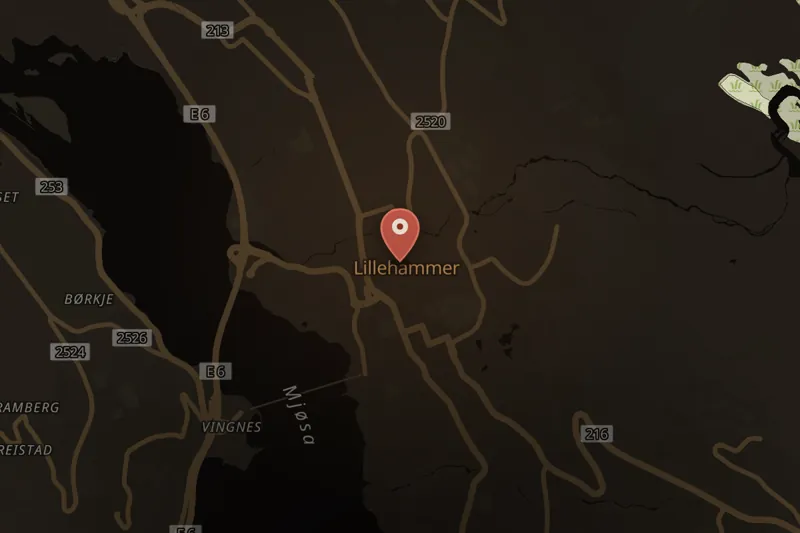
On the evening of 21 July 1973, Ahmed Bouchikhi, a Moroccan waiter living in Lillehammer, Norway, was shot dead by agents of the Israeli intelligence agency Mossad. He was walking home with his pregnant wife after they had been to the cinema when a car carrying four Mossad agents pulled alongside them; two agents got out and shot Bouchikhi thirteen times with a .22 caliber pistol before the group fled by car. His wife witnessed the shooting. Bouchikhi died before police and rescue services arrived. The killing was the first in the town in 36 years and shocked local residents.
The operation was part of a broader Mossad campaign, following the 1972 Munich Olympics massacre, to hunt down individuals linked to the Palestinian militant group Black September. Mossad had received a tip that its intended target, Ali Hassan Salameh, the head of Force 17 and a Black September operative, was working as a waiter in Lillehammer. A fifteen-member Mossad team, joined by Mossad director general Zvi Zamir and operation commander Michael Harari, traveled to the town. Agents identified Bouchikhi after observing him speak with a known Palestinian courier at a swimming pool and mistakenly matched his appearance and languages to descriptions of Salameh. Bouchikhi had no connection to any Palestinian armed group, and his encounter with the courier was coincidental.
The sudden presence of more than a dozen strangers in the small city drew the attention of local police, who had already begun watching the group before the shooting. Nine members of the team, including the two who fired the fatal shots, left Norway within a day of the killing. Six others — four men and two women — were arrested, in part because two agents were caught reusing a getaway car with unchanged license plates en route to an airport. Their interrogations led to further arrests and the discovery of incriminating documents and keys to a network of Mossad safe houses.
Five of the six agents were convicted by Norwegian courts of complicity in the killing, receiving sentences ranging from one year to five and a half years; they were released and returned to Israel by 1975. Mossad eventually located and killed Salameh in Beirut on 22 January 1979 using a car bomb, an attack that also killed eight other people.
Israel never officially took responsibility for Bouchikhi's death. In January 1996, then–Prime Minister Shimon Peres said Israel would not accept responsibility but would consider compensation. Israel subsequently paid a total of roughly US$401,000 to Bouchikhi's widow, daughter, and a son from a previous marriage, alongside a statement expressing "sorrow" over his "unfortunate" death, without an apology. Norway reopened the case in 1990 and issued a global arrest warrant in 1998 for operation leader Michael Harari, who had evaded capture, but closed the case in 1999 after concluding a conviction was unlikely.

 Credit: Author: Nærings- og fiskeridepartementet (Norwegian Ministry of Trade, Industry and…Public domainSourceSOLVEDListen