Casepin
Back to cases

Active case

Lynching of George Ward

EJI Marker George Ward Side 2
EJI Marker George Ward Side 2 — Credit: HISTAM · CC BY-SA 4.0

George Ward was born in Kentucky and raised by his grandmother in Circleville, Ohio, before moving to Terre Haute, Indiana, around 1896. He worked as a porter at the Filbeck Hotel, as a coal miner in nearby Seeleyville, and at the Terre Haute Car and Manufacturing Company. Co-workers reportedly described him as a good worker, though he had a prior burglary conviction and had served 30 days in jail in 1899. Ward married Ruth Roberts in 1897 or 1898, and by 1901 the couple had two children under the age of three. The family lived at 1610 Spruce Street in Terre Haute, and Ward's wife was from Lost Creek Township, a Freedmen's town in Vigo County.

On February 25, 1901, Ida Finkelstein, a young white teacher, was attacked and severely injured by shotgun blast and a pen knife wound. Before her death, she reportedly described her attacker as "a colored man dressed in hunting clothes." Ward, known as an avid squirrel hunter who had purchased a shotgun in late 1900, was reported by newspapers to have been seen in hunting clothes riding the same streetcar as Finkelstein earlier that day. On the morning of February 26, 1901, Terre Haute police arrested Ward, asserting that a pen knife with a missing blade matching one left at the assault scene was found in his possession. Ward allegedly confessed to the crime while in custody at the county jail.

Later that afternoon, a crowd of white residents gathered at the jail. Jailers, fearing violence, arranged to transfer Ward to Indianapolis, but before this could happen, the mob broke into the jail using a 25-foot steel-tipped timber, overwhelming the jailer and three deputies, who were fired upon and injured. The mob dragged Ward from his cell, beat him, and struck him in the back of the head with a sledgehammer — a blow believed to have killed him. His body was then dragged to a drawbridge on the Wabash River, where it was hanged before spectators described by the Fort Wayne Sentinel as filling riverbanks, bridges, and rooftops. The mob later burned Ward's body on the riverbank; participants reportedly cut off his toes and collected hobnails from his boots as souvenirs. Estimates suggest more than 1,000 people, including women and children, took part or watched.

Ward's case was never tried in court. A grand jury convened on March 11, 1901, but returned no indictments, and no one was ever charged with breaking into the jail or with Ward's killing. Members of Terre Haute's Black community were terrorized by the lynching, and some fled fearing further violence. This remains the only documented lynching in Vigo County; at least eighteen Black people were lynched in Indiana between 1877 and 1950.

Nearly 120 years later, the community group Facing Injustice, formed in 2019 as part of the Equal Justice Initiative's Community Remembrance Project, began memorialization efforts, including a 2020 soil collection ceremony and a 2021 historical marker unveiling near the lynching site attended by four generations of Ward's descendants. The Indiana State Senate also passed a resolution in April 2021 memorializing Ward.

Key facts

Victims
George Ward, Ida Finkelstein
Date
1901
Location
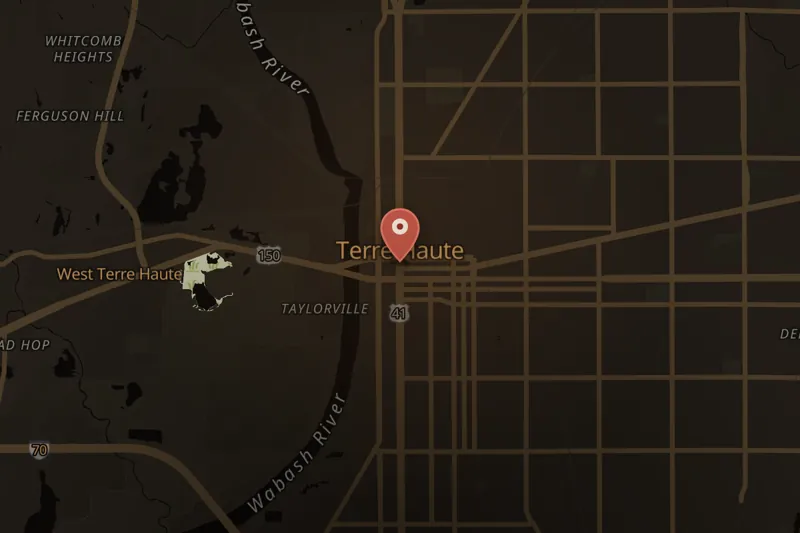
North Fairbanks Park area, near the Wabash River drawbridge, Terre Haute, Indiana
Case status
unsolved

Case timeline

  1. 1899

    George Ward was jailed for 30 days following a burglary conviction.

  2. 1901-02-25

    Ida Finkelstein, a white teacher, was attacked and severely injured by shotgun blast and knife wound in Terre Haute, Indiana.

  3. 1901-02-26

    Terre Haute police arrested George Ward on suspicion of the attack on Finkelstein; a mob later broke into the jail, dragged Ward from his cell, beat him, hanged him from a Wabash River drawbridge, and burned his body.

  4. 1901-03-11

    A grand jury convened but returned no indictments in the case.

  5. 2019

    The organization Facing Injustice formed as part of the Equal Justice Initiative's Community Remembrance Project.

  6. 2020-03-01

    A soil collection ceremony was held at the site of Ward's lynching, with soil sent to the Equal Justice Initiative's Legacy Museum.

  7. 2021-04-21

    The Indiana State Senate passed State Resolution 72 memorializing George Ward.

  8. 2021-09-26

    Facing Injustice unveiled a historical marker dedicated to Ward near the lynching site, attended by four generations of his descendants.

Best coverage

No approved coverage links are attached yet.

People

  • George Ward

    VICTIM

    Black man lynched by a white mob in Terre Haute, Indiana, on February 26, 1901, after being arrested on suspicion of murdering Ida Finkelstein; no charges were ever filed against him and he was never tried.

  • Ida Finkelstein

    VICTIM

    White teacher attacked and fatally injured by shotgun blast and knife wound on February 25, 1901; George Ward was suspected but never tried for her death.

Roles reflect public records and court outcomes at the time of writing — supporting citations are on file under Sources.

Archival records

  • EJI George Ward Marker with Bridge

    archival location

    EJI George Ward Marker with Bridge

    Credit: HISTAM · CC BY-SA 4.0 · Source

  • EJI Marker George Ward Side 2

    archival location

    EJI Marker George Ward Side 2

    Credit: HISTAM · CC BY-SA 4.0 · Source

Places

Common questions

What happened to the victim?
On February 26, 1901, a mob of over 1,000 white residents of Vigo County, Indiana, dragged George Ward, a Black man, from a jail cell in Terre Haute, beat him fatally, hanged him from a bridge, and burned his body; no one was ever charged in his death.
Where did the crime happen?
North Fairbanks Park area, near the Wabash River drawbridge, Terre Haute, Indiana.
What is the current status of the case?
Status: unsolved. Last verified July 2026.

Sources

  1. ENCYCLOPEDICLynching of George WardWikipedia · 2026-07-07
  2. PRESSNegro Hanged and Burned at Terre Haute; Had Confessed to the MurderThe New York Times · 2026-07-07
  3. OFFICIAL / AGENCYIndiana Senate Resolution 72 (2021)iga.in.gov · 2026-07-07

Record history

First published
JUL 07, 2026
Last verified against sources
JUL 07, 2026