Skip to content
Casepin

Ongoing case · 2023

Mindanao State University bombing

Also known as Mindanao mass bomb

ONGOINGCHARGEDPERSON OF INTEREST · NOT CHARGED

Ongoing case: this file carries charge-sheet facts only. Anyone charged is presumed innocent unless convicted.

Updated
Updated Jul 14, 2026
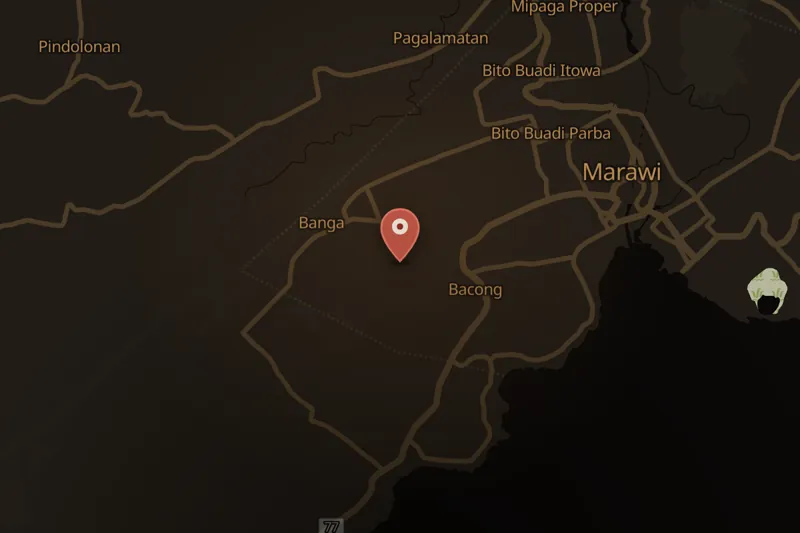
Mindanao State University, Marawi, PhilippinesView on the map

The short answer

Mindanao State University bombing in brief

On December 3, 2023, an improvised explosive device detonated during a Catholic Mass at the gymnasium of Mindanao State University in Marawi, Philippines, killing four people and injuring at least 50 others.

Key facts

Year
2023
Place
Mindanao State University, Marawi, Philippines
Status
ONGOINGOngoing
Outcome
Charged: Kadapi Mimbesa, Arseni Lumen Membisa and Jafar Gamo Sultan

The coverage index

Where to watch & listen

No one's coverage is attached to this file yet.

Know great coverage of this case?

A documentary, a podcast episode, a careful long-form video. Suggest it and an editor will review it before it appears here.

Suggest coverage for Mindanao State University bombing

The case file

What happened

On the morning of December 3, 2023, an improvised explosive device detonated at around 7:30 a.m. during a Catholic Mass held at the Dimaporo Gymnasium of Mindanao State University (MSU) in Marawi, a Muslim-majority city in the Bangsamoro autonomous region of the southern Philippines. The Mass, presided over by Franciscan priest Benigno Flores Jr., who survived, had approximately 72 attendees. The explosion occurred after the Kyrie portion of the liturgy and killed four people — two college professors and two students — while injuring at least 50 others. Police stated the attack was not a suicide bombing. CCTV footage showed two suspected bombers arriving on a motorcycle about 27 minutes before the blast and remaining at the scene for roughly eight minutes; an eyewitness reported seeing a man place a bag believed to contain the explosive device. A bomb threat targeting Marawi, without a specified target, had reportedly circulated the night before.

MSU's gymnasium was used for Sunday Mass because the campus's small chapel could not accommodate the congregation. The university's unfenced, seven-barangay campus had operated under a special security arrangement that barred military and police deployment prior to the bombing. Marawi itself was the site of a five-month siege in 2017 between Islamic State-affiliated insurgents and the Armed Forces of the Philippines that killed more than 1,100 people.

On the day of the bombing, Islamic State claimed responsibility, a claim authorities said was still being validated; the Maute Group and Abu Sayyaf were also named as possible perpetrators. Authorities speculated the attack may have been retaliation for recent government operations against the Dawlah Islamiyah group, which had suffered numerous casualties in the weeks before the bombing. The Philippine National Police named several "persons of interest," including Arseni Lumen Membisa ("Lapitos") and Wahab Sandigan Macabayao, along with Kadapi Mimbesa ("Engineer"), an alleged explosives expert who had twice enrolled at MSU without completing his studies. None of these individuals have been reported as convicted. Jafar Gamo Sultan was arrested on December 6, 2023, and two additional suspects were arrested on December 9, 2023. On January 26, 2024, a suspect identified only as "Omar" was killed in a firefight with the Philippine Army; the AFP later confirmed on February 12, 2024, that Membisa had also died in that clash, based on information from a surrendered militant. The bombing prompted the suspension of MSU classes, evacuation of roughly 600 students, national and international condemnation, a Philippine House resolution labeling it a terrorist attack, and a joint PNP-AFP security operation. Pope Francis publicly prayed for the victims, who were later included in the Vatican's New Martyrs catalogue. Disinformation and hate speech concerns emerged following the attack, including a fabricated quote falsely attributed to a Bangsamoro government official.

13 dated entries · 2017–2024

Timeline

  1. Five-month siege in Marawi between Islamic State-affiliated insurgents and the Armed Forces of the Philippines killed over 1,100 people.

  2. A bomb threat targeting Marawi reportedly circulated, without a specified target.

  3. An improvised explosive device detonated during Catholic Mass at MSU's Dimaporo Gymnasium in Marawi at around 7:30 a.m., killing four people and injuring at least 50; Islamic State claimed responsibility the same day.

  4. MSU classes and extracurricular activities suspended indefinitely; students and staff began being repatriated to home provinces.

  5. Students and alumni gathered at the Dimaporo gymnasium to light candles for victims.

  6. House of Representatives adopted Resolution 1504 condemning the bombing; suspect Jafar Gamo Sultan arrested in Marawi; Philippine Senate held closed-door briefing with security officials; CBCP day of mourning held.

  7. AFP admitted a possible security failure 'in a way'; memorandum set in-person class resumption for December 11.

  8. Two more suspects, referred to as 'Maausor' and 'Monatanda/Titing', arrested in Lumbayanague.

  9. In-person classes resumed at MSU amid student objections and protests.

  10. Muslim and Christian leaders held an interfaith meeting resulting in a joint statement condemning the bombing (through January 17, 2024).

  11. Suspect known as 'Omar' killed along with eight other Dawlah Islamiyah members in a firefight with the Philippine Army in Piagapo, Lanao del Sur.

  12. AFP confirmed suspect Arseni Lumen Membisa had been killed in the January 26 firefight, based on information from a surrendered militant.

  13. Membisa, described as the last known suspect in the bombing, was reported arrested in a joint PNP-AFP operation in Iligan.

4 named in this file

People

Victims first. Every legal label is set from public records and court outcomes, not from the prose.

  • Arseni Lumen Membisa

    CHARGED

    Charged with violating Section 4 of the Anti-Terrorism Act of 2020 (Republic Act 11479), under a no-bail warrant of arrest issued by an Iligan City court on 11 October 2024; arrested on 16 October 2024, accused of driving the motorcycle used to transport the bomb to Mindanao State University.[3]

  • Jafar Gamo Sultan

    CHARGED

    Charged by the Philippine National Police, via criminal complaints filed before the Marawi City Prosecutor's Office, with illegal possession of explosives and harboring a criminal, over the 3 December 2023 Mindanao State University gymnasium bombing; arrested 6 December 2023 in Marawi as an alleged accomplice/companion of the bomber. A separate charge of aiding a known terrorist under the Anti-Terrorism Act was also filed against him. The complaints are at the prosecutor's-office (preliminary investigation) stage; no report found yet of a court information or case resolution.[3]

  • Kadapi Mimbesa

    CHARGED

    Identified by the Armed Forces of the Philippines as the bomb-making "Engineer" who planted the explosive that killed four people at the MSU gymnasium; killed in a military operation in Piagapo, Lanao del Sur, on 25-26 January 2024, so was never prosecuted.[3]

  • Wahab Sandigan Macabayao

    PERSON OF INTEREST · NOT CHARGED

    Identified by the Philippine National Police as a person of interest and former Maute Group henchman allegedly involved in the 3 December 2023 Mindanao State University bombing; he fled and remains at large as of the most recent reporting — not arrested, not charged.[3]

3 cited

Sources

Coverage is not a source: every fact in this file rests on the records below.

  • 2 Press
  • 1 Encyclopedic
  1. Explosion at Marawi State University in southern Philippines

    PressAssociated PressAccessed Jul 7, 2026

  2. Mindanao State University bombing

    EncyclopedicWikipediaAccessed Jul 7, 2026

Trust

Record history

First published
Jul 7, 2026
Last verified against sources
Jul 7, 2026
Corrections
None

Are you family of someone named in this file? Corrections and removal requests from victims’ families are prioritized.