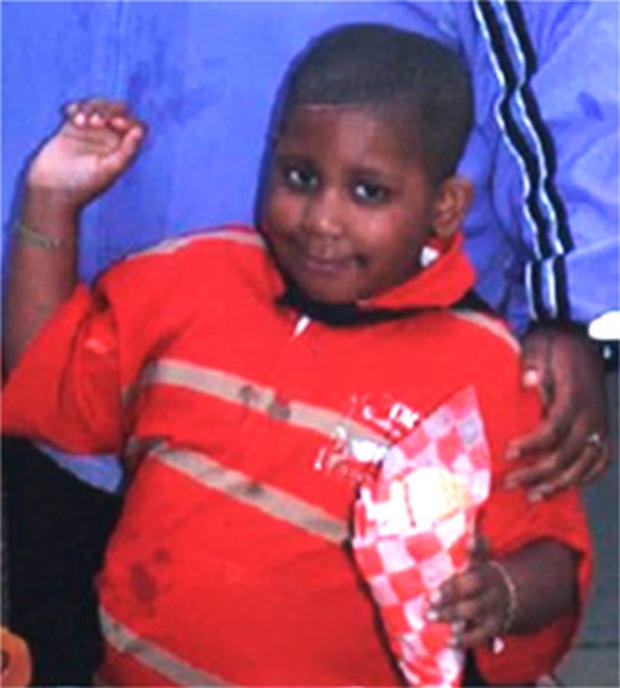
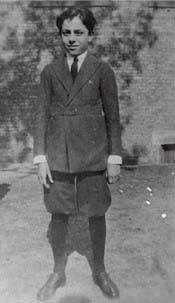
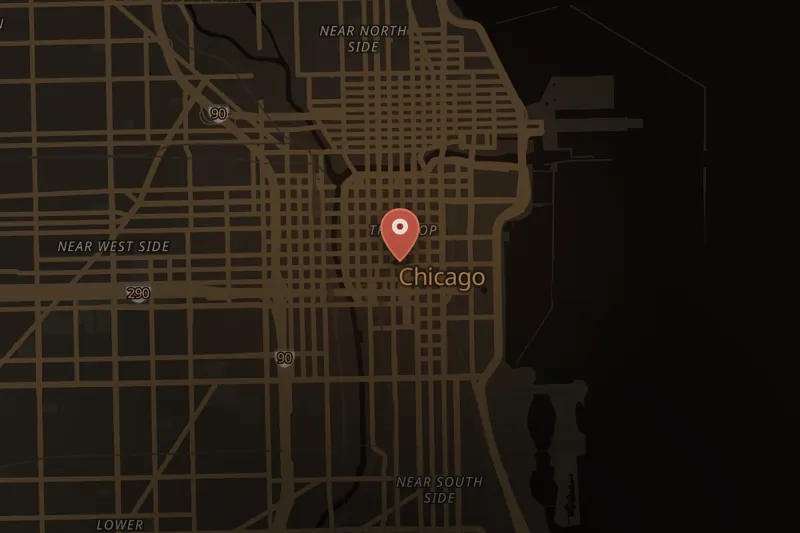
On the afternoon of May 21, 1924, 14-year-old Robert "Bobby" Franks was offered a ride home from school in Kenwood, Chicago, by Nathan Leopold, 19, and Richard Loeb, 18, two University of Chicago-affiliated students who had spent months planning to commit what they described as a "perfect crime." Loeb struck Franks in the head with a chisel while the boy sat in the car; Franks was gagged and left to die in the back seat. The pair drove to a remote area near Wolf Lake, stripped the body, and hid it in a culvert along railroad tracks, pouring acid on the face and genitals in an attempt to prevent identification, including obscuring the fact that the boy was circumcised.
After disposing of evidence, Leopold called Franks' mother posing as a kidnapper and a ransom note was later mailed to the family, though the extortion plan collapsed once Franks' body was discovered the next day. Investigators traced a pair of eyeglasses found near the body to Leopold through an unusual hinge mechanism sold to only three Chicago customers. Leopold's alibi—that he had been out with his car and had lent it to a chauffeur—was undermined when the chauffeur and his wife told police the car had been in for repairs that day. Under questioning, Loeb confessed first, saying Leopold had planned the crime and killed Franks; Leopold then told police the opposite, that he had driven while Loeb struck the fatal blows. Both confessions were announced by the state's attorney on May 31, 1924. During the later sentencing hearing, psychiatric testimony indicated that Loeb had washed blood from his hands at the crime scene, which most observers took as evidence that Loeb, not Leopold, delivered the fatal blows.
Leopold's and Loeb's families retained defense attorney Clarence Darrow, who entered guilty pleas on their behalf rather than risk a jury trial that could result in a death sentence. The proceeding, technically an extended sentencing hearing, lasted 32 days before Cook County Circuit Court Judge John R. Caverly. The prosecution, led by State's Attorney Robert E. Crowe, presented 88 witnesses. Darrow's defense presented psychiatric testimony on the defendants' backgrounds and delivered an eight-hour closing argument opposing capital punishment on the grounds of the defendants' youth and psychological makeup. On September 10, 1924, Judge Caverly sentenced both Leopold and Loeb to life imprisonment for murder plus 99 years for kidnapping, citing the defendants' youth and legal precedent as his primary reasoning.
In prison, Leopold and Loeb were largely kept apart but continued their friendship and worked on educational programs within the prison system. On January 28, 1936, Loeb was fatally attacked by a fellow inmate in a shower room; the inmate was acquitted at trial in June 1936 after claiming Loeb had attempted to sexually assault him, a claim disputed by others including the prison's Catholic chaplain. Leopold was released on parole on March 13, 1958, after 33 years of imprisonment, having worked with a Church of the Brethren-sponsored hospital program in Puerto Rico as part of his rehabilitation. He died of a heart attack related to diabetes on August 29, 1971, at age 66.

 Credit: Compiled by "a member of the Chicago Press"; published by Theo A. Patterson, Progressive…Public domainSourceSOLVEDListen