Background
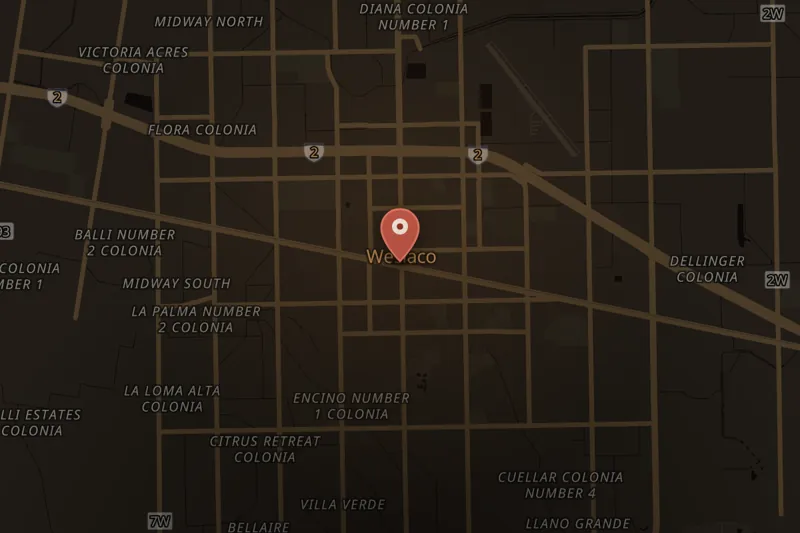
Elias Villarael Zarate was a 22-year-old Mexican immigrant working on a crew erecting a creamery in Weslaco, Hidalgo County, Texas, in November 1922. According to historian Lawrence A. Cardoso, Texas was extremely hostile toward Mexicans in the years following World War I, with reports of one Mexican national being lynched per week in the state shortly after the war ended.
On Thursday, November 9, 1922, a fight broke out between Zarate and a co-worker, J.L. Sullivan, after Sullivan complained about the quality of Zarate's work and got him fired. During the altercation, Sullivan's arm was broken. Weslaco police arrested Zarate and placed him in a building that was sometimes used as a temporary jail; the building was left unguarded.
The Lynching
At approximately 8:00 PM that same evening, a mob of 8 to 15 people broke the lock on the temporary jail, forced Zarate at gunpoint into a car, and abducted him. Police did not notice his absence for hours. Zarate was never seen alive again. His body was discovered on a road roughly five miles (8.0 km) from Weslaco on November 11, 1922.
The killing was recorded as the 15th lynching in Texas that year. According to a later United States Senate Committee on the Judiciary compilation, it was the 56th of 61 documented lynchings in the United States during 1922.
Aftermath
Following the lynching, anti-minority sentiment escalated in parts of Texas, with large white mobs reportedly roaming the streets of some cities and towns demanding that Black and Mexican residents leave. On November 16, 1922, hundreds of white residents marched through the streets of Breckenridge, Texas.
Mexican Consul General Eduardo Ruiz protested the lynching and the accompanying anti-Mexican demonstrations to Texas Governor Pat Morris Neff. After receiving no response from Neff, Ruiz escalated the complaint to U.S. Secretary of State Charles Evans Hughes. Hughes subsequently directed Governor Neff to act, and the Governor deployed additional police to Weslaco, which reportedly improved conditions for Mexican residents in the region.
Status
No individuals were identified, charged, or convicted in connection with Zarate's killing according to the available record. The case remains formally unsolved.

 SOLVEDListen