Active case
Rosewood Massacre

Rosewood was a small, predominantly Black, self-sufficient community in Levy County, Florida, settled in 1847 and connected to the outside world via the Seaboard Air Line Railway. By 1920 it had churches, a school, a Masonic hall, general stores, and a population that peaked around 355 in 1915. Relations with the nearby white town of Sumner had generally been described as amicable, though Florida in this period had among the highest lynching rates in the country, including the 1922 lynching of Charles Strong and the Perry massacre of December 1922.
The violence began on January 1, 1923, after Fannie Taylor, a 22-year-old white woman in Sumner, reported that she had been beaten by a Black man who had entered her home. Rumors that she had also been raped and robbed spread quickly among white residents, though her original account described only an assault. Sheriff Robert Elias Walker organized a posse to search for Jesse Hunter, a Black escapee from a chain gang, and the search drew hundreds of armed white men from surrounding towns. During the search, a mob tortured and then fatally shot Sam Carter, a local Black blacksmith, after he led them to a site where he said he had taken the fugitive; his body was hung from a tree.
On the evening of January 4, an armed white mob surrounded the home of Sarah Carrier in Rosewood, where 15 to 25 people, including many children, had gathered for protection. Sylvester Carrier, Sarah's son, defended the house; gunfire broke out, and Sarah and Sylvester Carrier were killed, along with two white men, C. P. "Poly" Wilkerson and Henry Andrews. Several others were wounded on both sides. Over the following days, a mob numbering in the hundreds burned Rosewood's churches, homes, and other structures, and additional Black residents were killed, including Lexie Gordon and Mingo Williams. James Carrier, who was partially paralyzed from a prior stroke, was tortured and shot after being found by the mob on January 5. Survivors fled into nearby swamps, and beginning January 6, some were evacuated by train to Gainesville with the help of sympathetic white residents including train conductors John and William Bryce and store owner John Wright. A final mob burned the remaining structures in Rosewood on January 7.
Officially, eight people were recorded as killed (six Black, two white), though survivor accounts have suggested a higher toll among Black victims, including claims of a mass grave. Governor Cary Hardee convened a grand jury in February 1923, which heard 25 witnesses but returned no indictments. No arrests were ever made. Rosewood's Black and white residents alike abandoned the town, which was never repopulated. The events received national newspaper coverage at the time but were largely absent from historical memory for six decades until journalist Gary Moore's reporting in the early 1980s and a subsequent CBS 60 Minutes segment brought renewed attention. In 1993, survivors and descendants filed a claims case against the state of Florida, and the Florida Legislature later commissioned a report on the massacre, leading to compensation for survivors and their descendants. The Rosewood site was designated a Florida Heritage Landmark in 2004.

Key facts
- Victims
- Sarah Carrier, Henry Andrews, C. P. Wilkerson, Lexie Gordon, Sylvester Carrier, Mingo Williams, James Carrier, Sam Carter
- Date
- 1923
- Location
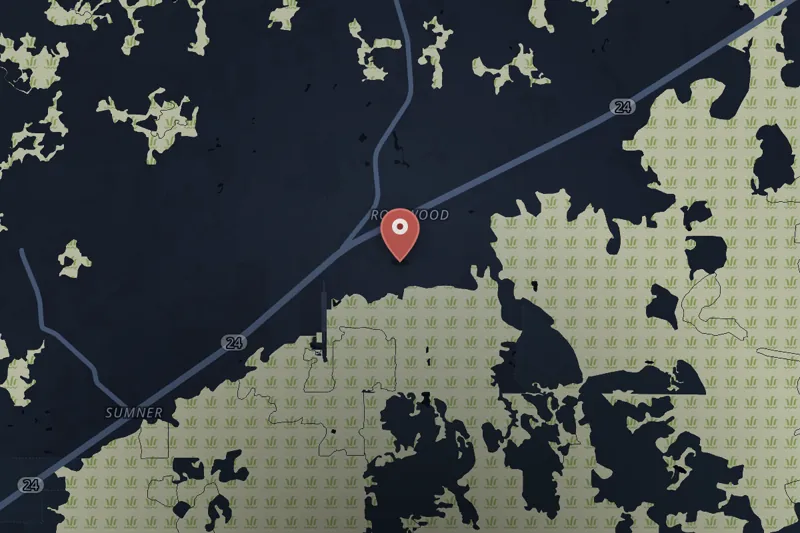
- Rosewood, Levy County, Florida, United States
- Case status
- unsolved
Case timeline
1847
Rosewood is settled in Levy County, Florida, near Cedar Key.
1915
Rosewood's population peaks at approximately 355 residents.
1922-12
The Perry massacre occurs in Perry, Florida, weeks before the Rosewood violence.
1923-01-01
Fannie Taylor reports being assaulted in her home in Sumner, Florida, triggering a search for a Black suspect.
1923-01-02
A mob tortures and fatally shoots Sam Carter, a Black blacksmith, and hangs his body from a tree.
1923-01-04
An armed white mob besieges the Carrier house in Rosewood; Sarah Carrier, Sylvester Carrier, C. P. "Poly" Wilkerson, and Henry Andrews are killed in the resulting gunfire.
1923-01-05
A larger mob forms; Lexie Gordon and Mingo Williams are killed, and James Carrier is tortured and shot after being located by the mob.
1923-01-06
Train conductors John and William Bryce and store owner John Wright help evacuate Black survivors from Rosewood to Gainesville.
1923-01-07
A mob of 100 to 150 white men burns the remaining structures in Rosewood.
1923-02
An all-white grand jury convenes in Bronson, hears 25 witnesses, and finds insufficient evidence to prosecute anyone.
1982
Journalist Gary Moore begins investigating and reporting on the Rosewood massacre for the St. Petersburg Times.
1993
Survivors and descendants file a lawsuit against the state of Florida; the Florida Legislature commissions a report on the massacre.
1997
A feature film about the massacre, directed by John Singleton, is released.
2004
The state of Florida designates the site of Rosewood as a Florida Heritage Landmark.
Best coverage
No approved coverage links are attached yet.
People
Sarah Carrier
VICTIMBlack resident of Rosewood killed by gunfire during the January 4, 1923 mob siege of her home.
Robert Elias Walker
LAW ENFORCEMENTLevy County Sheriff who organized the initial posse, attempted to manage the mob, and later informed Governor Hardee he did not require state intervention.
Henry Andrews
VICTIMWhite man killed by gunfire while participating in the mob's assault on the Carrier house.
C. P. Wilkerson
VICTIMWhite man killed by gunfire he encountered while participating in the mob's assault on the Carrier house.
Lexie Gordon
VICTIMBlack Rosewood resident, ill with typhoid fever, killed by a shotgun blast after fleeing her burning home.
Sylvester Carrier
VICTIMBlack resident of Rosewood killed defending his family's home during the January 4, 1923 mob siege.
Mingo Williams
VICTIMBlack man shot and killed by a group of white men while collecting turpentine sap near Bronson.
James Carrier
VICTIMPartially paralyzed Black resident tortured and fatally shot by a mob on January 5, 1923.
Sam Carter
VICTIMBlack blacksmith and teamster tortured and fatally shot by a mob on January 2, 1923, after being accused of aiding an escaped prisoner.
Roles reflect public records and court outcomes at the time of writing — supporting citations are on file under Sources.
Archival records

archival location
House in Roswwood, Florida, US
Credit: Jud McCranie · CC BY-SA 4.0 · Source

archival location
Levy County Florida Courthouse
Credit: W.H. Whitehead per image · Public domain · Source

other document
Rosewood 1923 map from Tropic Magazine
Credit: w:User:Moni3 · Public domain · Source

archival location
Rosewood Florida Highway Marker
Credit: Moni3 at English Wikipedia · Public domain · Source

crime scene press
Rosewood Florida rc12409
Credit: The Literary Digest Magazine · Public domain · Source
other document
Rosewood Massacre Map
Credit: US Census, Ruhrfisch, inset is based on map by User:Dbenbenn · CC BY-SA 3.0 · Source
Places
Common questions
- What happened to the victim?
- In early January 1923, white mobs in rural Levy County, Florida, killed at least six Black residents and destroyed the predominantly Black community of Rosewood after a white woman in nearby Sumner alleged she had been assaulted by a Black man; two white men were also killed in the resulting violence, and no one was ever prosecuted.
- Where did the massacre happen?
- Rosewood, Levy County, Florida, United States.
- What is the current status of the case?
- Status: unsolved.
Sources
- ENCYCLOPEDICRosewood massacreWikipedia · 2026-07-07
- PRESSContemporaneous coverage — The New York TimesThe New York Times · 2026-07-07
- OFFICIAL / AGENCYContemporaneous coverage — loc.govloc.gov · 2026-07-07
Record history
- First published
- JUL 07, 2026