Casepin
Back to cases

Active case

Duluth lynchings

UNSOLVED19201st Street and 2nd Avenue East, Duluth, Minnesota3 SOURCESUPDATED JUL 2026

Documents violence · sexual violence · ongoing investigation — written to inform, not to shock.

Illustrative

On June 15, 1920, three African-American circus workers—Elias Clayton, Elmer Jackson, and Isaac McGhie—were taken from the Duluth, Minnesota city jail and lynched by a white mob estimated at between 1,000 and 10,000 people. The men had been arrested as suspects after rumors spread that six Black circus workers had raped and robbed a 19-year-old white woman, Irene Tusken, near the John Robinson Circus grounds the previous night. A physician who examined Tusken on the morning of June 15 found no physical evidence of rape or assault, and the rape accusation was later discredited.

The lynchings occurred against a backdrop of postwar racial tension in Duluth, a rapidly industrializing city where a small Black population, drawn in part by jobs at U.S. Steel, competed with a large immigrant workforce for employment. Two years earlier, in September 1918, a Finnish immigrant, Olli Kinkkonen, had been lynched in Duluth after being accused of draft evasion; authorities did not pursue murder charges in that case. The Duluth lynchings occurred in the aftermath of the 1919 "Red Summer," a period of widespread racial violence across the United States.

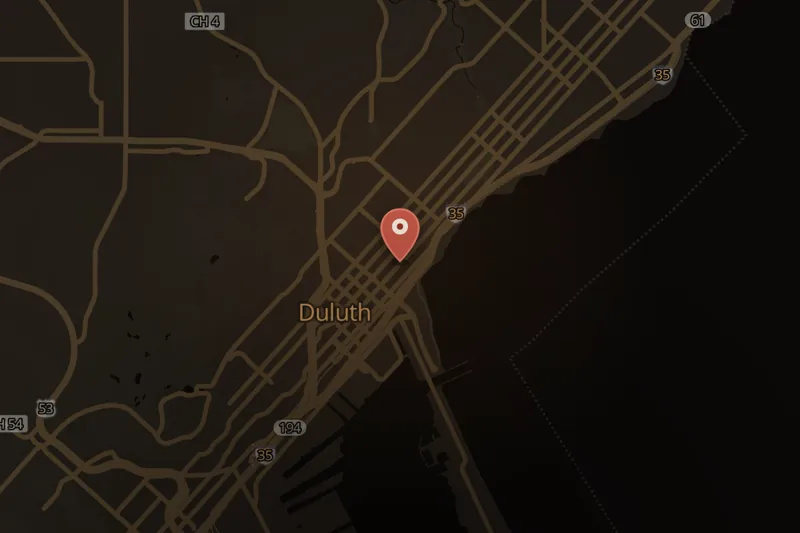
On the night of the lynching, Duluth Commissioner of Public Safety William F. Murnian ordered police not to use their guns to protect the prisoners. The mob broke into the jail using timbers, bricks, and rails, seized Clayton, Jackson, and McGhie, held a mock "trial," and hanged the three men from a light pole at 1st Street and 2nd Avenue East. The Minnesota National Guard arrived the following day to secure the city and protect remaining prisoners.

A special grand jury found Murnian "not competent" and criticized the police department. Thirty-seven indictments were issued against mob members—twenty-five for rioting and twelve for first-degree murder—but only three men, Louis Dondino, Carl Hammerberg, and Gilbert Stephenson, were convicted, all on rioting charges; none served more than fifteen months, and no one was convicted of the murders. Separately, of the circus workers originally arrested on rape allegations, charges against five were dismissed, William Miller was acquitted, and Max Mason was convicted and sentenced to seven to thirty years, serving four years before release.

Minnesota passed anti-lynching legislation in April 1921, providing for compensation to victims' relatives and for suspension of police officials who failed to protect prisoners from mob violence; no further lynchings have been recorded in the state. That law was repealed in 1984. In 2003, the city of Duluth dedicated the Clayton Jackson McGhie Memorial to the three men. In 2020, on the 100th anniversary of the killings, Minnesota Attorney General Keith Ellison sought reversal of Max Mason's 1920 rape conviction, and the Minnesota Board of Pardons granted him the first posthumous pardon in state history.

Key facts

Victims
Elmer Jackson, Isaac McGhie, Elias Clayton
Date
1920
Location
1st Street and 2nd Avenue East, Duluth, Minnesota
Case status
unsolved

Case timeline

  1. 1918-09

    Finnish immigrant Olli Kinkkonen is lynched in Duluth after being accused of draft evasion; authorities do not pursue murder charges.

  2. 1920-06-14

    The John Robinson Circus arrives in Duluth; Irene Tusken and James Sullivan later report an assault involving circus workers.

  3. 1920-06-15

    Police arrest six Black circus workers as rape suspects; a physician finds no physical evidence of rape or assault; that evening a mob storms the city jail and lynches Elias Clayton, Elmer Jackson, and Isaac McGhie.

  4. 1920-06-16

    The Minnesota National Guard arrives in Duluth to secure the area and protect surviving prisoners.

  5. 1920-06-17

    A grand jury begins proceedings; it eventually issues 37 indictments against mob members, 25 for rioting and 12 for first-degree murder.

  6. 1921

    Max Mason is convicted of rape and sentenced to seven to thirty years in prison; three men are convicted of rioting in connection with the lynching and serve no more than fifteen months.

  7. 1921-04

    Minnesota passes anti-lynching legislation.

  8. 1925

    Max Mason is released from Stillwater State Prison on condition he leave Minnesota.

  9. 1984

    Minnesota's 1921 anti-lynching law is repealed.

  10. 2003-10-10

    The Clayton Jackson McGhie Memorial is dedicated in Duluth.

  11. 2020-06-12

    The Minnesota Board of Pardons grants Max Mason the first posthumous pardon in state history.
  12. 2020-06-15

    Minnesota Governor Tim Walz visits the memorial on the 100th anniversary and issues a proclamation recognizing the day.

Best coverage

No approved coverage links are attached yet.

People

  • Carl Hammerberg

    CONVICTED

    Convicted of rioting in connection with the lynching; served no more than fifteen months.

    citation on file

  • Elmer Jackson

    VICTIM

    Circus worker lynched by a mob on June 15, 1920 after being arrested on an unsubstantiated rape accusation.

    citation on file

  • Max Mason

    EXONERATED

    Circus worker convicted of rape in 1921 and imprisoned four years; posthumously pardoned in 2020 as the first posthumous pardon in Minnesota history.

    citation on file

  • Isaac McGhie

    VICTIM

    Circus worker lynched by a mob on June 15, 1920 after being arrested on an unsubstantiated rape accusation.

    citation on file

  • Louis Dondino

    CONVICTED

    Convicted of rioting in connection with the lynching; served no more than fifteen months.

    citation on file

  • Gilbert Stephenson

    CONVICTED

    Convicted of rioting in connection with the lynching; served no more than fifteen months.

    citation on file

  • William Miller

    ACQUITTED

    Circus worker tried for rape alongside Max Mason and acquitted.

    citation on file

  • Elias Clayton

    VICTIM

    Circus worker lynched by a mob on June 15, 1920 after being arrested on an unsubstantiated rape accusation.

    citation on file

Places

Common questions

What happened to the victim?
On June 15, 1920, a white mob of thousands broke into the Duluth, Minnesota city jail and lynched three Black circus workers—Elias Clayton, Elmer Jackson, and Isaac McGhie—who had been arrested on an unsubstantiated rape accusation. No one was ever convicted of the murders.
Where did the crime happen?
1st Street and 2nd Avenue East, Duluth, Minnesota.
Who was convicted?
Carl Hammerberg (Convicted of rioting in connection with the lynching; served no more than fifteen months.), Louis Dondino (Convicted of rioting in connection with the lynching; served no more than fifteen months.), and Gilbert Stephenson (Convicted of rioting in connection with the lynching; served no more than fifteen months.).
What is the current status of the case?
Status: unsolved. Last verified July 2026.

Sources

  1. Duluth lynchingswikipedia · Wikipedia · 2026-07-07
  2. Contemporaneous coverage — revisor.mn.govnews · revisor.mn.gov · 2026-07-07
  3. Contemporaneous coverage — US Department of Justicenews · US Department of Justice · 2026-07-07

Last verified JUL 2026