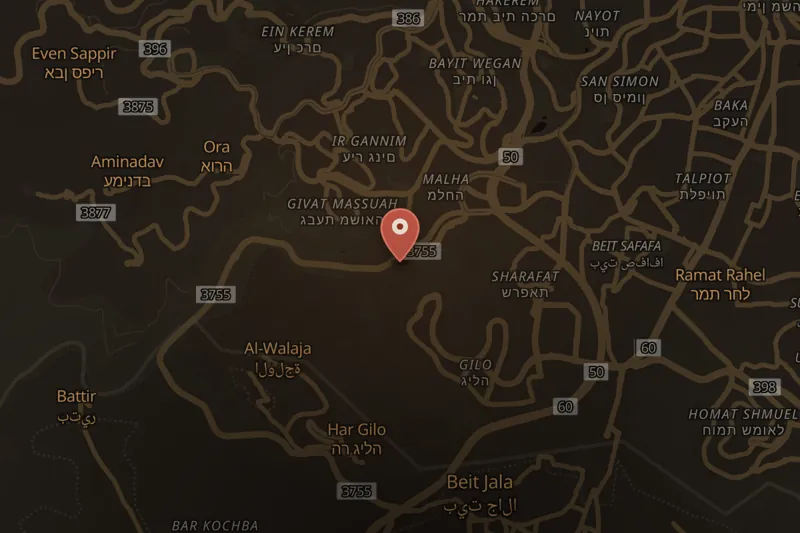
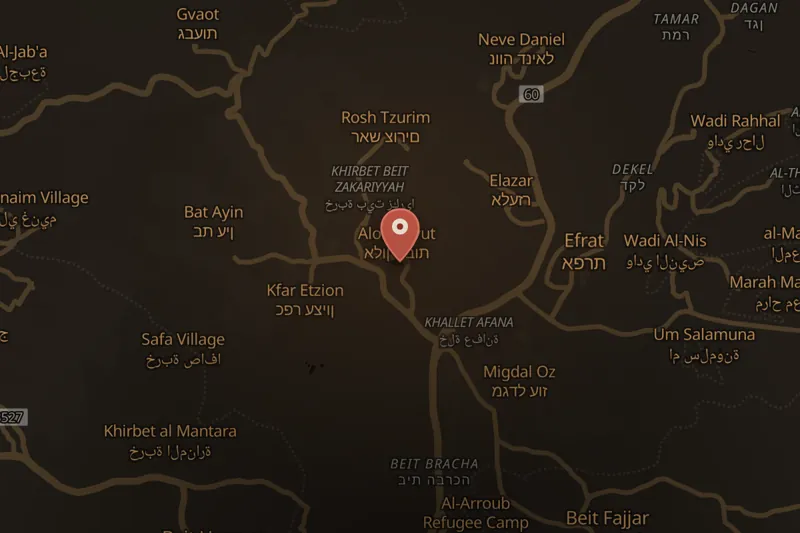
On 10 November 2014, an attack occurred at the bus and hitch-hiking station at the entrance to the Israeli settlement of Alon Shvut. A Palestinian man, later identified as Maher al-Hashlamun, attempted to drive his vehicle into a crowd waiting at the station. When his car struck a bollard, he exited the vehicle and attacked bystanders with a knife. A security guard shot al-Hashlamun in the chest, and he was taken to Hadassah Medical Center in Ein Kerem for treatment.
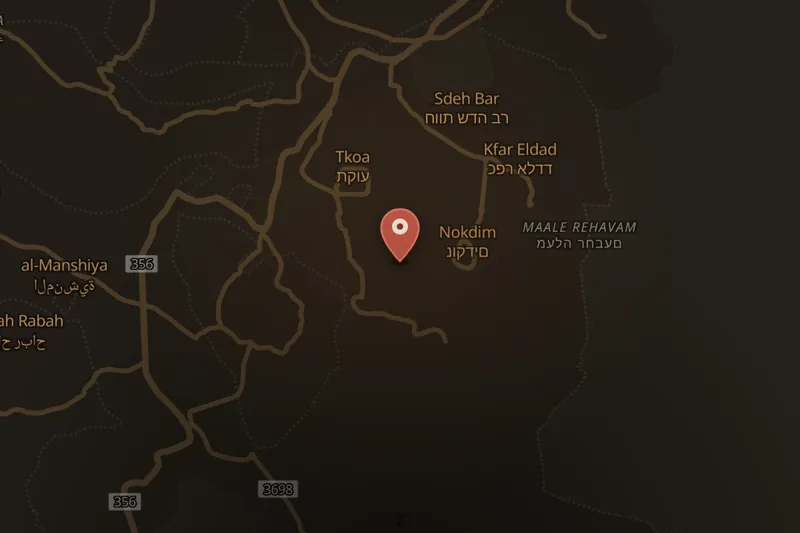
The attack killed Dalia Lemkus, a 26-year-old woman who lived in Tekoa. She was stabbed in the neck and was declared dead at the scene. Lemkus was the daughter of South African immigrants to Israel and had recently completed a university degree in occupational therapy. She was buried in Tekoa. She had previously been the victim of violence: in February 2006 she was stabbed while waiting at a hitchhiking station at the Gush Etzion Junction, an incident The Jewish Press described as "eerily similar" to her killing. Despite this earlier attack, she continued to use the official hitching posts in the area, which exist because public transit is scarce there, viewing her continued use of them as an act of defiance against terrorism. She was known to have said, "You think I'm going to let them beat me?"
Two other people were injured in the November 2014 attack. A man in his mid-20s was stabbed in the stomach and suffered light-to-moderate wounds; he was taken to Hadassah Medical Center in Jerusalem's Ein Kerem. A man in his 50s suffered lighter wounds, including stab wounds to the jaw, and was taken to Shaare Zedek Medical Center in Jerusalem.
The attack occurred approximately four hours after the killing of Sergeant Almog Shiloni in Tel Aviv, and took place at the same bus/hitch-hiking stop where three Israeli teenagers were kidnapped and murdered in June 2014.
The perpetrator, a resident of Hebron and a member of Islamic Jihad, had previously been imprisoned in Israel from 2000 to 2005 after being convicted of throwing Molotov cocktails at an IDF patrol. In March 2015, he was sentenced to serve two life sentences for the attack.
According to CNN, the attack came "amid a new round of infighting between Palestinian factions." Analyst Daniel Nisman told The Wall Street Journal that such attacks were not centrally coordinated but were inspired by weeks of social media propaganda from Palestinian groups praising individuals who had attacked Israelis and calling for others to replicate such attacks, describing them as spontaneous "copycat attacks." In response to the attack, Israeli Prime Minister Benjamin Netanyahu convened the security cabinet and ordered some troops to shift from training exercises to active duty protecting roads from rioters and terrorists.

 Credit: Unknown authorPublic domainSourceSOLVEDListen