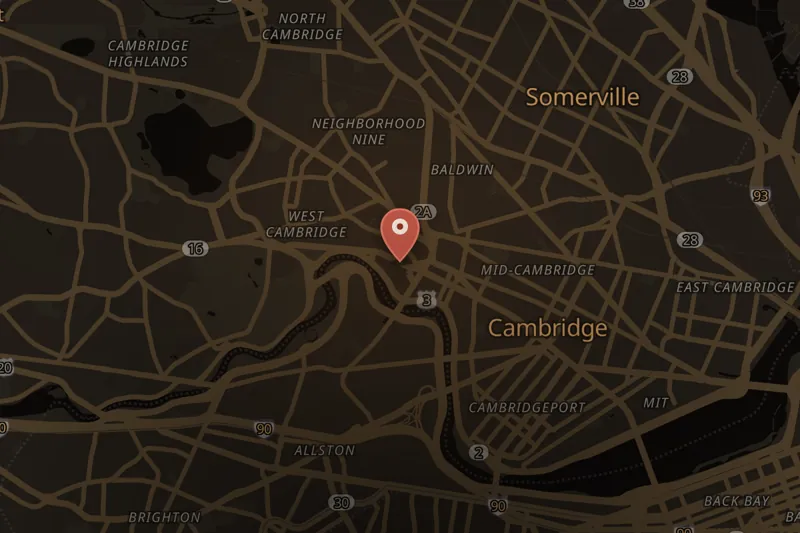
Jane Britton, a 23-year-old doctoral candidate in Near Eastern archaeology at Harvard University, was found dead in her fourth-floor apartment at 6 University Road in Cambridge, Massachusetts, on January 7, 1969. She had last been seen alive around 12:30 a.m. that day, leaving the apartment of her neighbors, Donald and Jill Mitchell, after sharing sherry with them. Her boyfriend, James Humphries, discovered her body shortly after noon when she failed to appear for her doctoral general examinations and did not answer repeated phone calls. She had been struck multiple times in the head with a pointed object, sustaining skull fractures, and had also been raped. The medical examiner ruled the death a homicide by blunt force trauma occurring roughly ten hours before discovery.
The case drew national media attention in part because Britton's father was an administrator at Radcliffe College. Investigators noted that no valuables had been taken and that Britton's body had been sprinkled with a reddish-brown powder later identified as red ochre or iron oxide, a substance used in ancient funeral rites in various cultures — a detail that fueled speculation the killer was an academic acquaintance familiar with archaeological practices. Harvard anthropology department chair Stephen Williams provided investigators a list of about 100 students and faculty, most of whom testified before a February 1969 grand jury. Colleague C. C. Lamberg-Karlovsky dismissed the ochre theory as "completely fabricated and without foundation." A neighbor reported seeing a man about 6 feet tall and 170 pounds running from the building around 1:30 a.m. the night of the murder, and investigators recovered an unidentified set of fingerprints from the apartment.
Convicted Boston Strangler Albert DeSalvo had earlier confessed to a 1963 rape and murder in the same building, but he was already institutionalized at the time of Britton's death and could not have been responsible. Speculation persisted that a second, unidentified "Boston Strangler"-style offender might have been involved, particularly after a similar homicide of Ada Bean, a former Harvard research secretary, occurred about a mile away on February 6, 1969.
The case remained unsolved for decades despite periodic reexamination, including DNA testing on preserved semen evidence in the late 1980s and again in 2006, neither of which produced a match. Renewed efforts by journalists and researchers seeking public records in the early 2010s coincided with advances in forensic DNA technology. A 2017 retest using Y-STR analysis produced a "soft hit" in the CODIS database on Michael Sumpter, a convicted rapist who had died in 2001 while in hospice care for terminal cancer, having been paroled from a sentence for a 1975 rape. Investigators confirmed the match using a DNA sample from Sumpter's brother, narrowing the field to roughly 0.08% of the male population. Additional DNA matches linked Sumpter to two other unsolved 1970s Cambridge rape-murders and another rape, though authorities did not consider him a suspect in the Ada Bean case. In November 2018, Middlesex County District Attorney Marian T. Ryan announced that Sumpter had been identified as responsible for Britton's murder, calling it the oldest cold case Middlesex County law enforcement had solved. Because Sumpter was deceased, no prosecution occurred.


 SOLVEDListen