Start here
THE KENNEDY FAMILY CURSE!

Kendall Rae's 13-minute overview: the quickest complete way into the case.
Watch on YouTubeThe short answer
On June 5, 1968, U. S. Senator Robert F. Kennedy was shot by Sirhan Sirhan at the Ambassador Hotel in Los Angeles shortly after winning the California Democratic presidential primary; he died the next day.
THE KENNEDY FAMILY CURSE!Kendall Rae · 13 min1 piece from 1 creator: ranked, with duplicates removed and short clips set aside.
Start here
Kendall Rae's 13-minute overview: the quickest complete way into the case.
Watch on YouTubeTitles and descriptions are the creators’ own and may not reflect current legal status. The sourced facts are in the file below. Players load only when you press play. Suggest coverage we’re missing.
On the night of June 4–5, 1968, Senator Robert F. Kennedy addressed supporters in the Embassy Ballroom of the Ambassador Hotel in Los Angeles after winning the California and South Dakota Democratic presidential primaries. Leaving the podium, campaign staff redirected him through a kitchen and pantry corridor toward a press area. As Kennedy shook hands with kitchen worker Juan Romero, 24-year-old Sirhan Sirhan stepped from beside an ice machine and fired an eight-shot .22 caliber revolver at close range. Kennedy was struck three times, including a fatal shot fired about one inch from behind his right ear. Five bystanders — William Weisel, Paul Schrade, Elizabeth Evans, Ira Goldstein, and Irwin Stroll — were also wounded. Kennedy was taken first to Central Receiving Hospital and then to Good Samaritan Hospital, where he underwent nearly four hours of neurosurgery. He never regained consciousness and was pronounced dead at 1:44 a.m. on June 6, 1968, at age 42.
Kennedy's body was returned east for a funeral Mass at St. Patrick's Cathedral in New York, with a eulogy delivered by his brother, Senator Ted Kennedy. He was buried at Arlington National Cemetery near his brother, President John F. Kennedy, in the first nighttime burial ever conducted there. The assassination led Congress to expand U.S. Secret Service protection to major presidential and vice-presidential candidates, a safeguard that had not existed at the time Kennedy was killed.
Sirhan Sirhan, a Palestinian Christian who had immigrated to the United States in 1956 and held strong anti-Zionist views, was arrested at the scene. Investigators found a diary in which he had written that "RFK must die," and a newspaper article on Kennedy's support for Israel was found in his pocket at booking. Sirhan was convicted of first-degree murder in April 1969 and sentenced to death; the sentence was commuted to life imprisonment with the possibility of parole in 1972 following the California Supreme Court's ruling in California v. Anderson, which invalidated pending death sentences imposed before that year. Sirhan has since been denied parole numerous times — 17 times as of 2023 — though a 2021 state parole panel recommendation was blocked by California Governor Gavin Newsom in January 2022.
Sirhan's attorneys have filed multiple habeas corpus petitions, including a 2012 brief alleging a second gunman fired the fatal shots; these were denied by federal courts, including a 2015 ruling by Judge Beverly Reid O'Connell. Paul Schrade, one of the wounded bystanders, has publicly asserted that a second shooter, not Sirhan, fired the fatal shot and has alleged that the Los Angeles Police Department withheld or destroyed ballistic evidence. Other researchers, including filmmaker Shane O'Sullivan, have raised separate theories about CIA personnel present that night, though key elements of that claim were later disputed. A 1975 official re-examination concluded there was little or no evidence supporting a second-gunman theory, while later audio analyses of a recording of the shooting have produced conflicting conclusions about the number of shots fired.
In January 2025, President Donald Trump signed an executive order declassifying remaining files related to the assassination, including autopsy photographs, prompting objections from Kennedy's daughter, Kerry Kennedy, over their release.
Robert F. Kennedy wins the California and South Dakota Democratic presidential primaries.
Kennedy is shot multiple times by Sirhan Sirhan in a kitchen corridor of the Ambassador Hotel in Los Angeles shortly after 12:10 a.m. PDT, following his victory speech.
Kennedy dies at Good Samaritan Hospital at 1:44 a.m., nearly 25 hours after being shot.
Funeral Mass held at St. Patrick's Cathedral in New York; Kennedy is buried at Arlington National Cemetery.
Sirhan Sirhan is convicted of first-degree murder and sentenced to death.
Sirhan's death sentence is commuted to life imprisonment with the possibility of parole following California v. Anderson.
Official re-examination of the case concludes there is little or no evidence supporting a second-gunman theory.
California Board of Prison Terms rescinds a previously set 1984 parole date for Sirhan, citing death threats he made from prison.
Sirhan's lawyers file a federal habeas corpus brief alleging a second gunman fired the fatal shots.
Judge Beverly Reid O'Connell denies Sirhan's habeas corpus petition.
A California state parole panel recommends Sirhan's parole.
California Governor Gavin Newsom denies Sirhan's parole.
President Donald Trump signs an executive order declassifying remaining documents related to Kennedy's assassination, including autopsy photographs.
Victims first. Every legal label is set from public records and court outcomes, not from the prose.
Democratic Party activist wounded during the shooting.[3]
Continental News Service employee wounded during the shooting.[3]
Kennedy campaign volunteer wounded during the shooting.[3]
United Automobile Workers union official wounded during the shooting; later publicly disputed the official account of a single shooter.[3]
U.S. Senator and 1968 Democratic presidential candidate, shot and killed at the Ambassador Hotel in Los Angeles on June 5, 1968.[3]
ABC News employee wounded during the shooting.[3]
Convicted in April 1969 of the first-degree murder of Robert F. Kennedy; sentenced to death, later commuted to life imprisonment with possibility of parole; remains incarcerated.[3]
From the record
Coverage is not a source: every fact in this file rests on the records below.
Are you family of someone named in this file? Corrections and removal requests from victims’ families are prioritized.
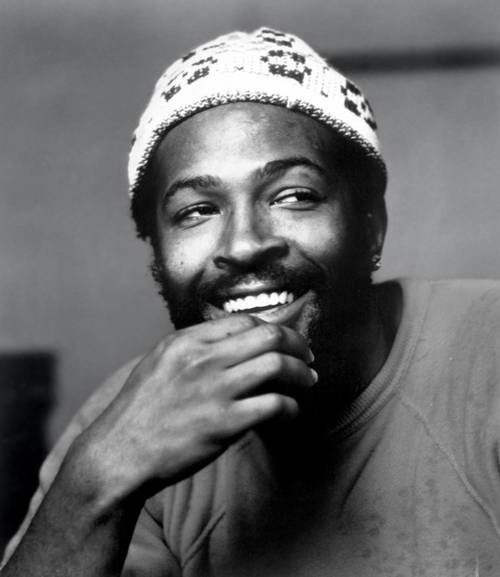 Credit: Wikimedia Commons; 1973 Motown publicity photoPublic domainSourceSOLVEDListen
Western Heights, Los Angeles, California · 1980s
On April 1, 1984, singer Marvin Gaye was fatally shot at his parents' Los Angeles home by his father, Marvin Gay Sr., following a violent confrontation. Gay Sr. pleaded no contest to voluntary manslaughter and received probation.
 Image recordEditorial useSourceSOLVEDListen
Near 2700 block of Raymond Avenue, Adams-Normandie neighborhood, Los Angeles, California · 2010s
On April 11, 2012, USC graduate students Ming Qu and Ying Wu were shot and killed while sitting in a parked car near campus in South Los Angeles during an attempted robbery. Two men, Bryan Barnes and Javier Bolden, were later convicted and sentenced to life without parole.
 Image recordCC BY-SA 4.0SourceSOLVEDListen
Hollywood, Los Angeles, California, United States · 1990s
In April 2008, California pensioners Helen Golay and Olga Rutterschmidt were convicted of conspiring to murder homeless men Paul Vados and Kenneth McDavid in staged hit-and-run deaths to collect millions in life insurance; both were convicted of Vados's murder, and Golay was also convicted of McDavid's murder.
 Credit: Associated Press (1963 press photo)Public domainSourceOVERTURNEDListen
Audubon Ballroom, Washington Heights, Manhattan, New York City · 1965
On February 21, 1965, Malcolm X was shot and killed at the Audubon Ballroom in Manhattan while preparing to address the Organization of Afro-American Unity. Three Nation of Islam members were convicted in 1966; two of them, Muhammad Abdul Aziz and Khalil Islam, were exonerated in 2021 after a reinvestigation.
 Credit: Walt Cisco, Dallas Morning NewsPublic domainSourceSOLVEDListen
Dealey Plaza, Dallas, Texas · 1963
President John F. Kennedy was fatally shot while riding in a motorcade through Dealey Plaza in Dallas, Texas, on November 22, 1963. Lee Harvey Oswald was charged with the killing but was himself murdered by Jack Ruby two days later, before facing trial.
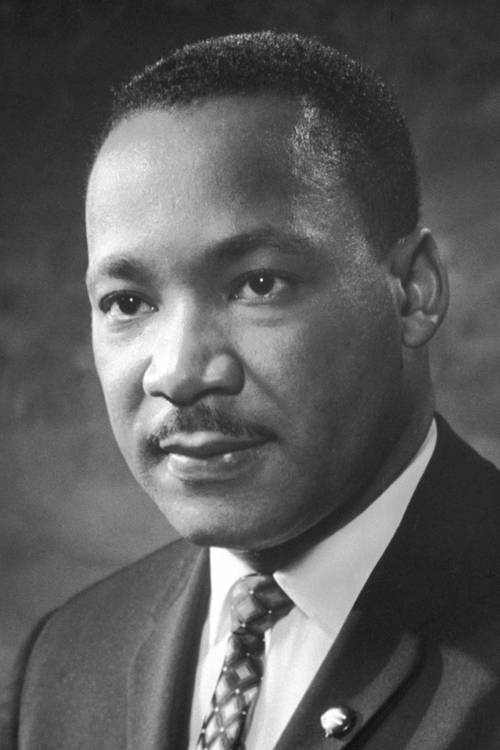 Credit: New York World-Telegram & Sun / Wikimedia CommonsPublic domainSourceSOLVEDListen
Lorraine Motel, Memphis, Tennessee · 1968
On April 4, 1968, civil rights leader Martin Luther King Jr. was fatally shot on the balcony of the Lorraine Motel in Memphis, Tennessee. James Earl Ray, an escaped convict, pleaded guilty to the murder in 1969 and was sentenced to 99 years, though he later recanted. A 1999 civil jury found Loyd Jowers and unnamed others civilly liable for a conspiracy, a finding the U.S. Department of Justice disputed in 2000 for lack of evidence.
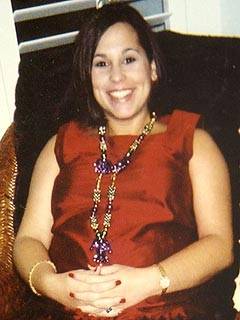 Credit: English WikipediaEditorial useSourceSOLVEDListen
Modesto, California · 2002
Laci Peterson, 27 and eight months pregnant, disappeared from her Modesto, California home on December 24, 2002; her body and that of her unborn son Conner were found in San Francisco Bay in April 2003, and her husband Scott Peterson was convicted in 2004 of murdering both.
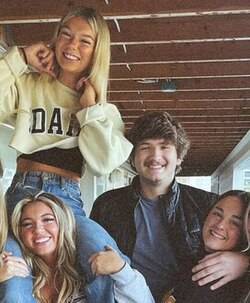 Credit: Family/Instagram photograph, widely distributed in press coverageEditorial useSourceSOLVEDListen
Moscow, Idaho · 2022
Four University of Idaho students—Madison Mogen, Kaylee Goncalves, Ethan Chapin, and Xana Kernodle—were fatally stabbed inside an off-campus house in Moscow, Idaho, in the early morning hours of November 13, 2022. Bryan Kohberger, a criminology PhD student at nearby Washington State University, was arrested that December and pleaded guilty in 2025, receiving four consecutive life sentences.
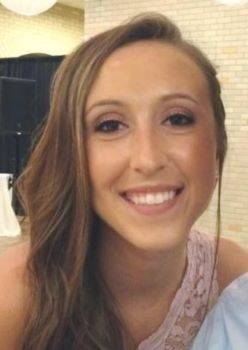 Credit: English WikipediaEditorial useSourceSOLVEDListen
Delta, Fulton County, Ohio · 2016
Sierah Joughin, a 20-year-old Ohio college student, was abducted while bicycling home in Fulton County on July 19, 2016, and found dead three days later. James Dean Worley, a neighbor with a 1990 abduction conviction who was not listed in any offender database, was convicted of her murder in 2018 and sentenced to death, prompting Ohio's Sierah's Law, which created a searchable violent-offender registry.
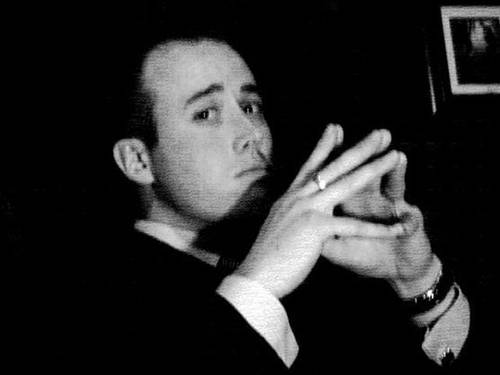 Credit: CBS News / Travis Alexander (personal photo)Editorial useSourceSOLVEDListen
Mesa, Arizona, United States · 2000s
Travis Alexander, 30, was stabbed, slashed, and shot to death in his Mesa, Arizona home on June 4, 2008. His ex-girlfriend, Jodi Arias, was convicted of first-degree murder in 2013 and sentenced to life without parole in 2015 after two juries deadlocked on the death penalty.
 Image recordEditorial useSourceSOLVEDListen
Austin, Texas · 2022
Moriah Wilson, a 25-year-old professional cyclist, was shot and killed at a friend's residence in Austin, Texas, on May 11, 2022, and Kaitlin Armstrong was later convicted and sentenced to 90 years in prison for the killing.
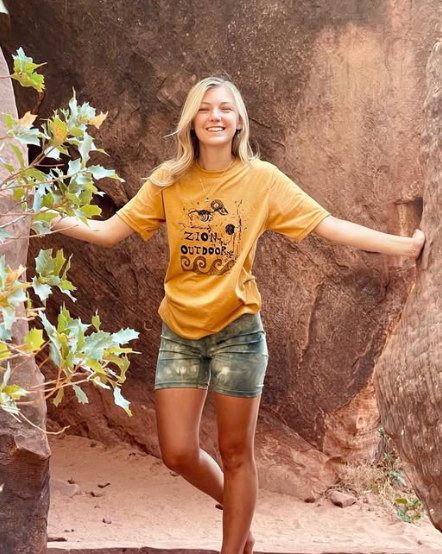 Credit: Instagram/@gabspetito, widely distributed in press coverageEditorial useSourceSOLVEDListen
Bridger–Teton National Forest, Wyoming · 2021
Gabby Petito, a 22-year-old travel vlogger, was killed by strangulation and blunt-force trauma in August 2021 while on a cross-country van trip with her fiancé, Brian Laundrie. Laundrie returned to Florida alone, was named a person of interest, and later died by suicide, leaving a note admitting he had killed her.