Start here
America's Cursed Royal Family | The Dark History of The Kennedys
Bailey Sarian's 59-minute breakdown, the fullest single telling on file.
Watch on YouTubeSolved case · 1963
Also known as Murder of John F. Kennedy · John Connally
 JFK Motorcade GettyImages-517330536Credit: Walt Cisco, Dallas Morning NewsPublic domainSource
The short answer
President John F. Kennedy was fatally shot while riding in a motorcade through Dealey Plaza in Dallas, Texas, on November 22, 1963. Lee Harvey Oswald was charged with the killing but was himself murdered by Jack Ruby two days later, before facing trial.
America's Cursed Royal Family | The Dark History of The KennedysBailey Sarian · 59 min1 piece from 1 creator: ranked, with duplicates removed and short clips set aside.
Start here
Bailey Sarian's 59-minute breakdown, the fullest single telling on file.
Watch on YouTubeTitles and descriptions are the creators’ own and may not reflect current legal status. The sourced facts are in the file below. Players load only when you press play. Suggest coverage we’re missing.
On Friday, November 22, 1963, President John F. Kennedy was riding in a presidential motorcade through Dealey Plaza in Dallas, Texas, alongside his wife Jacqueline Kennedy, Texas Governor John Connally, and Connally's wife Nellie. As the motorcade passed the Texas School Book Depository, multiple shots were fired. Kennedy was struck in the upper back, with the bullet exiting his throat, and shortly afterward was struck fatally in the head. Governor Connally was also wounded but survived. The motorcade rushed to Parkland Memorial Hospital, where Kennedy was pronounced dead at 1:00 p.m., roughly 30 minutes after the shooting.
Lee Harvey Oswald, a former U.S. Marine working at the Texas School Book Depository, was identified by investigators as the shooter. After the assassination, Oswald left the building, returned to his rooming house for a pistol, and shortly afterward, according to the Warren Commission, shot and killed Dallas police officer J. D. Tippit in the Oak Cliff neighborhood. Oswald was apprehended by Dallas police approximately 70 minutes after the shooting of Kennedy and was charged under Texas state law with the murders of both Kennedy and Tippit. Two days later, on November 24, while being transferred through the basement of Dallas Police Headquarters on live television, Oswald was fatally shot by Dallas nightclub operator Jack Ruby. Oswald died at Parkland Memorial Hospital, the same facility where Kennedy had been treated.
Vice President Lyndon B. Johnson was sworn in as president aboard Air Force One at Dallas Love Field about two hours after the shooting. Jack Ruby was subsequently convicted of murdering Oswald, but the conviction was overturned on appeal; Ruby died in prison in 1967 while awaiting a new trial, of a pulmonary embolism secondary to cancer.
A 10-month investigation by the Warren Commission concluded that Oswald acted alone in assassinating Kennedy and that there was no evidence either Oswald or Ruby participated in a conspiracy. In 1967, New Orleans district attorney Jim Garrison brought the only criminal trial connected to Kennedy's murder, charging businessman Clay Shaw with conspiracy; a jury acquitted Shaw in 1969. Later federal reviews, including the Rockefeller Commission and the Church Committee, largely affirmed the Warren Commission's core findings. In 1979, the U.S. House Select Committee on Assassinations (HSCA) concluded there was a "high probability" that two gunmen had fired at the president and that Kennedy was "probably assassinated as a result of a conspiracy," though it did not identify any alleged co-conspirators. The HSCA's acoustic-based conclusion was later found to rest on a police Dictabelt recording that has since been discredited by the U.S. Justice Department.
The assassination remains one of the most extensively investigated crimes in American history, having generated an extensive public record, numerous government inquiries, and widespread ongoing public debate about whether Oswald acted alone.
President John F. Kennedy is shot while riding in a motorcade through Dealey Plaza, Dallas, Texas; Governor John Connally is also wounded.
Kennedy is pronounced dead at Parkland Memorial Hospital at 1:00 p.m. CST, about 30 minutes after the shooting.
Vice President Lyndon B. Johnson is sworn in as president aboard Air Force One at Dallas Love Field.
Dallas police officer J. D. Tippit is shot and killed, allegedly by Lee Harvey Oswald, in the Oak Cliff neighborhood.
Lee Harvey Oswald is apprehended by Dallas police and later charged under Texas law with the murders of Kennedy and Tippit.
Oswald is fatally shot by Dallas nightclub operator Jack Ruby in the basement of Dallas Police Headquarters, on live television; Oswald dies at Parkland Memorial Hospital.
Kennedy's funeral is held at St. Matthew's Cathedral; he is buried at Arlington National Cemetery.
President Johnson establishes the Warren Commission to investigate the assassination.
The Warren Commission presents its final report to President Johnson, concluding Oswald acted alone.
New Orleans district attorney Jim Garrison charges businessman Clay Shaw with conspiring to assassinate Kennedy.
Jack Ruby dies in prison of a pulmonary embolism secondary to cancer while awaiting retrial.
A jury acquits Clay Shaw following a 34-day trial in New Orleans.
The Rockefeller Commission and the Church Committee each review aspects of the assassination investigation.
The U.S. House Select Committee on Assassinations issues its final report, concluding Kennedy was likely assassinated as a result of a conspiracy.
Victims first. Every legal label is set from public records and court outcomes, not from the prose.
Dallas police officer shot and killed by Lee Harvey Oswald shortly after the Kennedy assassination.[3]
Texas governor wounded in the same attack that killed Kennedy; he recovered.[3]
35th President of the United States; fatally shot in Dealey Plaza, Dallas, on November 22, 1963.[3]
Dallas nightclub operator convicted of murdering Lee Harvey Oswald; conviction overturned on appeal; died in 1967 awaiting retrial.[3]
Former U.S. Marine charged under Texas state law with the murders of Kennedy and Tippit; killed before trial.[3]
New Orleans businessman charged by DA Jim Garrison with conspiring to assassinate Kennedy; acquitted by a jury in 1969.[3]
From the record
Coverage is not a source: every fact in this file rests on the records below.
Are you family of someone named in this file? Corrections and removal requests from victims’ families are prioritized.
 Image recordPublic domainSourceSOLVEDListen
El Centro College area, downtown Dallas, Texas · 2010s
On July 7, 2016, Micah Xavier Johnson ambushed police at a Dallas protest against police shootings of Black men, killing five officers and wounding nine others and two civilians before being killed by a police robot-delivered explosive.
 Credit: Anonymous photographer from 1910Public domainSourceUNSOLVEDListen
Dallas County Courthouse / Elks Arch (Main & Akard Streets), Dallas, Texas · 1910s
Allen Brooks, a Black handyman, was lynched by a mob of thousands in Dallas, Texas, on March 3, 1910, after being accused of raping a young white girl. He was dragged from the Dallas County Courthouse and hanged from a telephone pole at Elks Arch; no one was ever charged.
 Credit: Jno.skinnerCC BY-SA 4.0SourceSOLVEDListen
Dallas and surrounding North/East Texas towns · 1860s
In the summer of 1860, fires in North and East Texas towns—likely caused by extreme heat and self-igniting phosphorus matches—sparked a moral panic in which vigilantes tortured, lynched, and executed an estimated 30 to 100 Black Texans and white residents accused of abolitionism, on the basis of an insurrection conspiracy historians consider imaginary.
 Credit: Associated Press (1963 press photo)Public domainSourceOVERTURNEDListen
Audubon Ballroom, Washington Heights, Manhattan, New York City · 1965
On February 21, 1965, Malcolm X was shot and killed at the Audubon Ballroom in Manhattan while preparing to address the Organization of Afro-American Unity. Three Nation of Islam members were convicted in 1966; two of them, Muhammad Abdul Aziz and Khalil Islam, were exonerated in 2021 after a reinvestigation.
Ambassador Hotel, Los Angeles, California · 1968
On June 5, 1968, U.S. Senator Robert F. Kennedy was shot by Sirhan Sirhan at the Ambassador Hotel in Los Angeles shortly after winning the California Democratic presidential primary; he died the next day. Sirhan was convicted of murder in 1969 and remains incarcerated.
 Credit: New York World-Telegram & Sun / Wikimedia CommonsPublic domainSourceSOLVEDListen
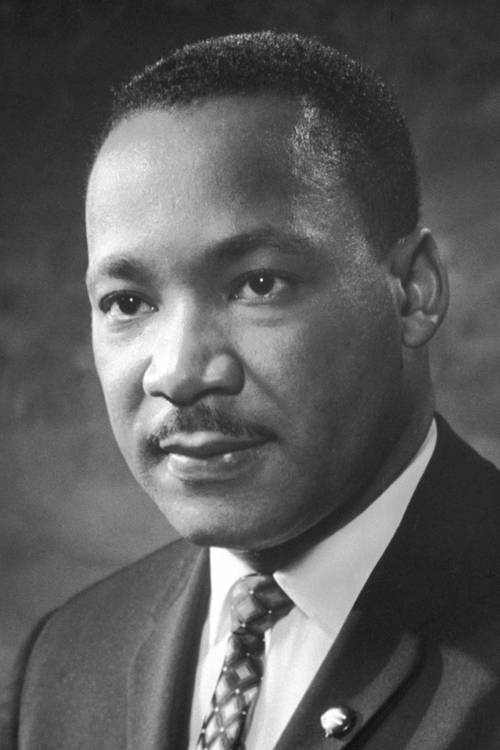
Lorraine Motel, Memphis, Tennessee · 1968
On April 4, 1968, civil rights leader Martin Luther King Jr. was fatally shot on the balcony of the Lorraine Motel in Memphis, Tennessee. James Earl Ray, an escaped convict, pleaded guilty to the murder in 1969 and was sentenced to 99 years, though he later recanted. A 1999 civil jury found Loyd Jowers and unnamed others civilly liable for a conspiracy, a finding the U.S. Department of Justice disputed in 2000 for lack of evidence.
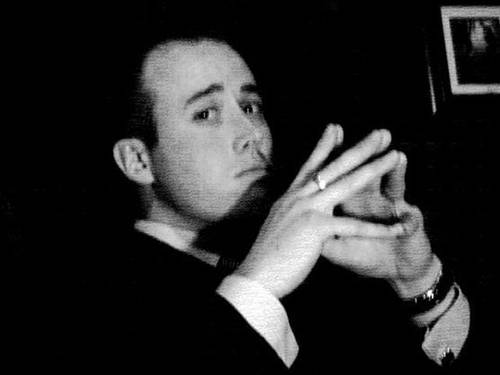 Credit: CBS News / Travis Alexander (personal photo)Editorial useSourceSOLVEDListen
Mesa, Arizona, United States · 2000s
Travis Alexander, 30, was stabbed, slashed, and shot to death in his Mesa, Arizona home on June 4, 2008. His ex-girlfriend, Jodi Arias, was convicted of first-degree murder in 2013 and sentenced to life without parole in 2015 after two juries deadlocked on the death penalty.
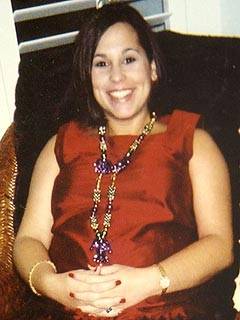 Credit: English WikipediaEditorial useSourceSOLVEDListen
Modesto, California · 2002
Laci Peterson, 27 and eight months pregnant, disappeared from her Modesto, California home on December 24, 2002; her body and that of her unborn son Conner were found in San Francisco Bay in April 2003, and her husband Scott Peterson was convicted in 2004 of murdering both.
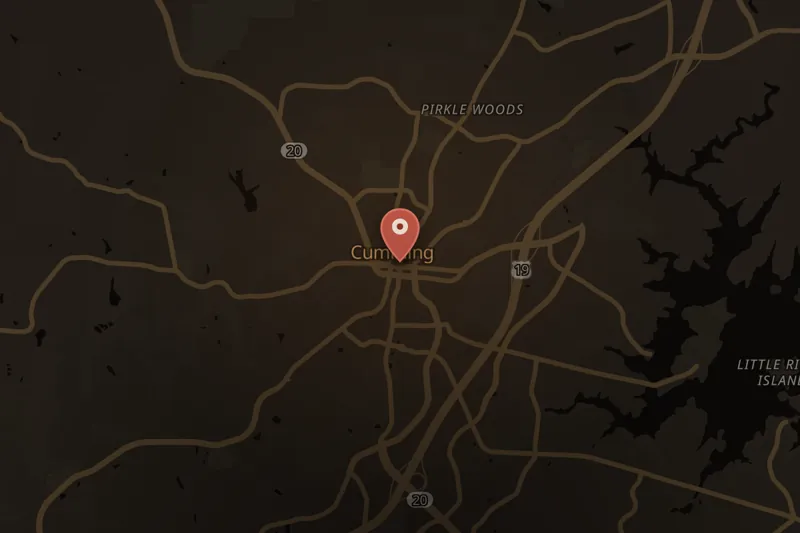 COLDListen
Cumming, Georgia · 2018
Tamla Horsford, a 40-year-old mother of five, died from a fall at a home in Cumming, Georgia, during a gathering on November 3-4, 2018; two separate investigations ruled her death accidental, though her family has disputed that finding and pushed for further inquiry.
 Credit: Los Angeles Police DepartmentPublic domainSourceUNSOLVEDListen
Leimert Park, Los Angeles, California, USA · 1940s
Elizabeth Short, known posthumously as the Black Dahlia, was found murdered in Los Angeles in January 1947 in a case that remains unsolved.
 Credit: Ted Van ZylEditorial useSourceSOLVEDListen
Albuquerque, New Mexico, United States · 1993
Girly Chew Hossencofft, a Malaysian-born bank teller living in Albuquerque, New Mexico, disappeared on September 9, 1999, shortly after filing for divorce from her husband Diazien Hossencofft. He and his girlfriend Linda Henning were later convicted of her murder. Her body has never been found.
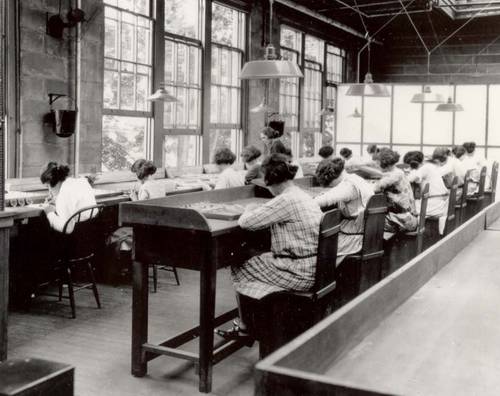 Credit: Argonne National Laboratory / Wikimedia Commons, c.1922–23Public domainSourceSOLVEDListen
Orange, New Jersey · 1917
Beginning in 1917, factory workers who came to be known as the Radium Girls were poisoned after being instructed to shape radium-paint brushes with their lips; the resulting illnesses, deaths, and lawsuits against the United States Radium Corporation and the Radium Dial Company reshaped U.S. occupational health and labor law.