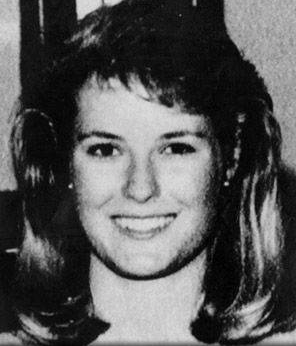
Karen Price was a 15-year-old Welsh girl who was living in a children's home and had a history of running away. In July 1981, she ran away again, but on this occasion she did not return. She later turned to prostitution after leaving the home.
On 7 December 1989, construction workers installing a garden behind a house in Cardiff discovered a rolled-up carpet buried in the ground. When unrolled, it contained the skeletal remains of a young female. A plastic bag had been placed over her head, and her arms were tied behind her back. Forensic entomologists examined insect eggs at the site and estimated the body had been buried for five to ten years, indicating a death sometime in the early-to-mid 1980s.
Early efforts to identify the remains failed. British facial reconstruction artist Richard Neave, of Manchester University, then created a clay model based on the skull, reconstructing what the victim may have looked like in life. This reconstruction, combined with DNA comparison between the remains and Price's parents, allowed the body to be identified as Karen Price. The case has been cited as one of the first instances of DNA technology being used in this manner for identification.
In 1991, Idris Ali and Alan Charlton — who were alleged to have managed Price's solicitation as a prostitute — were charged with her murder. Ali's charge was later reduced to manslaughter, and he was released in 1994. Charlton continued to serve a life sentence for murder but was released on parole in 2017.
The convictions were later subject to review. In February 2014, the Criminal Cases Review Commission (CCRC), the public body responsible for investigating alleged miscarriages of justice in England, Wales, and Northern Ireland, referred Charlton's conviction to the Court of Appeal, stating there was a "real possibility" it could be overturned. In March 2015, the CCRC similarly referred Ali's conviction, citing a real possibility that the Court of Appeal would find the conviction unsafe "because of the risk of the prosecution amounting to an abuse of process."
It was disclosed that several South Wales Police officers who worked on the Price investigation had also been involved in the Lynette White and Philip Saunders murder inquiries, cases in which six men were wrongfully convicted. Other concerns raised by the CCRC included breaches of the Police and Criminal Evidence Act 1984 (PACE) and its accompanying Code of Practice, the credibility of prosecution witnesses, "oppressive handling by the police of key witnesses," and the "veracity of Mr Ali's guilty plea."
In 2016, the Court of Appeal in London dismissed both men's appeals, and the convictions of Ali (manslaughter) and Charlton (murder) stood.

 Credit: Seth WhalesCC BY-SA 4.0SourceSOLVEDListen