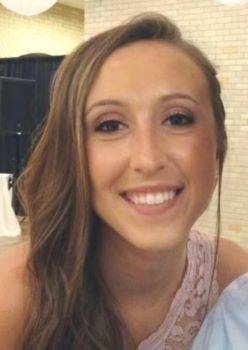
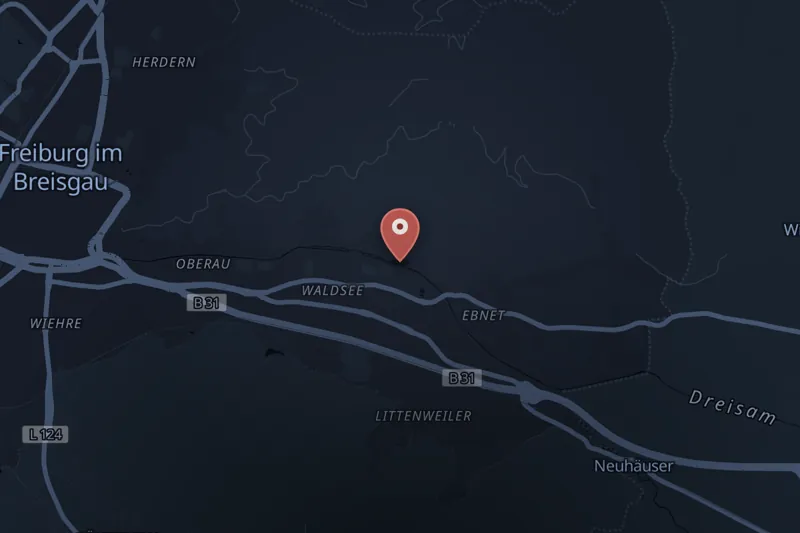
Maria Ladenburger was a 19-year-old medical student at the University of Freiburg in Baden-Württemberg, Germany. On the night of 15–16 October 2016, she attended a party hosted by the university's medical faculty and left at 2:37 a.m. to cycle home. Near the Schwarzwald-Stadion, she was raped, and she died of drowning in the river Dreisam shortly after 3:00 a.m.; the man later convicted of her killing said he had choked her with a scarf. A jogger discovered her body later that morning.
Freiburg police formed a special commission of 68 officers, who questioned more than 1,400 people and examined more than 1,600 pieces of evidence. Investigators recovered a strand of hair from a bleached undercut hairstyle in bushes near the scene and a black scarf on the riverbed carrying DNA evidence. A still image from tram surveillance footage recorded on 17 October led a street patrol to identify and arrest a suspect, Hussein Khavari, on 3 December 2016; DNA evidence subsequently linked him to the crime scene. Investigators also cited location data from a health-tracking application on Khavari's iPhone as evidence of his movements at the time of the crime. In January 2017, police published photographs to locate a witness they described as important to the case, who then came forward.
Khavari had entered Germany in November 2015 without identification, claiming to be an unaccompanied minor from Afghanistan born in 1999; he was granted asylum and placed with a foster family. His fingerprints, recorded when he sought asylum in Greece in 2013, were already stored in the European Eurodac database. It later emerged that a Greek court had convicted him in 2014 of robbing a 20-year-old student and throwing her from a cliff on Corfu in 2013; she survived with serious injuries. Khavari was released after about eighteen months under a Greek juvenile amnesty, then left the country in violation of his probation; because Greece had not issued an international alert through Interpol, German authorities were not aware of the conviction when he arrived. A medical assessment reported in February 2017 found that Khavari was not a minor, and in March 2017 prosecutors, citing unresolved doubts about his exact age, filed charges in juvenile court rather than adult criminal court, which capped the potential sentence at ten years under German juvenile law.
Khavari's trial opened in Freiburg in September 2017. He confessed to the rape and murder of Ladenburger and acknowledged misrepresenting his age. Tram surveillance video shown at trial indicated he had molested two other women shortly before attacking Ladenburger. A forensic dental examination presented in court estimated his age at 25, and his father told the court by telephone of a document listing a birth date of 29 January 1984. A court-appointed psychiatrist found no evidence of schizophrenia or brain damage but described a low threshold for violence rooted in Khavari's individual character rather than substance use, national origin, or religion. On 22 March 2018, the Landgericht Freiburg convicted Khavari of aggravated rape and murder, finding a particular severity of guilt, and applied adult criminal law; he was sentenced to life imprisonment with preventive detention ordered.
The case received sustained national news coverage in Germany and prompted public debate over information-sharing gaps between European states regarding asylum seekers' prior criminal records, age-verification procedures for unaccompanied minors, and proposals to expand forensic DNA analysis in criminal investigations.

 Credit: EinDaoCC BY-SA 4.0SourceCOLDListen