
Solved case
Murder of Richard Everitt
Richard Everitt, a 15-year-old boy, was stabbed to death in Somers Town, London, in August 1994 by a gang seeking revenge against another white teenager. Badrul Miah was convicted of conspiring to murder him; a co-defendant was convicted of violent disorder, and a third was acquitted.
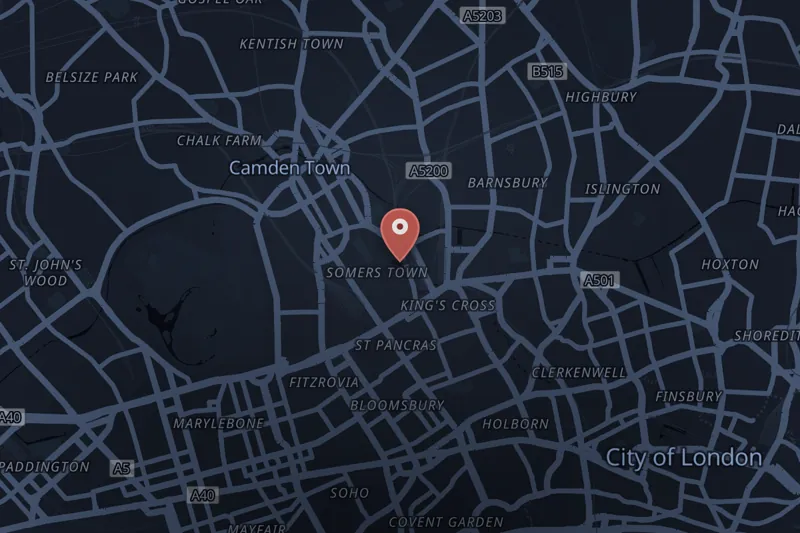
Richard Norman Everitt was a 15-year-old white boy living in Somers Town, in the London Borough of Camden, an area that in the early 1990s was experiencing urban decay and ethnic tensions between white and Bengali residents. Everitt attended South Camden Community School, where such tensions existed, though he was not personally involved in them. Weeks before his death, he had been attacked by a Bangladeshi group, an incident that led his parents to raise concerns with a teacher.
On the night of 13 August 1994, Everitt had been playing football and went out with friends to buy food. Walking along Midland Road and then Brill Place between roughly 9pm and 10pm, he encountered a gang of Asian youths who had set off from the Euston area intending to find and confront an Irish teenager, Liam Coyle, over a dispute involving stolen property. The gang had earlier assaulted another boy, Mark Andrew, after he denied knowing Coyle. When the gang encountered Everitt and two friends, one member demanded to know if they knew Coyle; when the answer was no, Everitt's friends fled and escaped, but Everitt was caught and stabbed once in the back with a seven-inch kitchen knife, the blade piercing his heart. He died at hospital shortly afterward. Badrul Miah was later reported to have boasted to acquaintances that the group had "stabbed up a white boy," and blood matching Everitt's was found on Miah's clothing and trainers when he was arrested.
Eleven men were arrested and bailed during the investigation. Three defendants — Badrul Miah, Showat Akbar, and Abdul Hai — were tried at the Old Bailey beginning 5 October 1995. The prosecution argued the killing was a joint enterprise and did not claim to know definitively who wielded the knife. On 1 November 1995, Miah was convicted of conspiring to murder Everitt and sentenced to life imprisonment with a minimum term of twelve years; Akbar was convicted of violent disorder and given three years' youth detention. The trial judge directed the jury to acquit Abdul Hai, ruling there was no case for him to answer.
A campaign supported by advocacy groups including Liberty and the Society of Black Lawyers subsequently sought Miah and Akbar's release, alleging racial bias in the trial. Their appeal, which centered on a disputed note allegedly written by a juror, was rejected by the Court of Appeal in November 1996, and a further appeal to the European Court of Human Rights in July 1998 also failed. Miah was released from prison in 2008.
The murder caused shock in Somers Town and was followed by a firebombing of a halal butcher's shop and attacks by white gangs on Bengali residents. Everitt's family faced abuse from Bengali neighbours after the convictions and relocated, first to Essex and later to northern England. His mother subsequently campaigned for stronger sentencing for knife crime. Abdul Hai, following his acquittal, later became a Labour Party politician on Camden Council. Memorials to Everitt have been established near the site of his death, including a plaque and bench later replaced in 2024 after the original site was sold for development.
Key facts
- Victims
- Richard Everitt
- Date
- 1994
- Location
- Brill Place, Somers Town, London
- Case status
- solved
Case timeline
1978-12-06
Richard Norman Everitt is born in Camden, London.
1986
The Everitt family moves to the Somers Town Estate.
1994-08-13
Richard Everitt is fatally stabbed in Brill Place, Somers Town, during an attack by a gang seeking an unrelated teenager.
1994-10-14
Richard Everitt's funeral is held at St Mary the Virgin Roman Catholic Church.
1995-10-05
Trial of Badrul Miah, Showat Akbar, and Abdul Hai begins at the Old Bailey.
1995-11-01
Miah is convicted of conspiring to murder and sentenced to life with a 12-year minimum; Akbar is convicted of violent disorder and sentenced to three years' youth detention; Hai is acquitted on the judge's direction.
1996-11
The Court of Appeal rejects Miah and Akbar's appeal.
1998-07
Miah's appeal to the European Court of Human Rights is unsuccessful.
2008
Badrul Miah is released from prison.
2012-02
Politician Richard Barnbrook raises Everitt's case in the London Assembly, prompting a response from Mayor Boris Johnson.
2020-06
Council-owned land containing Everitt's memorial plaque is sold to private developers; the memorial is placed into storage.
2024-08
A replacement memorial to Everitt is unveiled at Purchese Street Open Space.
Best coverage
No coverage has been attached to this file yet.
People
Badrul Miah
CONVICTEDConvicted of conspiring to murder Richard Everitt; sentenced to life imprisonment with a minimum term of 12 years; released in 2008.
Abdul Hai
ACQUITTEDAcquitted by the jury on the direction of the trial judge at the close of the prosecution's case; later became a Camden Council politician.
Showat Akbar
CONVICTEDConvicted of violent disorder in connection with the attack; sentenced to three years' youth detention.
Richard Everitt
VICTIM15-year-old boy stabbed to death in Somers Town on 13 August 1994.
Roles reflect public records and court outcomes at the time of writing — supporting citations are on file under Sources.
Places
Common questions
- What happened to the victim?
- Richard Everitt, a 15-year-old boy, was stabbed to death in Somers Town, London, in August 1994 by a gang seeking revenge against another white teenager. Badrul Miah was convicted of conspiring to murder him; a co-defendant was convicted of violent disorder, and a third was acquitted.
- Where did the murder happen?
- Brill Place, Somers Town, London.
- Who was convicted?
- Badrul Miah (Convicted of conspiring to murder Richard Everitt; sentenced to life imprisonment with a minimum term of 12 years; released in 2008.) and Showat Akbar (Convicted of violent disorder in connection with the attack; sentenced to three years' youth detention.).
- What is the current status of the case?
- Status: solved.
Related cases
View all cases
Disappearance of Andrew Gosden
King's Cross station, London

Murder of Ben Kinsella
Junction of North Road and York Way, Islington, London
Killing of Emily Dimmock (the "Camden Town Murder")
Agar Grove (formerly 29 St Paul's Road), Camden Town, London

Murder of Anita Cobby
Blacktown / Prospect, New South Wales, Australia

Brighton hotel bombing
Grand Hotel, Brighton, England
Murder of Cara Knott
Mercy Road offramp, Interstate 15, San Diego County, California
Sources
- ENCYCLOPEDICMurder of Richard EverittWikipedia · 2026-07-07
- PRESSSomers Town: where lessons go unlearntThe Independent · 2026-07-07
- PRESSAlan Walter obituaryThe Guardian · 2026-07-07
Record history
- First published
- JUL 07, 2026
When a file you follow changes — a new development, a correction, fresh coverage — the Dispatch is how you hear about it.
The Casepin Dispatch
A calm weekly briefing from the archive — one case worth understanding, meaningful updates to files you follow, and the best new coverage. You’ll also get the one-time note when the apps land. No gore, no rumor, no drip.