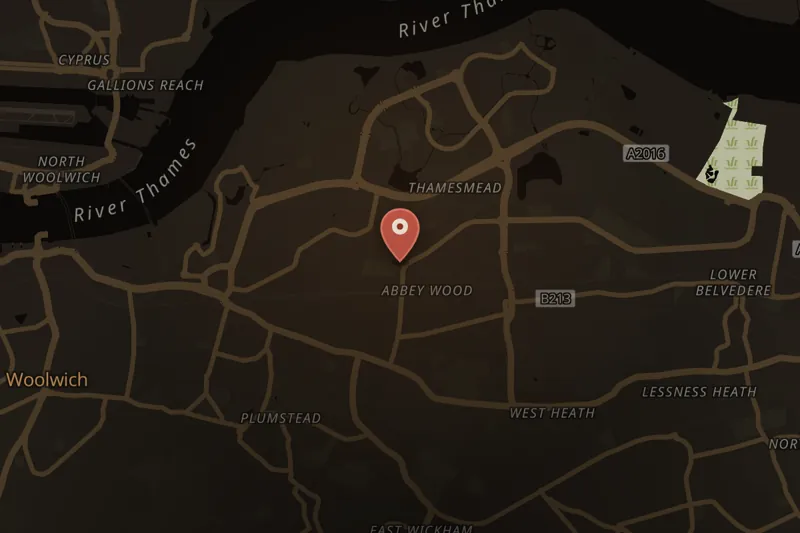
Rolan Adams was born 21 March 1975 and died 21 February 1991 in Thamesmead, south-east London, the victim of a racially motivated killing. Those who knew him described him as a good student, a dedicated football player who had been scouted by West Ham United, and a musician working on original recordings. His family had moved to nearby Abbey Wood five years before his death, and at the time of the attack Rolan was responsible for looking after his younger brother Nathan and younger sister Lauren while their parents worked.
At the time, Thamesmead was predominantly white with some Asian and Caribbean families, and the area had developed a reputation for racial tension, partly attributed to the nearby presence of the British National Party's headquarters in Welling. Adolescent gangs holding racist views had formed in the area during the 1980s and 1990s, including a group known as the Goldfish, also called the NTO (Nutty Turn Out), which later became known as the Nazi Turn-Outs. This group is identified as responsible for the attack on Rolan.
On the evening of Friday 21 February 1991, Rolan and his brother Nathan, aged 15 and 14 respectively, were followed from Thamesmead's Hawksmoor Youth Centre after playing table tennis, on their way to a bus stop to return home. At the bus stop they were surrounded by a group of 12 to 15 older white youths who had been drinking at a nearby pub. Amid racial abuse, one member of the group, 19-year-old Mark Thornborrow, stabbed Rolan in the neck with a butterfly knife. Rolan attempted to flee and told Nathan to run; the brothers became separated while being chased. Nathan escaped, but Rolan collapsed and died shortly afterward. Nathan returned to the bus stop and found his brother dead.
During the investigation and trial, police and the Crown Prosecution Service initially treated the killing as related to gang territory rather than as racially motivated. Eight youths involved in the incident were arrested on charges of violent disorder, but only Mark Thornborrow was tried, and he was convicted of murder. The sentencing judge, Kenneth Richardson, ultimately determined that the murder was racially motivated and sentenced Thornborrow accordingly. None of the group was prosecuted for the assault on Nathan.
Following the murder, the Adams family reported receiving threatening phone calls and a letter containing a racist message celebrating Rolan's death. They said they lacked police protection despite the harassment and were eventually advised by local authorities and the Commission for Racial Equality that they were in danger, leading them to leave their home three months after the murder. Richard, Audrey, and Nathan Adams later became involved in the Undercover Policing Inquiry concerning police surveillance of crime victims' families. The family founded the Rolan Adams Family Campaign, which extended support to other victims of racist violence and contributed to the closure of the BNP's Welling headquarters. An annual candlelit vigil at the murder site continued until 2001, when mourners were harassed by onlookers.


 SOLVEDListen