Solved case
Murder of Walter Sedlmayr
Bavarian stage and television actor Walter Sedlmayr was found tied up, stabbed, and beaten to death in his Munich apartment in July 1990; two half-brothers and former business associates were convicted of his murder in 1993 and later became central figures in a legal dispute over privacy and internet name removal.

Walter Sedlmayr (6 January 1926 – 14 July 1990) was a well-known German stage, television, and film actor from Bavaria. He built a decades-long career, performing for more than 25 years with the Münchner Kammerspiele and appearing in numerous Heimatfilme during the 1940s and 1950s. In 1971 he was briefly arrested after a stolen artwork, the Blutenburger Madonna, was found in his home; he was later acquitted of all charges, and the resulting media attention is credited with helping advance his career. His breakthrough film role came in 1972 with Hans-Jürgen Syberberg's "Theodor Hierneis oder Wie man ehem. Hofkoch wird," for which he won the Deutscher Filmpreis for Outstanding Individual Achievement: Actor in 1973. He went on to appear in many popular German television productions, including "Münchner Geschichten," "Der Herr Kottnik," "Der Millionenbauer," and "Polizeiinspektion 1."
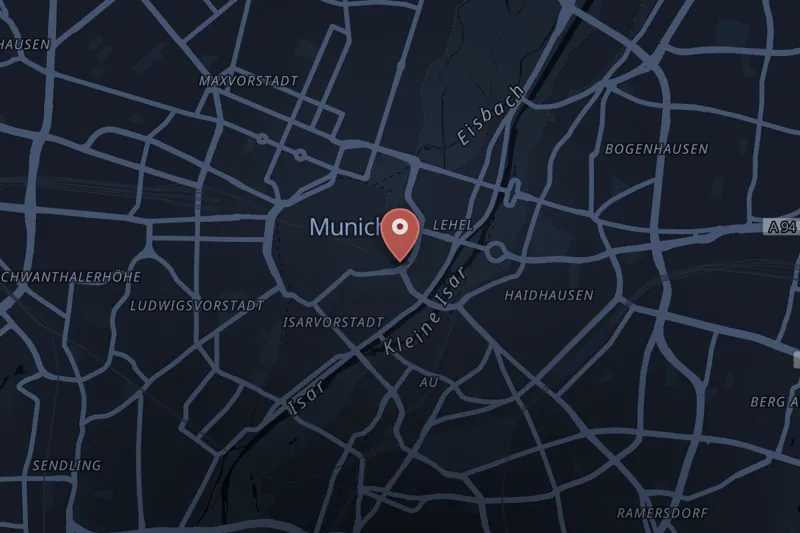
On 14 July 1990, Sedlmayr was found dead in the bedroom of his Munich apartment. He had been tied up, stabbed in the stomach with a knife, and beaten about the head with a hammer. The killing received wide public attention in Germany.
On 21 May 1993, former business associates and half-brothers Wolfgang Werlé and Manfred Lauber were convicted of Sedlmayr's murder and sentenced to life imprisonment.
Both men were released from prison — one in 2007 and the other in 2008.
Sedlmayr's life and death later became the subject of the 2001 biopic "Wambo," directed by Jo Baier, in which he was portrayed by actor Jürgen Tarrach, as well as an episode of the German television series "Die großen Kriminalfälle."
In 2009, the two convicted men took legal action seeking removal of their names from the German- and English-language Wikipedia articles about the case, arguing that continued publication violated their right to privacy. Their names were removed from the German Wikipedia at the time, but the English-language Wikipedia community declined to do so, a position supported by the Wikimedia Foundation, which noted it neither operates nor holds assets in Germany. In December 2009, Germany's Federal Court of Justice ruled that the convicted men had no right to have their names removed from internet archives, finding that such removal would too strongly interfere with freedom of speech; following this ruling, their names were restored to the German Wikipedia article. In June 2018, the European Court of Human Rights upheld the Federal Court of Justice's decision rejecting the men's request to ban publication of their names.

Key facts
- Victims
- Walter Sedlmayr
- Date
- 1990
- Location
- Munich, Germany
- Case status
- solved
Case timeline
1926-01-06
Walter Sedlmayr is born in Bavaria, Germany.
1971
Sedlmayr is briefly arrested after a stolen artwork, the Blutenburger Madonna, is found in his house; he is later acquitted of all charges.
1972
Sedlmayr's breakthrough film role in 'Theodor Hierneis oder Wie man ehem. Hofkoch wird' is released.
1973
Sedlmayr wins the Deutscher Filmpreis for Outstanding Individual Achievement: Actor.
1990-07-14
Sedlmayr is found dead in the bedroom of his Munich apartment, having been tied up, stabbed, and beaten with a hammer.
1993-05-21
Wolfgang Werlé and Manfred Lauber are found guilty of Sedlmayr's murder and sentenced to life in prison.
2000-06
Walter-Sedlmayr-Platz is named after him.
2001
Biopic 'Wambo,' depicting Sedlmayr's life and murder, is released, directed by Jo Baier.
2007
One of the two convicted killers is released from prison.
2008
The second convicted killer is released from prison.
2009
The two convicted men take legal action demanding removal of their names from German and English Wikipedia articles about the case.
2009-12
Germany's Federal Court of Justice rules the convicted men have no right to removal of their names from internet archives.
2018-06
The European Court of Human Rights upholds the Federal Court of Justice's rejection of the request to ban publication of the killers' names.
Best coverage
No coverage has been attached to this file yet.
People
Walter Sedlmayr
VICTIMBavarian stage, television, and film actor found tied up, stabbed, and beaten to death in his Munich apartment on 14 July 1990.
Wolfgang Werlé
CONVICTEDFormer business associate of Sedlmayr and half-brother of Manfred Lauber; found guilty of murder on 21 May 1993 and sentenced to life in prison; released in 2007 or 2008.
Manfred Lauber
CONVICTEDFormer business associate of Sedlmayr and half-brother of Wolfgang Werlé; found guilty of murder on 21 May 1993 and sentenced to life in prison; released in 2007 or 2008.
Roles reflect public records and court outcomes at the time of writing — supporting citations are on file under Sources.
Places
Common questions
- What happened to the victim?
- Bavarian stage and television actor Walter Sedlmayr was found tied up, stabbed, and beaten to death in his Munich apartment in July 1990; two half-brothers and former business associates were convicted of his murder in 1993 and later became central figures in a legal dispute over privacy and internet name removal.
- Where did the murder happen?
- Munich, Germany.
- Who was convicted?
- Wolfgang Werlé (Former business associate of Sedlmayr and half-brother of Manfred Lauber; found guilty of murder on 21 May 1993 and sentenced to life in prison; released in 2007 or 2008.) and Manfred Lauber (Former business associate of Sedlmayr and half-brother of Wolfgang Werlé; found guilty of murder on 21 May 1993 and sentenced to life in prison; released in 2007 or 2008.).
- What is the current status of the case?
- Status: solved. Last verified July 2026.
Sources
- PRESSMordfall Walter Sedlmayr: Ermittler spricht über JahrhundertfallAbendzeitung München · 2026-07-13
- ENCYCLOPEDICWalter SedlmayrWikipedia · 2026-07-07
- PRESSContemporaneous coverage — The New York TimesThe New York Times · 2026-07-07
- PRESSContemporaneous coverage — spiegel.despiegel.de · 2026-07-07
Record history
- First published
- JUL 07, 2026
- Last verified against sources
- JUL 13, 2026
JUL 13, 2026Correction
Catalog QA: Added the documented murder date.
When a file you follow changes — a new development, a correction, fresh coverage — the Dispatch is how you hear about it.
The Casepin Dispatch
A calm weekly briefing from the archive — one case worth understanding, meaningful updates to files you follow, and the best new coverage. You’ll also get the one-time note when the apps land. No gore, no rumor, no drip.