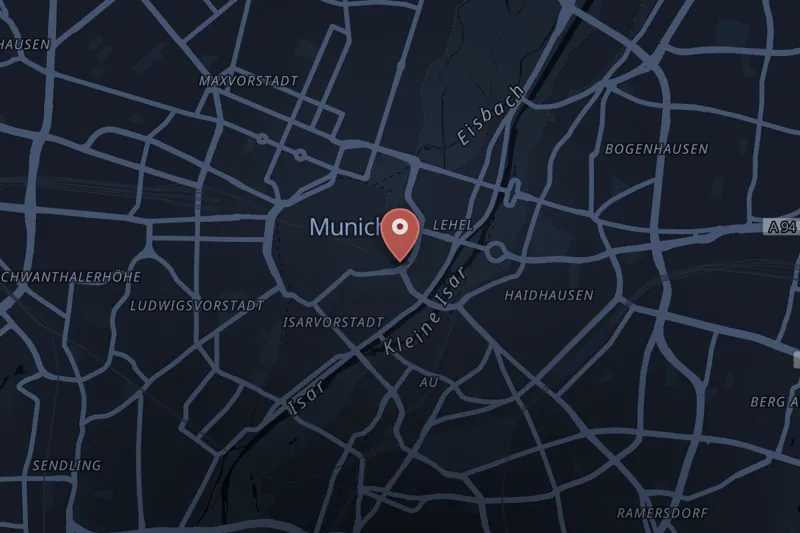
On the evening of 26 September 1980, a bomb concealed in a rubbish bin exploded at the main entrance to the Oktoberfest festival grounds in Munich, West Germany, at approximately 10:19 p.m. The blast killed 13 people, including the person responsible for planting the device, and left more than 200 people injured, many of whom lost limbs. Investigators determined the device had been built from an emptied British mortar grenade packed with military explosives and a gas bottle taken from a fire extinguisher.
City officials reopened the festival grounds less than twelve hours after the attack. Munich's mayor at the time, Erich Kiesl, said the city would not be “held to ransom by criminals” and that closing the event would only serve the intentions of whoever was responsible.
Investigators identified Gundolf Köhler, a geology student who had recently failed an exam and was described as emotionally troubled, as the person standing over the device when it exploded. Köhler had trained twice with the banned neo-Nazi militia Wehrsportgruppe Hoffmann, and a picture of Adolf Hitler was found above his bed after the bombing. The initial Bavarian-led investigation nonetheless concluded his motive was primarily personal rather than political, and the Federal Public Prosecutor General's Office closed its inquiry in November 1982. In 1997, with the case considered closed, investigators destroyed the physical evidence they had collected, including bomb fragments and a severed hand that could not be matched to any known victim and had been treated as a possible sign that a second person was present at the scene; cigarette butts recovered from Köhler's car in February 1981 were destroyed the same way, before DNA testing of them was possible.
The conclusion that Köhler acted alone was disputed for years by victims' relatives, lawyers, and journalists, who pointed to witness accounts that were never resolved. Several witnesses described Köhler arguing with two unidentified men in military-style jackets shortly before the blast; a passerby recalled two young men standing near his body immediately afterward, one of whom said he had not wanted this to happen; and a woman reported seeing a car carrying a large, concealed object near the festival entrance a week before the attack. One member of the Wehrsportgruppe Hoffmann reportedly claimed to have been present during the attack shortly before taking his own life, and another was said to have referenced the “Munich action” in conversation. None of these leads produced an identified second suspect.
Following a public campaign by victims' relatives, lawyers, and journalists, German federal prosecutors reopened the investigation in December 2014. Investigators interviewed more than 1,000 witnesses and reviewed roughly 300,000 documents, including far-right records from the 1970s. In 2020, the federal prosecutor's office revised its earlier conclusion, stating that Köhler had acted from a right-wing extremist motive and had intended to influence the West German federal election held soon after the bombing. On the question of accomplices, the office concluded the evidence was insufficient to prove other people had helped plan or carry out the attack, but said the possibility “could not be ruled out.” No one besides Köhler was ever charged in connection with the bombing.


 SOLVEDListen