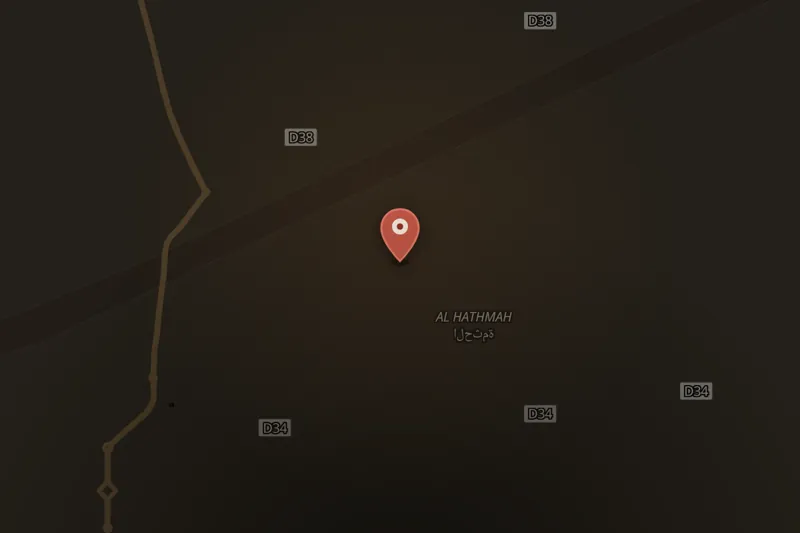
On 23 September 1983, Gulf Air Flight 771, a Boeing 737-2P6 registered A4O-BK, was on approach to Abu Dhabi International Airport after departing from Jinnah International Airport in Karachi, Pakistan. As the aircraft neared its destination, an explosive device detonated in the baggage compartment, triggering an onboard fire. The aircraft crashed into the desert near Jebel Ali, roughly 45 kilometres northeast of Abu Dhabi, between Abu Dhabi and Dubai. All 112 people aboard — 105 passengers and 7 crew members — were killed. Passengers are believed to have died instantly from asphyxiation due to the fire, and the aircraft did not break apart in mid-air before impact.
The flight's cockpit crew consisted of Omani Captain Saud al-Kindi and Bahraini First Officer Khazal al-Qadi. The cabin crew were of mixed nationalities, including British, Filipino, Indian, and Pakistani personnel. The sole Bahraini cabin crew member, Hashim Sayed Abdullah, served as deputy purser in the economy cabin. Two British crew members were aboard: chief purser Sally Anne Townsend, 25, of Peterborough, and Linda Farthing, 27; both had joined Gulf Air in 1978. Passengers included 96 Pakistani nationals, many returning to jobs in Abu Dhabi and Bahrain after the Eid al-Adha holiday, as well as seven British nationals, one American, and one Iranian national.
An investigative report, revealed publicly in September 1987 by British politician Sir Dudley Smith after pressure from the parents of Lyn Farthing (one of the British flight attendants who died), described the final moments in the cockpit. Voice recordings reportedly showed the crew engaged in ordinary conversation — including one crew member asking another about his schedule for the next day — before a sudden interruption led to a frantic attempt to control the aircraft. The report also described Captain Saoud Al Kindy praying as the plane went down.
Investigators identified a bomb in the baggage hold as the probable cause, citing several factors: a passenger who had checked baggage in Karachi but did not board the flight, the nature of injuries sustained by passengers seated above the baggage hold, the sudden interruption to an otherwise normal flight, and data from the aircraft's flight data recorder.
The bombing was carried out by the Iraqi-based Palestinian nationalist militant group the Abu Nidal Organization, reportedly intended to pressure the United Arab Emirates into paying protection money to avoid further attacks on its soil. The crash remains, alongside Sterling Airways Flight 296, among the deadliest air disasters in the history of the United Arab Emirates.


 UNSOLVEDListen

